

Introduction
There’s a smell that defines Korean winters.
It’s sweet, warm, and slightly caramelized — drifting from a small street cart where an ajumma (older woman) presses golden discs of dough on a sizzling griddle. That smell is hotteok.
Hotteok is Korea’s favorite winter street food: a soft, chewy pancake filled with melted brown sugar, cinnamon, and crushed nuts. One bite and you’ll understand why Koreans line up in the cold just to get one fresh off the griddle.
If you’re visiting Korea in winter, hotteok is a must-try experience. It’s cheap, it’s delicious, and it captures the cozy warmth of Korean street food culture in a single bite.
What is Hotteok?
Hotteok (호떡) is a Korean sweet pancake made from a yeasted dough filled with a sugary mixture, then pressed flat and pan-fried until golden and crispy.
The outside is slightly crisp and chewy, while the inside contains a molten filling of brown sugar, cinnamon, and often chopped nuts like peanuts, sunflower seeds, or walnuts. When you bite into it, the hot syrup oozes out — which is both delicious and dangerous if you’re not careful.
The texture is what makes hotteok special. The dough has a subtle chewiness from the yeast, and when fried properly, the exterior gets a satisfying crunch while the inside stays soft and gooey.
A Brief History
Hotteok is believed to have originated from Chinese immigrants who came to Korea in the late 19th century. The name “hotteok” comes from the Chinese word for “fire cake” (火餅).
Over time, Koreans adapted the recipe to local tastes, adding the signature brown sugar and cinnamon filling. By the 1990s, hotteok had become a beloved winter street food, sold at markets, street carts, and near schools across the country.
Today, hotteok is one of the most iconic Korean winter snacks — something that Koreans associate with cold weather, childhood memories, and the simple pleasure of eating something warm on a freezing day.
Types of Hotteok
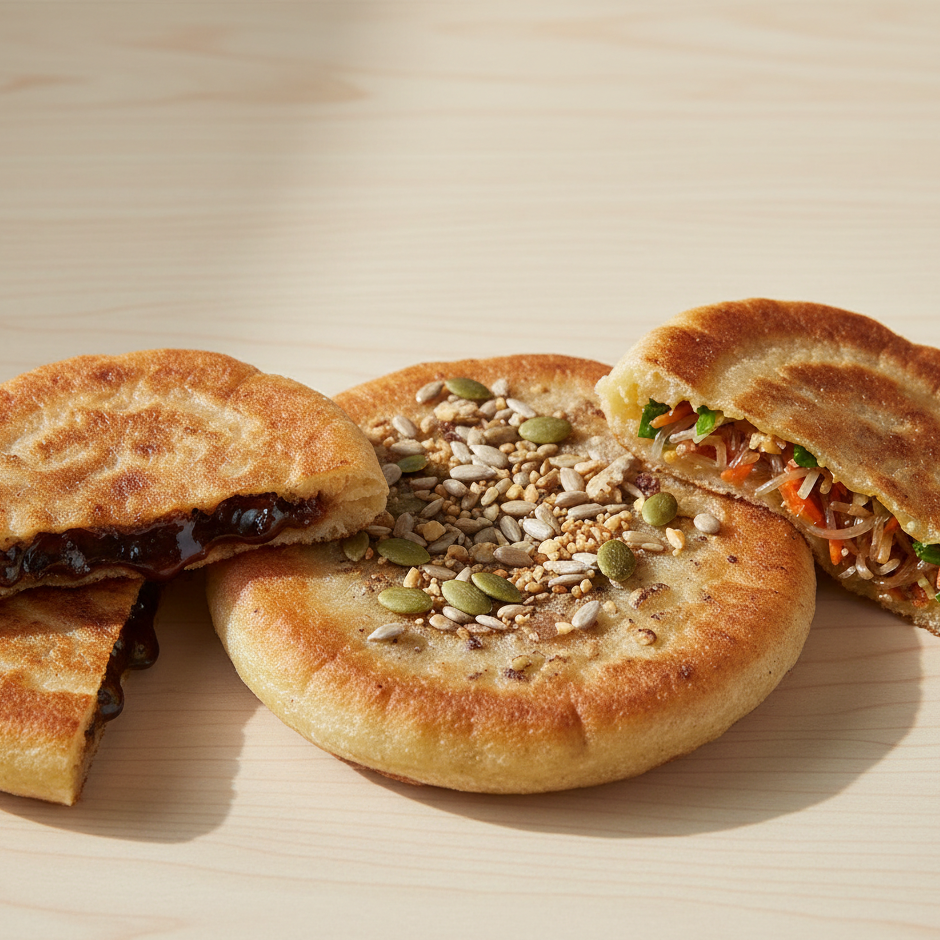
Hotteok has evolved into many variations over the years. Here are the most popular types you’ll find.
Classic Hotteok (일반 호떡)
The original version with brown sugar, cinnamon, and crushed peanuts inside. Simple, sweet, and perfect. This is what most street vendors sell.
Seed Hotteok (씨앗 호떡)
Packed with various seeds and nuts — sunflower seeds, pumpkin seeds, sesame seeds, and more. It has a nuttier flavor and more texture than the classic version.
Honey Hotteok (꿀 호떡)
Made with honey instead of or in addition to brown sugar. Extra sweet and sticky.
Vegetable Hotteok (야채 호떡) — Busan Style
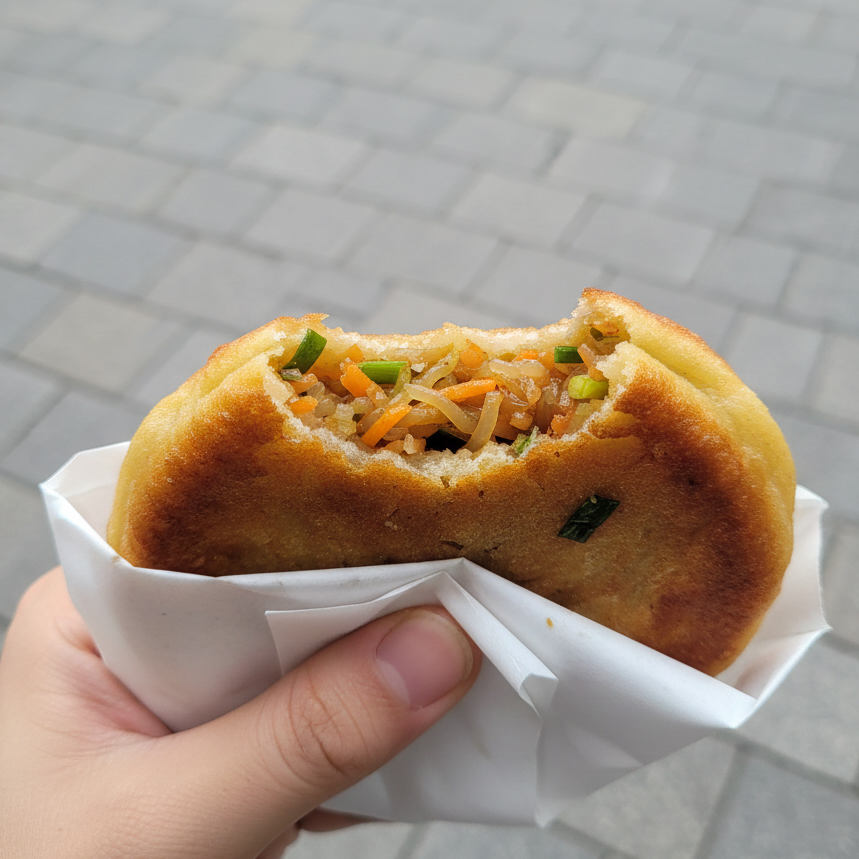
A savory twist on the classic. Instead of sweet filling, this version contains glass noodles (japchae), vegetables, and sometimes meat. It’s crispy, savory, and more like a stuffed pancake than a dessert. Originally from Busan, but now popular throughout Korea.
Cheese Hotteok (치즈 호떡)
A modern variation with melted mozzarella cheese inside. Sometimes combined with the sweet filling for a sweet-and-savory combo.
Green Tea / Chocolate Hotteok
Fusion versions with matcha or chocolate flavored dough or filling. Found mostly at trendy shops rather than traditional street carts.
Where to Find Hotteok
Hotteok is everywhere in Korea during winter — but finding a good one matters.
Street Carts (포장마차)
The most traditional way to eat hotteok. Small carts set up near subway stations, bus stops, and busy streets during the colder months. Watch for the ones with a line — that’s usually a good sign.
Traditional Markets
Markets like Namdaemun, Gwangjang, and Tongin have famous hotteok vendors that have been serving for decades. These are often the most reliable places to find quality hotteok.
Near Schools and Academies
Hotteok carts often set up near schools in the afternoon, targeting students looking for a warm snack. If you see students lining up somewhere, follow them.
Franchise Shops
Some shops specialize in seed hotteok or gourmet versions. These are more consistent in quality but less atmospheric than street carts.
How to Eat Hotteok
Eating hotteok seems simple, but there are a few things to know.
Eat It Fresh
Hotteok is best straight off the griddle. As it cools, the filling hardens and the texture changes. Don’t save it for later — eat it immediately.
Be Careful — It’s Hot
This is the most important tip. The filling inside is basically molten sugar. If you bite into it too quickly, you will burn the roof of your mouth. It happens to everyone at least once. Let it cool for a minute, or take small bites from the edge.
The Paper Cup
Most vendors serve hotteok in a small paper cup. This isn’t just for convenience — it catches the syrup if it leaks out and keeps your hands clean.
Price
Hotteok is one of the cheapest street foods. Expect to pay around 1,000 to 2,000 won per piece (less than $2 USD).
Hotteok vs Other Korean Street Foods
If tteokbokki is the king of spicy Korean street food, hotteok is the king of sweet.
They serve different cravings. Tteokbokki is savory, spicy, and filling. Hotteok is sweet, warm, and comforting. On a cold winter day, many Koreans will get both — tteokbokki for the meal, hotteok for dessert.
One key difference: hotteok is seasonal. While tteokbokki is available year-round, hotteok vendors mostly appear in fall and winter. During summer, it’s much harder to find. So if you’re visiting Korea between November and February, don’t miss the chance.
My Hotteok Story
I’ll be honest — if someone asked me to choose between tteokbokki and hotteok, I’d pick tteokbokki most of the time. That’s just my preference.
But hotteok is something everyone should try at least once in their life. And in winter, a freshly made hotteok can absolutely compete with tteokbokki. There’s something about biting into that warm, sweet pancake on a freezing day that just hits different.
That said, hotteok is one of the most hit-or-miss street foods in Korea.
I’ve had amazing hotteok from random street carts — crispy outside, gooey inside, perfectly sweet. But I’ve also had disappointing ones that were too greasy, with barely any filling inside. The quality really depends on where you get it. Not all hotteok is created equal.
My personal favorite is the classic version with brown sugar and cinnamon. Simple and reliable. But there’s one hotteok experience I’ll never forget: the vegetable hotteok at Namdaemun Market.
There’s a famous vendor there — you’ll recognize it by the long line of people waiting. Their vegetable hotteok is incredible. It’s crispy, stuffed with glass noodles and vegetables, and has a savory flavor that’s completely different from the sweet version. Every time I visit Namdaemun Market, I make sure to stop by and get one.
Just remember: the filling is extremely hot. I’ve burned my mouth more than once because I was too eager. Learn from my mistakes — let it cool for a minute before taking a big bite.
Final Thoughts
Hotteok is one of those foods that captures a season.
It’s not just a pancake — it’s the taste of Korean winter. The warmth in your hands on a cold day. The sweet smell drifting from a street cart. The simple joy of eating something delicious for just a thousand won.
If you visit Korea in winter, find a hotteok cart with a line, wait your turn, and eat it while it’s hot. Just be careful with that first bite.
Your mouth will thank you. Eventually.