
Introduction
In many countries, eating alone at a restaurant feels awkward. You might get pitying looks from staff, or feel self-conscious sitting by yourself while everyone else is with friends or family.
In Korea, it’s completely different.
Eating alone isn’t just accepted — it’s normal, common, and even celebrated. There’s a word for it: “honbap” (혼밥). And it’s become one of the defining lifestyle trends in modern Korea.
In this guide, I’ll explain why solo dining is so normal in Korea, where to eat alone comfortably, and why this cultural shift matters.
What is Honbap?
“Honbap” (혼밥) combines two Korean words: “honja” (혼자, alone) and “bap” (밥, rice/meal). It simply means eating alone.
But honbap is just one part of a larger trend. Koreans have created words for doing all kinds of activities solo.
Honhul (혼술) — Drinking alone Honyeong (혼영) — Watching movies alone Honnol (혼놀) — Playing/hanging out alone Honcance (혼캉스) — Vacationing alone
This “hon” culture reflects a broader shift in Korean society — one where doing things alone is no longer seen as sad or strange, but as a personal choice and sometimes even a luxury.
Why Solo Dining Became Normal in Korea
Several factors have made solo dining mainstream in Korea.
Rise of Single-Person Households
Over 40% of Korean households are now single-person households — one of the highest rates in the world. With so many people living alone, eating alone naturally became common.
Busy Lifestyles
Korea is fast-paced. Office workers often have limited lunch breaks, and students study late into the night. Coordinating meals with others isn’t always possible. Eating alone is practical.
Changing Attitudes
In the past, eating alone in Korea could attract judgment. “Why are you alone? Don’t you have friends?” But attitudes have shifted dramatically. Today, honbap is seen as independent and self-sufficient, not lonely.
Media Influence
Korean TV shows and YouTube channels have embraced honbap content. Mukbang (eating broadcasts) often feature people eating alone, normalizing it for millions of viewers. Celebrities openly talk about enjoying solo meals.
The Pandemic Effect
COVID-19 accelerated the trend. Social distancing made solo dining not just acceptable but encouraged. Many restaurants added single-seat options during this time, and the infrastructure for honbap expanded.
Solo-Friendly Restaurants in Korea
Korea has adapted to the honbap trend. You’ll find solo-friendly dining options everywhere.
Counter Seating
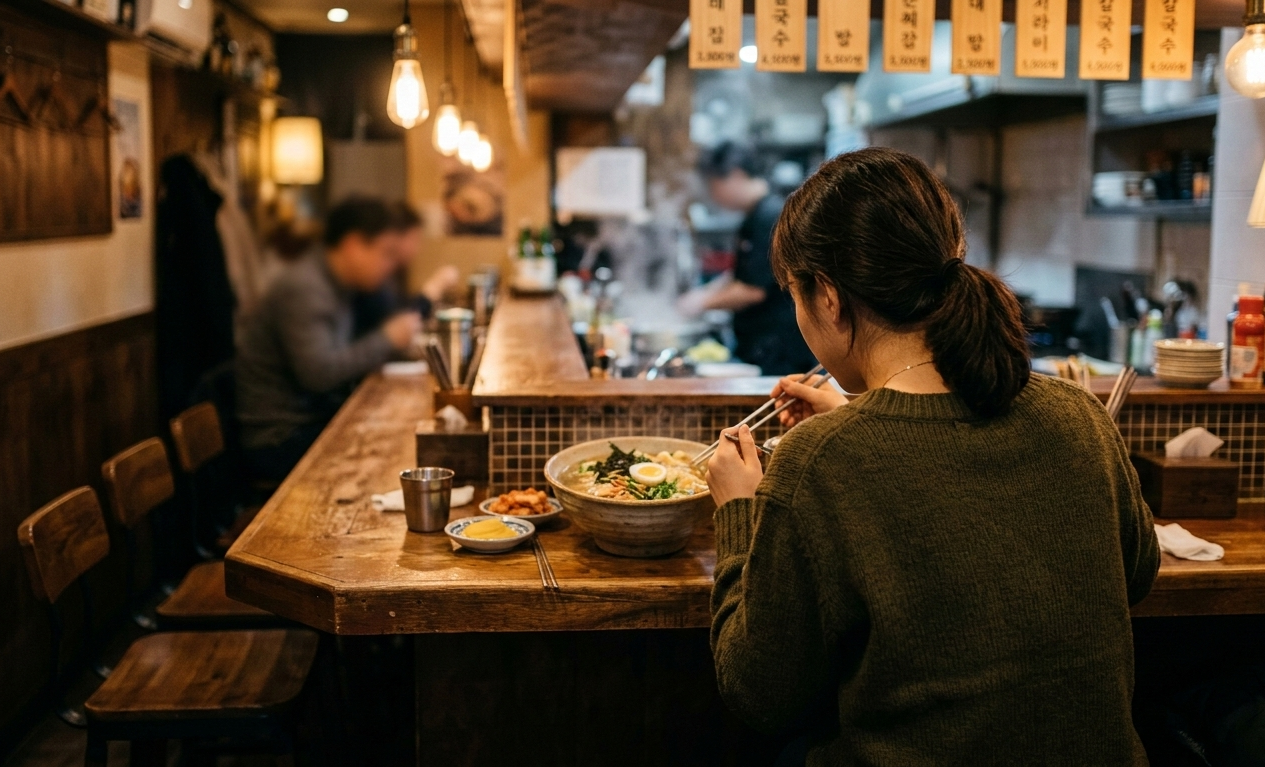
Many Korean restaurants have counter seats facing the kitchen or wall. This setup is perfect for solo diners — you don’t feel awkward sitting at a big table alone, and you can watch the chef work.
Single-Person Portions
More restaurants now offer 1-person portions. In the past, many dishes (like Korean BBQ or stews) required minimum two servings. Today, 1인분 (one-person serving) options are increasingly common.
Convenience Stores
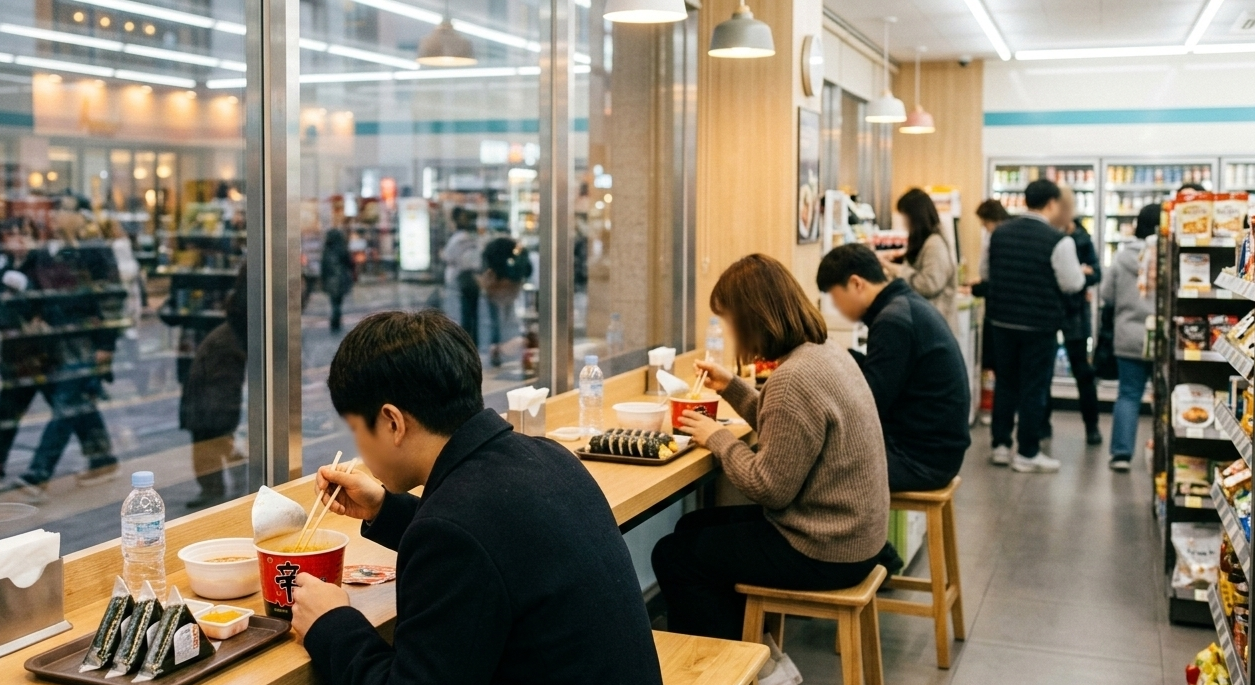
Korean convenience stores have seating areas with microwaves and hot water. You can buy a lunch box, ramyeon, or gimbap and eat right there. It’s the ultimate casual honbap spot.
Bunsik Restaurants
Casual Korean eateries serving tteokbokki, gimbap, and ramyeon are naturally solo-friendly. They’re fast, cheap, and no one thinks twice about eating alone.
Noodle Shops
Ramen shops, kalguksu (knife-cut noodle) restaurants, and janchi-guksu (banquet noodle) shops often have counter seating. A warm bowl of noodles is perfect for a quick solo meal.
Solo-Specialty Restaurants
Some restaurants are designed specifically for solo diners. Single-person Korean BBQ with individual grills, single-person hot pot, and “solo席” (solo seats) with partitions for privacy. These have become increasingly popular in Korean cities.
Best Foods for Honbap
Some dishes are naturally suited for eating alone.
Noodle Soups
Kalguksu, janchi-guksu, ramyeon, and naengmyeon are all perfect solo foods. One bowl, one person, no sharing required. Warm noodle soups are especially comforting on cold days.
Gukbap (Rice Soup)
Dishes like seolleongtang (ox bone soup), sundae-gukbap (blood sausage soup), and dwaeji-gukbap (pork soup with rice) are classic honbap meals. They’re filling, affordable, and traditionally eaten at counter seats.
Rice Bowls (Deopbap)
Jeyuk-deopbap (spicy pork rice bowl), curry rice, and other deopbap dishes come as single servings and are easy to eat quickly.
Bunsik
Gimbap, tteokbokki, and ramyeon at bunsik restaurants are go-to honbap choices. Cheap, fast, and satisfying.
Convenience Store Meals
Triangular gimbap, cup ramyeon, and lunch boxes from convenience stores are the easiest honbap option. Heat it up, sit down, and eat.
Single-Portion BBQ and Hot Pot
Recent trends include solo Korean BBQ with personal grills and solo shabu-shabu (hot pot). What used to require groups can now be enjoyed alone.
Honhul: Drinking Alone
Solo dining has a companion: solo drinking.
“Honhul” (혼술) — drinking alone — has also become normalized in Korea. It’s no longer seen as a sign of loneliness or a problem. For many, it’s just a way to unwind.
Where Koreans Drink Alone
Convenience stores are popular honhul spots. Buy a beer or soju, sit at the outdoor table, and relax. Some bars and pubs also cater to solo drinkers with counter seating. And of course, many people enjoy honhul at home, watching TV or reading.
Why It’s Accepted
The same cultural shifts that normalized honbap apply to honhul. Busy schedules, single-person households, and changing attitudes have made solo drinking unremarkable. Korean dramas often show characters drinking alone after a hard day — it’s portrayed as normal self-care, not a red flag.
The Cultural Shift
Korea’s attitude toward solo activities has transformed dramatically.
The Past
Not long ago, eating alone could invite awkward questions. “Are you okay? Where are your friends?” Solo diners might feel self-conscious or rush through their meals. Restaurants often required minimum orders of two portions.
The Present
Today, people proudly identify as “honbap-reo” (혼밥러) — solo dining enthusiasts. Social media is full of honbap restaurant recommendations. Asking “where’s a good honbap spot?” is completely normal.
The word “alone” lost its negative connotation. It now suggests independence, self-care, and freedom rather than isolation.
Media Representation
TV shows dedicated to solo activities, YouTube channels reviewing honbap restaurants, and celebrities sharing their solo routines have all contributed to normalizing — even glamorizing — doing things alone.
Tips for Solo Dining in Korea
If you’re visiting Korea and want to try honbap, here’s what to know.
Don’t Worry About Judgment
Nobody will think it’s weird that you’re eating alone. Especially during lunch hours, solo diners are everywhere.
Look for Counter Seating
Restaurants with counter seats facing the kitchen or wall are ideal for solo diners. You’ll feel comfortable and the setup is designed for individuals.
Use Convenience Stores
For the easiest honbap experience, grab food from a convenience store and use their seating area. No Korean skills needed, no ordering pressure.
Lunch is Peak Honbap Time
During lunch hours, restaurants are full of office workers eating alone. You’ll blend right in.
Delivery Apps Work for One
If you prefer eating in your accommodation, Korean delivery apps have plenty of single-portion options. You don’t need to order for a group.
Embrace It
Solo dining in Korea can be freeing. No coordinating schedules, no compromising on what to eat. Just you and your food.
My Honbap Story
I don’t eat alone very often, but when I do, there’s one place I always go: the janchi-guksu shop near my home.
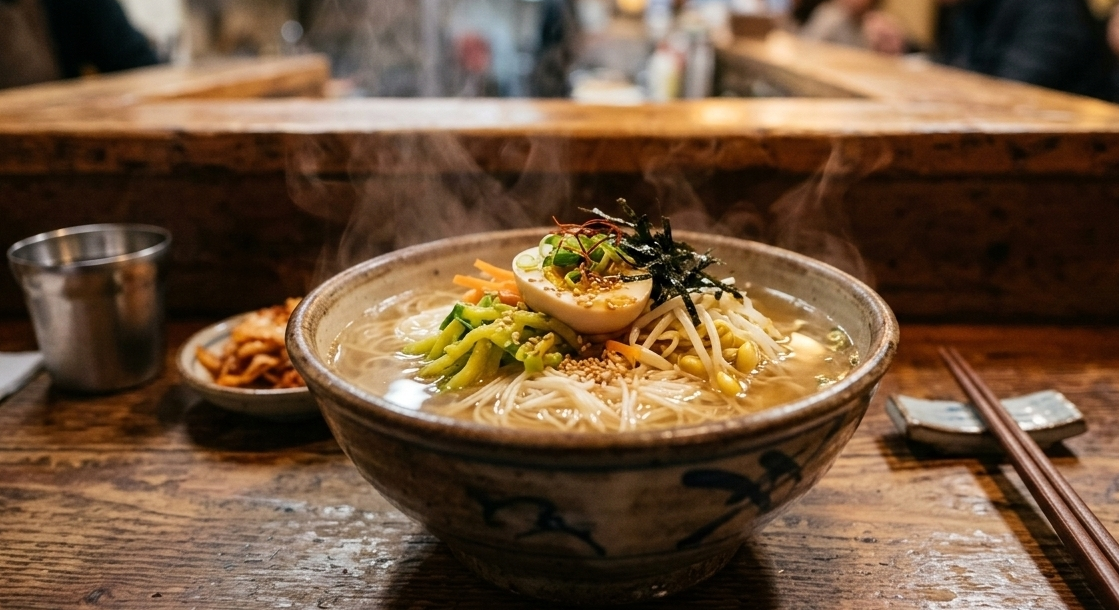
Janchi-guksu is a simple Korean noodle dish — thin wheat noodles in a warm, anchovy-based broth, topped with some vegetables and sometimes kimchi. It’s light, comforting, and perfect for a quick solo meal.
On cold winter evenings, when I’m heading home and don’t feel like cooking, I’ll stop by this little noodle shop. A steaming bowl of janchi-guksu warms you up from the inside. It’s so simple, but on a freezing night, it feels like the most satisfying meal in the world.
The restaurant has counter seating facing the cook, so it’s naturally comfortable for solo diners. When I go in the evening, I’m never the only one eating alone. The seats are filled with people just like me — stopping in for a quick, warm meal before heading home.
There’s something nice about it. No conversation needed, no waiting for anyone. Just me, a hot bowl of noodles, and a few quiet minutes before the rest of the evening.
That’s honbap at its best — not lonely, just peaceful.
Final Thoughts
Solo dining in Korea isn’t about being alone. It’s about freedom.
The freedom to eat what you want, when you want, without coordinating with anyone. The freedom to enjoy a meal at your own pace. The freedom to treat yourself without needing a reason or a companion.
If you visit Korea, don’t be afraid to eat alone. Find a cozy noodle shop, grab a seat at the counter, and enjoy. You’ll be in good company — even if that company is just yourself.