
Introduction
Korean BBQ isn’t just a meal. It’s an experience.
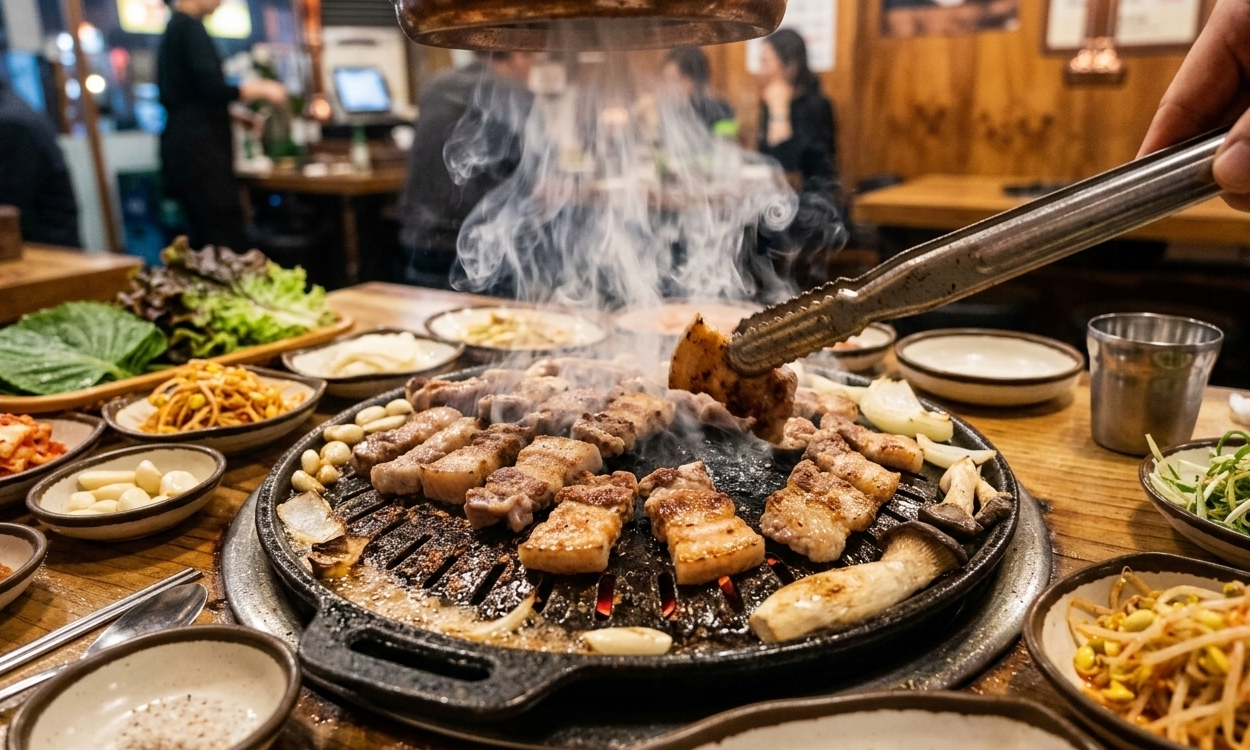
Sitting around a table with a grill in the center, cooking your own meat, wrapping it in fresh lettuce with garlic and sauces, sharing food and conversation — this is what Korean BBQ is all about.
For first-timers, it can seem intimidating. What meat should you order? How do you cook it? What do you do with all those side dishes? Don’t worry. By the end of this guide, you’ll know exactly how to enjoy Korean BBQ like a local.
What is Korean BBQ?
Korean BBQ, known as “gogi-gui” (고기구이), is a style of dining where you grill meat right at your table. The meat is cooked on a gas or charcoal grill built into the table, and you eat it as it cooks — fresh, hot, and exactly how you like it.
But it’s not just about the meat. Korean BBQ comes with an array of banchan (side dishes), fresh vegetables for wrapping, dipping sauces, and usually ends with a stew or cold noodles to finish the meal.
Korean BBQ is traditionally a group experience. While solo BBQ options exist now, the culture is built around sharing — cooking together, eating together, and enjoying the meal as a social event.
Types of Meat
Korean BBQ restaurants offer various cuts of pork and beef. Here’s what you need to know.
Pork (돼지고기)
Pork is the most common and affordable option at Korean BBQ restaurants.
Samgyeopsal (삼겹살) — Pork belly. The most popular cut in Korea. “Samgyeop” means “three layers,” referring to the alternating layers of meat and fat. It’s rich, flavorful, and incredibly satisfying when grilled until crispy on the edges.
Moksal (목살) — Pork neck. Leaner than samgyeopsal but still tender and juicy. A good choice if you want something less fatty.
Hangjungsal (항정살) — Pork jowl. A premium cut that’s chewy and flavorful. It’s a smaller muscle, so it’s more expensive and sometimes harder to find.
Beef (소고기)
Beef tends to be pricier but offers a different experience.
Galbi (갈비) — Beef short ribs, usually marinated in a sweet soy sauce mixture. The meat is tender and the marinade caramelizes beautifully on the grill.
Chadolbaegi (차돌박이) — Thinly sliced beef brisket. It cooks in seconds and has a delicate, beefy flavor.
Kkotdeungsim (꽃등심) — Ribeye. Well-marbled and rich. A premium choice.
Hanwoo (한우) — Korean native beef. The highest quality and most expensive option. Hanwoo is known for its exceptional marbling and flavor. Save this for special occasions.
Other Options
Dakgalbi (닭갈비) — Spicy stir-fried chicken, often cooked at the table with vegetables and rice cakes.
Ori (오리) — Duck. Smoked duck or grilled duck breast is available at some restaurants.
Banchan — Side Dishes
Korean BBQ always comes with banchan (반찬) — an assortment of small side dishes that complement the meat.
Kimchi
The essential side dish. Cabbage kimchi is most common, but you might also get radish kimchi or other varieties. You can eat it as is or grill it on the barbecue for a smoky, slightly caramelized flavor.
Ssam Vegetables (쌈)
Fresh lettuce leaves (상추) and perilla leaves (깻잎) are provided for wrapping your meat. More on this later.
Pajeori (파절이)
Sliced green onion salad dressed in a spicy, tangy sauce. It cuts through the richness of the meat perfectly.
Fresh Garlic and Peppers
Whole garlic cloves and green chili peppers are common. Grill the garlic until soft and golden, then eat it with your meat. The peppers add a fresh kick.
Ssamjang (쌈장)
A thick, savory paste made from doenjang (fermented soybean paste) and gochujang (red pepper paste). Essential for wrapping.
Soup and Stew
Most BBQ meals end with a soup or stew. Doenjang-jjigae (fermented soybean stew) or kimchi-jjigae (kimchi stew) are common. They help balance the richness of the meat.
Naengmyeon (냉면)
Cold buckwheat noodles in icy broth. A refreshing way to finish a heavy meat meal, especially in summer.
How to Grill Like a Korean
Grilling at Korean BBQ isn’t difficult, but there are some tips to get the best results.
Staff May Grill for You
At some restaurants, staff will cook the meat for you, especially the first batch. Let them — they know the perfect timing. At other places, you’re on your own.
Don’t Flip Too Often
Let the meat cook on one side until it develops a nice crust before flipping. Constantly flipping prevents proper browning.
Use Scissors
It’s completely normal to use scissors to cut meat into smaller pieces while it’s on the grill. This helps it cook evenly and makes it easier to eat.
Grill Everything
Don’t just grill meat. Add garlic, kimchi, and even green onions to the grill. Grilled kimchi is especially delicious — slightly charred and smoky.
Request a New Grill Plate
If the grill plate gets too charred or dirty, you can ask for a new one. Just say “불판 좀 바꿔주세요” (Could we get a new grill plate?). It’s a normal request.

How to Eat Korean BBQ
Here’s the classic way to eat Korean BBQ.
The Ssam Wrap
- Take a piece of lettuce or perilla leaf in your hand
- Add a piece of grilled meat
- Add a small dab of ssamjang
- Add a slice of grilled garlic
- Add some pajeori (green onion salad)
- Wrap it all together and eat in one bite
The combination of fresh vegetables, savory meat, spicy sauce, and pungent garlic is incredible. This is the quintessential Korean BBQ experience.
Salt and Sesame Oil
For samgyeopsal especially, many Koreans dip the meat in a mixture of sesame oil and salt before eating. It’s simpler than ssam but highlights the pure flavor of the pork.
Don’t Skip the Rice
Order rice (공기밥). Eating only meat can feel heavy and greasy. Rice balances the meal and helps you feel satisfied without feeling sick.
Finish with Stew
End your meal with doenjang-jjigae or another stew. The warm, savory soup helps digest all the meat and rounds out the experience.
Drinking with Korean BBQ
Korean BBQ and alcohol go hand in hand.
Soju
The classic pairing. Korea’s national spirit cuts through the richness of the meat. Most Koreans order soju with samgyeopsal.
Beer
Cold beer is refreshing with BBQ. Korean beers like Cass and Hite are light lagers that complement the food.
Somaek
A mixture of soju and beer. It’s smoother than straight soju and has become incredibly popular.
Non-Alcoholic Options
You don’t have to drink alcohol. Soft drinks, sparkling water, and Korean sodas like Chilsung Cider are perfectly acceptable.
Types of Korean BBQ Restaurants
Not all BBQ restaurants are the same.
Neighborhood BBQ Joints
Local restaurants with simple menus and honest prices. Often the best value and most authentic experience.
Franchise Chains
Brands like Saemaeul Sikdang, Yeontabal, and Gukne Moksal offer consistent quality across multiple locations.
All-You-Can-Eat (무한리필)
Pay a fixed price and eat unlimited meat. Great value if you’re hungry, but quality may vary.
Premium Hanwoo Restaurants
High-end spots specializing in Korean beef. Expect premium prices but exceptional quality.
Charcoal vs Gas
Some restaurants use charcoal (숯불) for a smokier flavor, while others use gas grills for convenience. Charcoal purists swear by the difference.
Regional Specialties
Different regions have their own BBQ styles. Jeju Island is famous for black pork (흑돼지). Some restaurants specialize in Jeju-style samgyeopsal with unique dipping sauces.
Useful Phrases
Here are some phrases that will help you at a Korean BBQ restaurant.
| Korean | Meaning |
|---|---|
| 고기 추가요 | More meat, please |
| 불판 좀 바꿔주세요 | Can we get a new grill plate? |
| 공기밥 주세요 | Rice, please |
| 된장찌개 주세요 | Doenjang jjigae, please |
| 여기요! | Excuse me! (to call staff) |
| 계산이요 | Check, please |
| 소금 있어요? | Do you have salt? |
| 상추 더 주세요 | More lettuce, please |
Tips for First-Timers
Minimum Order
Most restaurants require ordering at least 2 servings (2인분) per meat type. This is standard — don’t take it personally.
Your Clothes Will Smell
BBQ smoke gets into everything. Wear clothes you don’t mind smelling like meat. Many restaurants provide aprons to protect your clothes.
Ventilation
Some seats have better ventilation than others. If smoke bothers you, ask for a seat near an exhaust fan.
Price Range
Expect to pay 15,000-25,000 won per person for pork, more for beef. Premium Hanwoo can cost significantly more.
Staff Will Help
If you look confused, staff will often help you grill. Don’t be afraid to ask or just watch what other tables are doing.

My Korean BBQ Story
When I go to a BBQ restaurant, I almost always go for samgyeopsal. There’s something about that crispy, fatty pork belly that I never get tired of.
Near my home, there’s a Jeju-style samgyeopsal restaurant called “Jejudo Yaji” (제주도야지). Jeju Island is famous for its pork, and restaurants specializing in Jeju samgyeopsal have a slightly different style than regular BBQ places.
What makes it special is the dipping sauce: meljeot (멜젓).
Meljeot is a fermented anchovy sauce — a Jeju specialty. It’s salty, funky, and deeply savory. Instead of the usual sesame oil and salt, you dip your grilled samgyeopsal in meljeot. The combination is incredible.
They also serve myeongi-namul (명이나물) — pickled wild garlic leaves. You add it to your ssam wrap along with the meat and meljeot. The pickled, slightly garlicky flavor pairs perfectly with the rich pork.
This combination — samgyeopsal, meljeot, myeongi-namul — isn’t something every Korean has tried. But once you have it, you’ll understand why Jeju-style BBQ has such a devoted following.
And of course, I always order doenjang-jjigae and rice to finish. There’s something about that salty, earthy stew with the leftover flavors of grilled meat that makes me want to eat three bowls of rice. Honestly, I probably could.
That’s the beauty of Korean BBQ. It’s not just about the meat — it’s about all the little things that come together to make a perfect meal.
Final Thoughts
Korean BBQ is more than food. It’s a social experience, a cultural tradition, and one of the best ways to understand Korean dining culture.
Don’t worry if you’re a first-timer. The staff will help you, the other diners won’t judge you, and the food will be delicious no matter how perfectly (or imperfectly) you grill it.
Order some samgyeopsal, pour some soju, and enjoy the experience. You’ll see why Korean BBQ has fans all over the world.