
Introduction
Seoul may be Korea’s capital, but Busan is its heart by the sea.
Located on the southeastern coast, Busan is Korea’s second-largest city and offers a completely different experience from Seoul. Where Seoul is fast-paced and landlocked, Busan is relaxed, coastal, and proud of its distinct culture.
Here you’ll find stunning beaches, fresh seafood, colorful hillside villages, and a local dialect that sounds like music. Busan moves at its own rhythm, and visitors quickly fall in love with its laid-back charm.
In this guide, I’ll cover everything you need to know to plan your first trip to Busan — the best areas to explore, must-see attractions, food you can’t miss, and practical tips to make the most of your visit.
Busan at a Glance
| Quick Facts | |
|---|---|
| Population | About 3.4 million |
| Location | Southeastern coast of Korea |
| From Seoul | 2.5 hours by KTX (high-speed train) |
| Best Time to Visit | Spring (April-May) or Fall (September-October) |
| Known For | Beaches, seafood, temples, film festival |
Summer Note: July and August are peak beach season. Haeundae and Gwangalli get extremely crowded. If you want beaches without massive crowds, visit in early June or September.
Best Areas to Explore
Busan is spread across many distinct neighborhoods. Here are the key areas to know.
Haeundae (해운대)
Korea’s most famous beach. Haeundae is lined with luxury hotels, high-rise apartments, and trendy cafes. The beach itself is beautiful, but it gets packed in summer. Beyond the beach, you’ll find excellent restaurants and a lively nightlife scene.
Gwangalli (광안리)
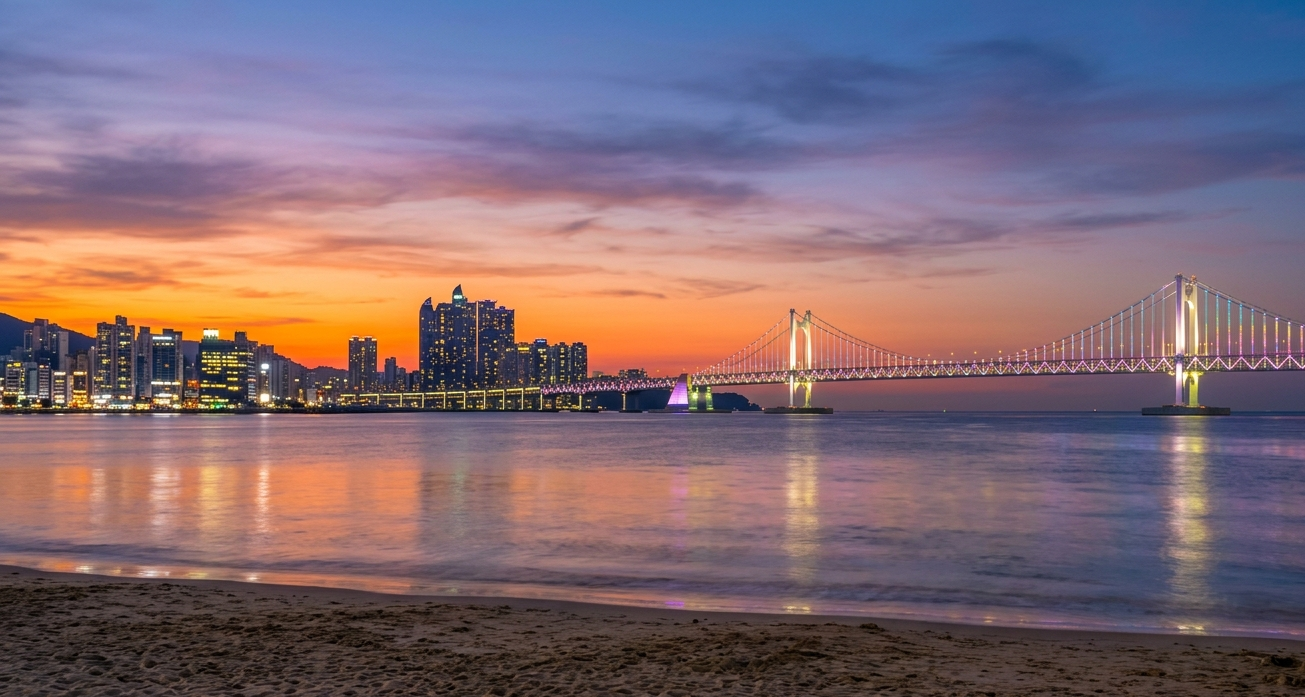
A more local alternative to Haeundae. Gwangalli Beach is known for its stunning view of Gwangan Bridge, especially at night when the bridge lights up in different colors. The area is full of cafes, bars, and seafood restaurants along the waterfront.
Seomyeon (서면)
Busan’s central downtown area. This is where locals go for shopping, dining, and nightlife. It’s busy, modern, and well-connected by subway. If you want to experience Busan beyond the tourist spots, spend an evening here.
Nampo-dong / BIFF Square (남포동)
The old downtown area, home to BIFF Square (Busan International Film Festival). You’ll find street food, shopping, and easy access to Jagalchi Fish Market. It has an older, more traditional feel than Haeundae.
Gamcheon Culture Village (감천문화마을)
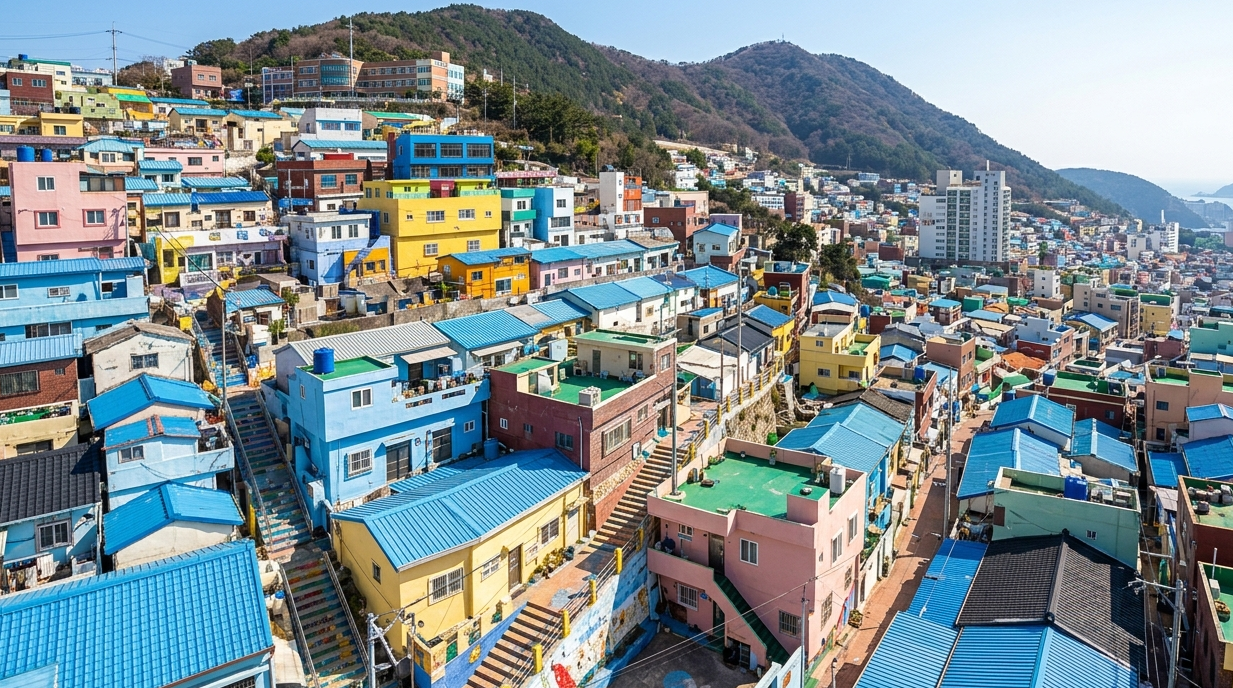
A hillside village painted in bright colors, often called “Korea’s Santorini.” Originally a refugee settlement, it’s now an art village filled with murals, sculptures, and small galleries. Very photogenic, but expect crowds.
Must-See Attractions
Beaches
- Haeundae Beach — The most famous beach in Korea. Wide sandy shore, clear water, surrounded by skyscrapers
- Gwangalli Beach — Best for nighttime views of the illuminated Gwangan Bridge
- Songjeong Beach — Smaller, quieter, popular with surfers and locals
Nature and Views
- Taejongdae — A dramatic clifftop park with ocean views, a lighthouse, and coastal trails
- Oryukdo Skywalk — A glass-bottomed walkway extending over the sea. Not for those afraid of heights
- Igidae Coastal Walk — A scenic trail with ocean views, connecting to Oryukdo
- Huinnyeoul Culture Village — A quiet seaside village with ocean views, cafes, and art
Culture and History
- Gamcheon Culture Village — Colorful hillside village with art installations and narrow alleys
- Haedong Yonggungsa Temple — A stunning Buddhist temple built on the cliffs overlooking the sea
- Beomeosa Temple — A traditional mountain temple, peaceful and less crowded than Yonggungsa
Markets
- Jagalchi Market — Korea’s largest seafood market. Buy fresh fish and have it prepared on the spot
- Gukje Market — A traditional market selling everything from clothes to street food
- Bupyeong Kkangtong Market — Known for its night market atmosphere with food stalls
Food You Must Try
Busan’s food scene is heavily focused on seafood, but there’s much more to discover.
Seafood
- Hoe (회, Raw Fish) — Freshly sliced sashimi, best enjoyed at Jagalchi Market
- Jogae-gui (조개구이, Grilled Shellfish) — Various shellfish grilled at your table. Gijang area is famous for this
- Kkkomjangeo (꼼장어, Hagfish) — A Busan specialty. Chewy, unique texture. Available grilled with salt or stir-fried in spicy sauce
Busan Signature Dishes
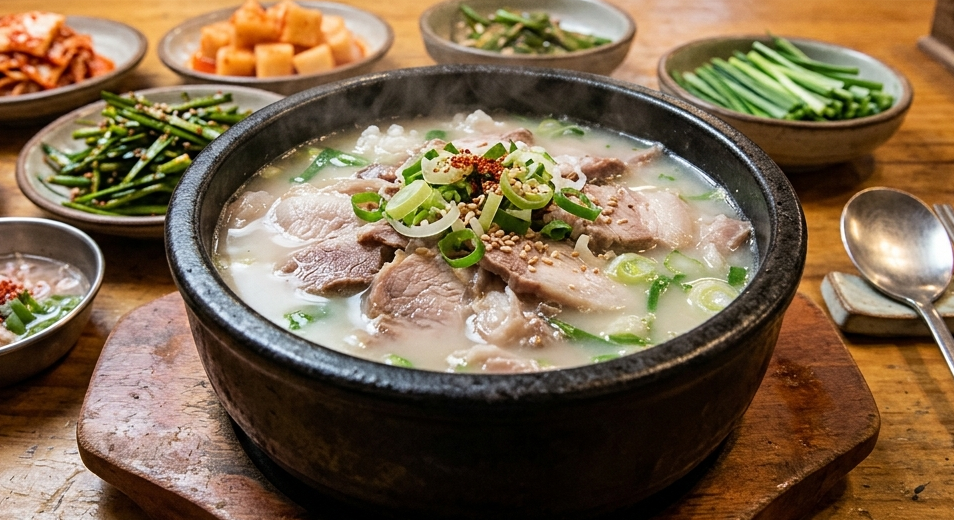
- Dwaeji-gukbap (돼지국밥) — Pork soup with rice. Busan’s soul food. Rich, hearty, and comforting. A must-try
- Milmyeon (밀면) — Busan-style cold noodles. Similar to naengmyeon but made with wheat flour, slightly chewy
- Ssiat Hotteok (씨앗호떡) — Busan-style hotteok filled with seeds and nuts instead of just sugar
- Bibim-dangmyeon (비빔당면) — Spicy mixed glass noodles, a Nampo-dong specialty
- Eomuk (어묵, Fish Cake) — Busan is famous for fish cakes. Try them fresh at a market, served with warm broth
Where to Eat
Jagalchi Market is the place for seafood — you can pick live fish and have it prepared immediately. For dwaeji-gukbap, look for old, no-frills restaurants near Seomyeon. For street food, explore BIFF Square and Gukje Market.
Getting to Busan
From Seoul
| Option | Time | Notes |
|---|---|---|
| KTX (High-speed train) | ~2.5 hours | Fastest and most popular option. Seoul Station to Busan Station |
| Express Bus | ~4-5 hours | Cheaper but slower. Multiple departures daily |
| Domestic Flight | ~1 hour | Gimpo to Gimhae Airport. Quick but requires airport time |
The KTX is the best option for most travelers — fast, comfortable, and scenic.
Gimhae International Airport
Busan has its own international airport with flights from many Asian cities. From the airport, take the light rail to connect to Busan’s subway system.
Getting Around Busan
Busan has excellent public transportation.
Subway
The subway connects most major tourist areas — Haeundae, Gwangalli, Seomyeon, Nampo-dong, and Busan Station. Clean, efficient, and easy to navigate with English signs.
Bus
Buses reach places the subway doesn’t, like Gamcheon Culture Village and Haedong Yonggungsa Temple. Use Kakao Map or Naver Map to plan bus routes.
Taxi
Taxis in Busan are affordable, often cheaper than Seoul. Useful for areas that aren’t subway-accessible.
T-Money Card
Your T-Money card from Seoul works in Busan too. Use it for subway, buses, and even some taxis.
On Foot
The beach areas — Haeundae and Gwangalli — are very walkable. You can easily spend a day exploring on foot.
How Many Days in Busan?
| Duration | What You Can Do |
|---|---|
| 1 Day | Quick highlights: one beach, Jagalchi Market, a meal or two. Rushed but possible |
| 2 Days | A proper visit: beaches, Gamcheon Village, major food experiences, Gwangalli night view |
| 3-4 Days | Relaxed pace: everything above plus Taejongdae, temples, local neighborhoods, more food exploration |
I recommend at least 2 nights to experience Busan properly. Three nights is ideal if you want to relax and not rush.
Sample Itineraries
2-Day Itinerary
| Day | Itinerary |
|---|---|
| Day 1 | Haeundae Beach → Haedong Yonggungsa Temple → Dinner at Haeundae → Gwangalli Bridge night view |
| Day 2 | Gamcheon Culture Village → Jagalchi Market (lunch) → Nampo-dong / BIFF Square → Seomyeon (evening) |
3-Day Itinerary
| Day | Itinerary |
|---|---|
| Day 1 | Haeundae Beach → Haedong Yonggungsa → Gwangalli night view |
| Day 2 | Gamcheon Culture Village → Nampo-dong → Jagalchi Market → BIFF Square street food |
| Day 3 | Taejongdae → Huinnyeoul Culture Village → Seomyeon shopping/dining → Dwaeji-gukbap dinner |
Tips for Visitors
Beat the Crowds
Summer (July-August) is peak season. Beaches are packed, accommodations are expensive, and everything is crowded. Spring and fall offer better weather with fewer tourists.
Book Accommodations Early
Hotels near Haeundae and Gwangalli fill up fast, especially on weekends. Book in advance for better rates and locations.
Embrace the Dialect
Busan has a distinct accent — the Gyeongsang dialect. It’s stronger and more direct than standard Korean. Locals are proud of it, and hearing it everywhere adds to the experience.
Seafood is Freshest at the Market
Jagalchi Market is the place for fresh seafood. Pick your fish, and the vendors will prepare it right there. It’s an experience as much as a meal.
Watch the Sunset at Gwangalli
The Gwangan Bridge lights up at night in changing colors. Find a cafe or spot on the beach, grab a drink, and enjoy the view.
My Busan Story
A while ago, my wife and I took a 2-night, 3-day trip to Busan together. We ate so many famous foods during that trip — fresh seafood, street snacks, all the local specialties. But the dish I still think about? Dwaeji-gukbap.
Dwaeji-gukbap is pork soup with rice — it sounds simple, but in Busan, it’s something special. The broth is rich and milky, the pork is tender, and you customize it with salted shrimp, green onions, and chili flakes. We had it at an old, humble restaurant, the kind with no frills, just good food. Even now, when my wife and I talk about our next trip to Busan, we always say the same thing: “We have to go back for that dwaeji-gukbap.”
Another unforgettable dish was kkkomjangeo — hagfish. We had it at Jagalchi Market, stir-fried in spicy sauce. You could choose between salt-grilled or spicy; we went with spicy. My wife wasn’t a fan, but I loved it. The texture was unlike anything I’d tried before — chewy and rich, coated in that sweet-spicy sauce. It was adventurous eating, and I’d absolutely order it again.
The eomuk (fish cakes) were delicious too, but what really made the trip memorable was the atmosphere. Everyone in Busan speaks the Gyeongsang dialect — that strong, distinctive accent you hear in Korean dramas and movies. Walking through the markets, hearing that dialect everywhere, I felt like I’d stepped into the movie “Ode to My Father” (국제시장), which is actually set in Busan and tells the story of modern Korean history through one man’s life. If you haven’t seen it, I highly recommend watching it before your trip — it’ll give you a deeper appreciation for the city.
That’s what I love about Busan. It’s not just a beach destination. It has its own food, its own language, its own culture. And once you’ve been, you’ll understand why Koreans talk about Busan with such affection.
Final Thoughts
Busan offers something Seoul simply can’t — ocean air, fresh seafood, and a slower pace of life.
It’s close enough to visit on a short trip but different enough to feel like a real escape. Whether you’re watching the sunset over Gwangalli Bridge, eating raw fish at Jagalchi Market, or getting lost in the colorful alleys of Gamcheon Village, Busan has a way of making you fall in love with it.
If Seoul is Korea’s head, Busan is its heart — warm, open, and always ready to welcome you.