
Introduction
You don’t need to be fluent in Korean to travel in Korea.
English signs are common in tourist areas, many restaurants have picture menus, and translation apps can get you through most situations. You can absolutely have a great trip without speaking a word of Korean.
But here’s the thing — learning even a few basic phrases makes everything better.
Koreans genuinely appreciate it when foreigners try to speak their language. A simple “thank you” in Korean can turn a routine interaction into a warm exchange. It shows respect for the culture and opens doors that staying in English keeps closed.
In this guide, I’ll share the essential Korean phrases every traveler should know — greetings, dining, shopping, transportation, and more. You don’t need to memorize everything, but even a handful of these will make your trip more enjoyable.
Why Learn Basic Korean?
Koreans Love It
When a foreigner speaks Korean — even just a few words — Koreans react positively. It’s seen as a sign of respect and genuine interest in the culture. You’ll notice people become friendlier and more willing to help.
It’s Practical
Not everywhere has English menus or English-speaking staff. Local restaurants, traditional markets, and smaller shops often operate entirely in Korean. Knowing basic phrases helps you navigate these situations.
It Enhances the Experience
Travel is about connection. Speaking even a little Korean lets you interact with locals in a more meaningful way. It transforms you from a tourist into a traveler who’s making an effort.
It’s Easier Than You Think
Korean grammar is complex, but basic phrases are simple to learn and pronounce. You can memorize the essentials in an afternoon.
Korean Alphabet Basics
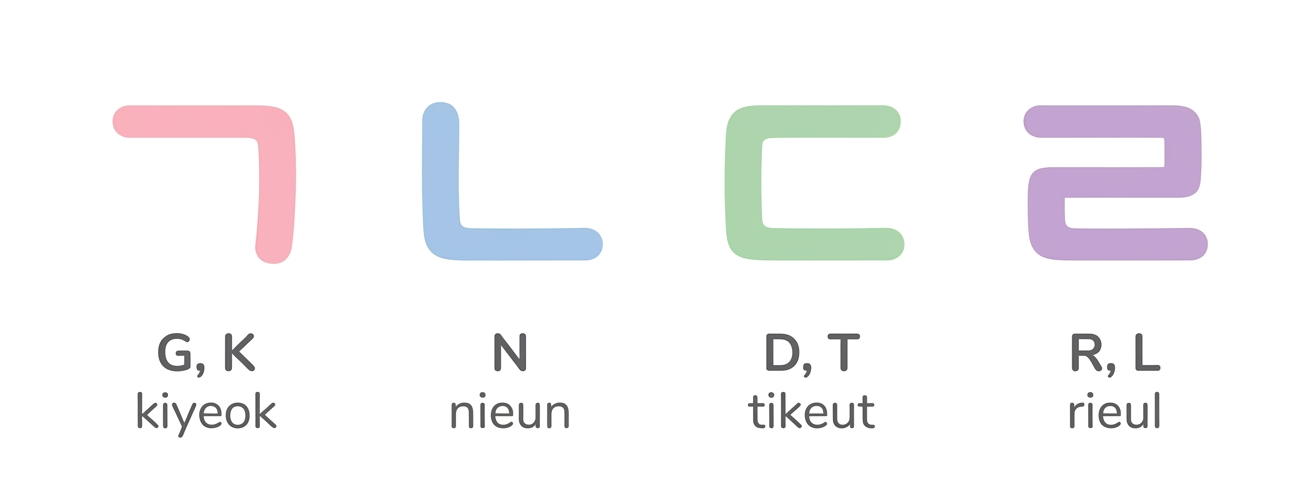
Korean uses its own alphabet called Hangul (한글). Unlike Chinese or Japanese, Hangul is phonetic — each symbol represents a sound, not a meaning.
The good news? Hangul was designed to be easy to learn. It has 14 basic consonants and 10 basic vowels. Many people can learn to read it in just a few hours.
Being able to read Hangul helps you:
- Read restaurant menus
- Understand subway station names
- Navigate signs that don’t have English
You don’t need to master it before your trip, but spending an hour learning the basics can be surprisingly useful.
Essential Greetings
Start with these. They’re the foundation of polite interaction.
| Korean | Pronunciation | Meaning |
|---|---|---|
| 안녕하세요 | Annyeonghaseyo | Hello |
| 감사합니다 | Gamsahamnida | Thank you |
| 네 | Ne | Yes |
| 아니요 | Aniyo | No |
| 죄송합니다 | Joesonghamnida | I’m sorry |
| 괜찮아요 | Gwaenchanayo | It’s okay / No problem |
| 안녕히 가세요 | Annyeonghi gaseyo | Goodbye (to someone leaving) |
| 안녕히 계세요 | Annyeonghi gyeseyo | Goodbye (when you’re leaving) |
Tip: “안녕하세요” and “감사합니다” are the two most important phrases. Use them constantly — when entering shops, after receiving help, when leaving restaurants. Koreans will appreciate it every time.
Dining Phrases
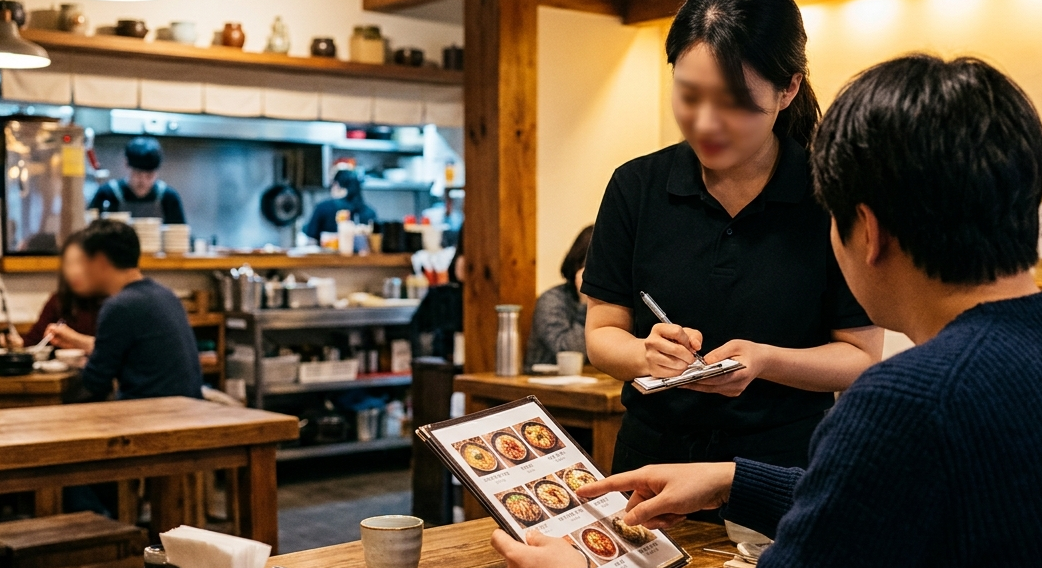
These phrases will help you at restaurants, cafes, and street food stalls.
| Korean | Pronunciation | Meaning |
|---|---|---|
| 여기요! | Yogiyo! | Excuse me! (to call staff) |
| 메뉴 주세요 | Menyu juseyo | Menu, please |
| 이거 주세요 | Igeo juseyo | This one, please |
| 물 주세요 | Mul juseyo | Water, please |
| 맛있어요 | Mashisseoyo | It’s delicious |
| 계산이요 | Gyesaniyo | Check, please |
| 매워요? | Maewoyo? | Is it spicy? |
| 안 맵게 해주세요 | An maepge haejuseyo | Not spicy, please |
| 하나 더 주세요 | Hana deo juseyo | One more, please |
Tip: “여기요!” is essential. In Korean restaurants, you call the staff by saying this loudly — it’s not rude, it’s expected. Don’t wait quietly for someone to notice you.
Before and After Eating
| Korean | Pronunciation | Meaning |
|---|---|---|
| 잘 먹겠습니다 | Jal meokgesseumnida | I will eat well (before eating) |
| 잘 먹었습니다 | Jal meogeosseumnida | I ate well (after eating) |
These phrases show appreciation for the food. Saying them to restaurant staff or the cook is a nice touch.
Shopping Phrases
Useful at markets, convenience stores, and shops.
| Korean | Pronunciation | Meaning |
|---|---|---|
| 얼마예요? | Eolmayeyo? | How much is it? |
| 너무 비싸요 | Neomu bissayo | Too expensive |
| 깎아 주세요 | Kkakka juseyo | Please give me a discount |
| 카드 돼요? | Kadeu dwaeyo? | Can I pay by card? |
| 현금만요 | Hyeongeummanyo | Cash only |
| 영수증 주세요 | Yeongsujeung juseyo | Receipt, please |
| 봉투 필요 없어요 | Bongtu pillyo eopseoyo | I don’t need a bag |
Tip: “깎아 주세요” (please give me a discount) works at traditional markets but not at regular stores or franchises. At markets, bargaining is part of the culture.
Transportation Phrases
For taxis, subways, and asking directions.
| Korean | Pronunciation | Meaning |
|---|---|---|
| 여기 가주세요 | Yeogi gajuseyo | Please go here (show address) |
| 여기서 내려주세요 | Yeogiseo naeryeojuseyo | Please let me off here |
| 지하철역 어디예요? | Jihacheolyeok eodiyeyo? | Where is the subway station? |
| 얼마나 걸려요? | Eolmana geollyeoyo? | How long does it take? |
| 직진 | Jikjin | Straight |
| 왼쪽 | Oenjjok | Left |
| 오른쪽 | Oreunjjok | Right |
Tip: For taxis, having your destination written in Korean or showing it on your phone is very helpful. Just say “여기 가주세요” and show the screen.
Emergency and Help Phrases
Hopefully you won’t need these, but good to know.
| Korean | Pronunciation | Meaning |
|---|---|---|
| 도와주세요 | Dowajuseyo | Please help me |
| 화장실 어디예요? | Hwajangsil eodiyeyo? | Where is the bathroom? |
| 영어 하세요? | Yeongeo haseyo? | Do you speak English? |
| 못 알아들어요 | Mot aradeureoyo | I don’t understand |
| 천천히 말해주세요 | Cheoncheonhi malhaejuseyo | Please speak slowly |
| 경찰 | Gyeongchal | Police |
| 병원 | Byeongwon | Hospital |
Polite Expressions
These phrases show extra politeness and cultural awareness.
| Korean | Pronunciation | Meaning |
|---|---|---|
| 잠시만요 | Jamsimanyo | Just a moment |
| 실례합니다 | Sillyehamnida | Excuse me (polite) |
| 수고하세요 | Sugohaseyo | Thank you for your hard work |
Tip: “수고하세요” is a uniquely Korean expression. You can say it to delivery drivers, convenience store workers, or anyone providing a service. It’s a kind acknowledgment of their effort.
Basic Numbers
Korean has two number systems. Here are the basics you’ll need for prices and counting.
Sino-Korean Numbers (for prices, phone numbers, addresses)
| Number | Korean | Pronunciation |
|---|---|---|
| 1 | 일 | Il |
| 2 | 이 | I |
| 3 | 삼 | Sam |
| 4 | 사 | Sa |
| 5 | 오 | O |
| 10 | 십 | Sip |
| 100 | 백 | Baek |
| 1,000 | 천 | Cheon |
| 10,000 | 만 | Man |
Example: 15,000 won = 만 오천 원 (man ocheon won)
Native Korean Numbers (for counting items)
| Number | Korean | Pronunciation |
|---|---|---|
| 1 | 하나 | Hana |
| 2 | 둘 | Dul |
| 3 | 셋 | Set |
| 4 | 넷 | Net |
| 5 | 다섯 | Daseot |
Example: Two coffees = 커피 두 잔 (keopi du jan)
Pronunciation Tips
Korean pronunciation isn’t too difficult, but here are some things to know.
The “ㅇ” Sound
At the beginning of a syllable, ㅇ is silent. At the end, it makes an “ng” sound.
The “ㄹ” Sound
It’s between an “r” and an “l” — not quite either one. Practice saying it softly.
Double Consonants
Letters like ㄲ, ㄸ, ㅃ, ㅆ, ㅉ are pronounced with more tension and force than their single versions.
Don’t Worry About Perfection
Your pronunciation doesn’t need to be perfect. Koreans will understand you’re trying, and they’ll appreciate the effort. Context helps a lot.
Useful Apps and Tools
These apps will help you communicate when your Korean isn’t enough.
Papago (Naver Translate)
The best translator for Korean. More accurate than Google Translate for Korean-English. Use the conversation mode for real-time translation.
Kakao Map / Naver Map
Essential for navigation. Google Maps doesn’t work well in Korea. These apps show bus routes, subway lines, and walking directions.
ChatGPT
Great for quick translations and explanations. You can ask it to translate phrases, explain grammar, or even practice conversations.

My Advice for Travelers
Here’s something I’ve noticed: when foreigners try to speak Korean in Korea, locals genuinely appreciate it.
It’s not about being fluent. It’s about showing that you care enough to learn a few words. When a traveler asks for directions in Korean, or says “감사합니다” with a smile, Koreans see it as a sign of respect. You’re not just visiting — you’re trying to understand the culture and language. That means a lot.
So if you’re planning a trip to Korea, I really recommend learning at least a few basic phrases before you arrive.
But here’s the funny thing — you might learn how to ask a question in Korean, but when a Korean person answers you… you probably won’t understand a word they’re saying!
This happens all the time. You confidently ask “화장실 어디예요?” and suddenly get a rapid-fire response full of words you’ve never heard. Don’t panic. This is normal.
My tip? Always have a translation app ready. Papago is excellent for Korean, and these days ChatGPT works really well too. When someone answers you in Korean, you can quickly use the app to translate what they said. Some apps even have real-time conversation modes that can translate speech.
So learn the phrases, use them confidently, and keep your phone ready for the response. It’s the perfect combination.
Final Thoughts
You don’t need to speak Korean to enjoy Korea. But knowing a few phrases transforms your experience.
It turns transactions into interactions. It makes locals smile. It opens up the authentic, local side of Korea that staying in English keeps hidden.
Start with the basics: “안녕하세요,” “감사합니다,” “이거 주세요.” Practice them before your trip. Use them constantly when you arrive.
Koreans don’t expect perfection. They just appreciate the effort. And that effort — those few words of Korean — will make your trip more memorable than you might expect.