
Introduction
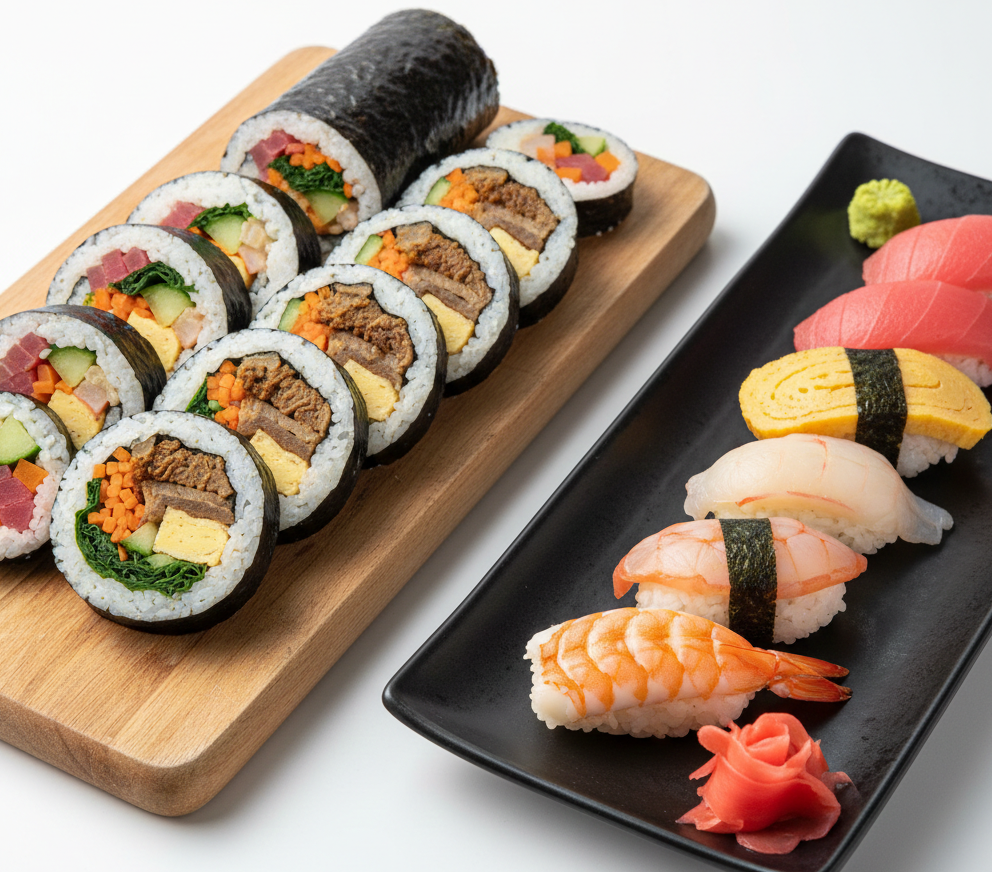
If you’ve ever seen Korean gimbap for the first time, you probably thought: “That looks like sushi.”
It’s one of the most common misconceptions about Korean food. Gimbap and sushi may look similar — both involve rice and seaweed — but they’re completely different foods with different flavors, ingredients, and cultural meanings.
In this guide, I’ll break down exactly what makes gimbap and sushi different, explain the various types of gimbap you can find in Korea, and share why this humble rice roll holds such a special place in Korean hearts.
What is Gimbap?
Gimbap (김밥) literally means “seaweed rice” — “gim” (김) is dried seaweed, and “bap” (밥) is rice. It’s a Korean dish made by rolling rice and various fillings in a sheet of dried seaweed, then slicing it into bite-sized pieces.
The rice is seasoned with sesame oil and salt, giving it a subtle nutty flavor. Inside, you’ll find a colorful combination of ingredients: yellow pickled radish (danmuji), ham or spam, egg omelette, spinach, carrots, and sometimes burdock root (우엉).
Gimbap is everyday food in Korea. It’s eaten as a quick lunch, a snack, a picnic staple, or a late-night bite. It’s affordable, filling, and available almost everywhere — from small street stalls to convenience stores.
What is Sushi?
Sushi (寿司) is a traditional Japanese dish centered around vinegared rice. The rice is seasoned with rice vinegar, sugar, and salt, giving it a distinctly tangy flavor.
The most well-known form is nigiri — a slice of raw fish placed on top of a small mound of rice. Another popular form is maki — rice and fillings rolled in seaweed, similar in appearance to gimbap.
Sushi typically features raw fish as the main ingredient, such as salmon, tuna, or shrimp. It’s served with soy sauce, wasabi, and pickled ginger. In Japan, sushi is considered a refined cuisine, often associated with skilled craftsmanship and special occasions.
Key Differences
Here’s where gimbap and sushi clearly part ways.
Rice Seasoning
This is the biggest difference. Gimbap rice is seasoned with sesame oil and salt, giving it a savory, nutty taste. Sushi rice is seasoned with vinegar, sugar, and salt, creating a tangy, slightly sweet flavor.
If you taste both side by side, you’ll notice the difference immediately.
Main Ingredients
Sushi traditionally features raw fish as the star. Gimbap almost never uses raw fish. Instead, it’s filled with cooked ingredients — ham, egg, processed crab meat, cooked vegetables, and pickled radish.
How It’s Eaten
Sushi is typically dipped in soy sauce and eaten with wasabi. Gimbap is usually eaten plain, without any dipping sauce. The sesame oil in the rice provides enough flavor on its own.
Price
Gimbap is a budget-friendly food. A roll costs around 2,000-4,000 won ($1.50-3 USD). Sushi, especially quality nigiri, is significantly more expensive.
Cultural Role
In Japan, sushi is often seen as special-occasion food — something you might eat at a nice restaurant to celebrate. In Korea, gimbap is the opposite — it’s humble, everyday food. It’s what moms pack for school picnics, what students grab between classes, what office workers eat for a quick lunch.
Types of Gimbap
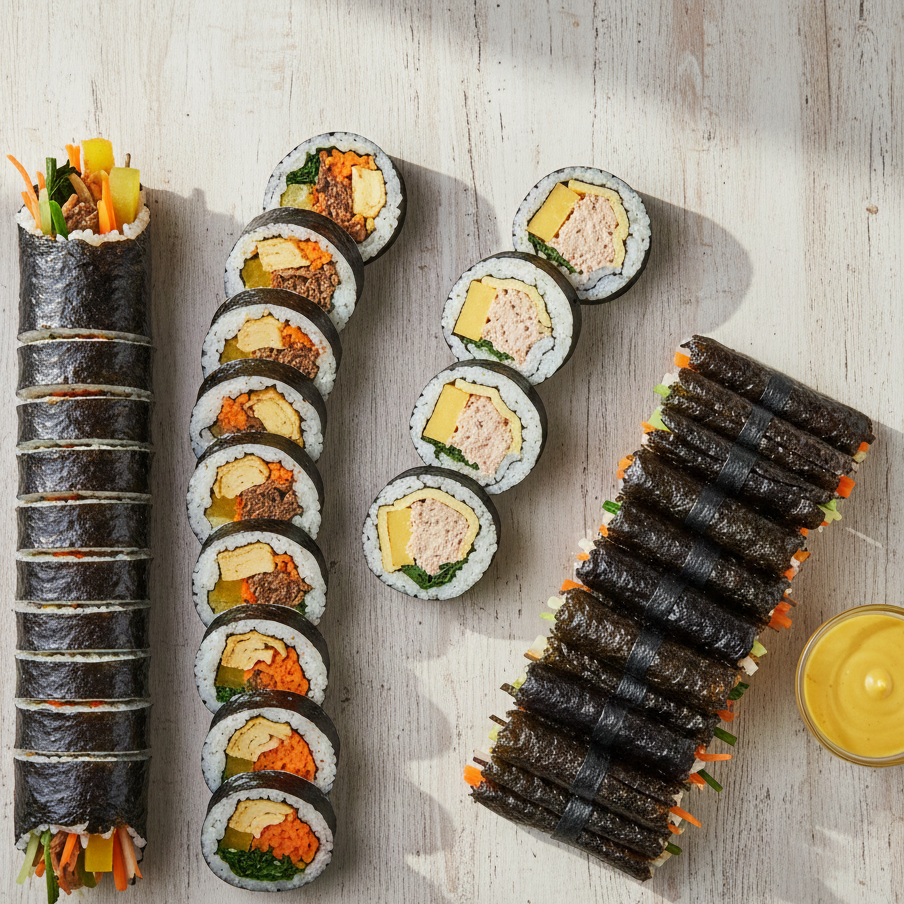
Gimbap has evolved into many variations. Here are the most popular types you’ll find in Korea.
Classic Gimbap (일반 김밥)
The original version with standard fillings: pickled radish, ham, egg, spinach, carrots, and burdock root. This is what most people think of when they hear “gimbap.”
Tuna Gimbap (참치 김밥)
Filled with tuna mixed with mayonnaise. It’s creamy, savory, and one of the most popular variations.
Beef Gimbap (소고기 김밥)
Features marinated beef bulgogi as the main filling. Heartier and more flavorful than the classic version.
Cheese Gimbap (치즈 김밥)
Classic gimbap with melted cheese added. Popular with kids and anyone who loves cheese.
Nude Gimbap (누드 김밥)
An inside-out roll where the rice is on the outside and seaweed is on the inside. Sometimes topped with fish roe or sesame seeds.
Mini Gimbap / Mayak Gimbap (꼬마 김밥 / 마약김밥)
Tiny, bite-sized rolls with minimal filling — often just pickled radish and carrots. Served with a sweet mustard dipping sauce. “Mayak” means “drug” because they’re supposedly addictive.
Chungmu Gimbap (충무김밥)
A regional specialty from the coastal city of Chungmu. The rolls contain only rice (no fillings inside) and are served with spicy squid salad and radish kimchi on the side.
Where to Eat Gimbap
Gimbap is everywhere in Korea. Here’s where to find it.
Bunsik Restaurants (분식집)
Casual Korean eateries that serve affordable comfort food. Gimbap is always on the menu, along with tteokbokki, ramyeon, and dumplings. This is the most common place to eat gimbap.
Gimbap Chains
Franchises like Gimbap Cheonguk (김밥천국) and Bareuda Gimseongsaeng (바르다김선생) specialize in gimbap with consistent quality and low prices. You’ll find them in almost every neighborhood.
Convenience Stores
Pre-made gimbap rolls and triangle gimbap (삼각김밥) are available at every Korean convenience store. They’re cheap, quick, and surprisingly good for grab-and-go meals.
Traditional Markets
Many markets have vendors selling freshly made gimbap. It’s often made right in front of you and tastes best when eaten immediately.
Homemade
Many Korean families make gimbap at home, especially for picnics, school events, or family outings. Homemade gimbap is a labor of love — and every family has their own version.
How to Eat Gimbap
Gimbap is simple, but there are a few things to know.
Usually No Dipping Sauce
Unlike sushi, gimbap is typically eaten plain. The sesame oil and salt in the rice provide enough flavor. Some restaurants may offer pickled radish (단무지) on the side as a palate cleanser.
The Tteokbokki Combo
At bunsik restaurants, a popular move is to dip gimbap slices into tteokbokki sauce. The sweet-spicy sauce adds an extra layer of flavor. It’s not traditional, but it’s delicious.
With Ramyeon
Gimbap and instant ramyeon are a classic Korean combo. The savory gimbap balances the spicy soup perfectly. Many Koreans eat this as a quick, satisfying meal.
Eat It Fresh
Gimbap is best eaten within a few hours of being made. The rice dries out over time, and the seaweed loses its texture. If you’re buying from a convenience store, check the expiration time.
Common Misconceptions
Let’s clear up some confusion.
“Gimbap is Korean sushi”
No. They look similar, but they’re different foods with different ingredients, flavors, and cultural contexts. Calling gimbap “Korean sushi” is like calling a taco a “Mexican sandwich.”
“Gimbap has raw fish”
Almost never. Traditional gimbap uses cooked ingredients only. Some modern fusion versions might include raw fish, but that’s the exception, not the rule.
“Sushi is better than gimbap”
This isn’t about better or worse — they’re completely different foods serving different purposes. Sushi is refined and often expensive. Gimbap is casual and affordable. Both are delicious in their own way.
My Gimbap Story
For me, gimbap brings back memories of elementary school picnics.
Whenever our school had a field trip, my mom would wake up early in the morning to make gimbap. I’d be still half-asleep, but I could hear her in the kitchen — the sound of rice being spread on seaweed, vegetables being sliced, everything being rolled up carefully.
Looking back now, I realize how much work goes into making gimbap. You have to prepare so many ingredients separately, then assemble everything by hand. She must have woken up incredibly early just to make sure I had a homemade lunch to bring to school.
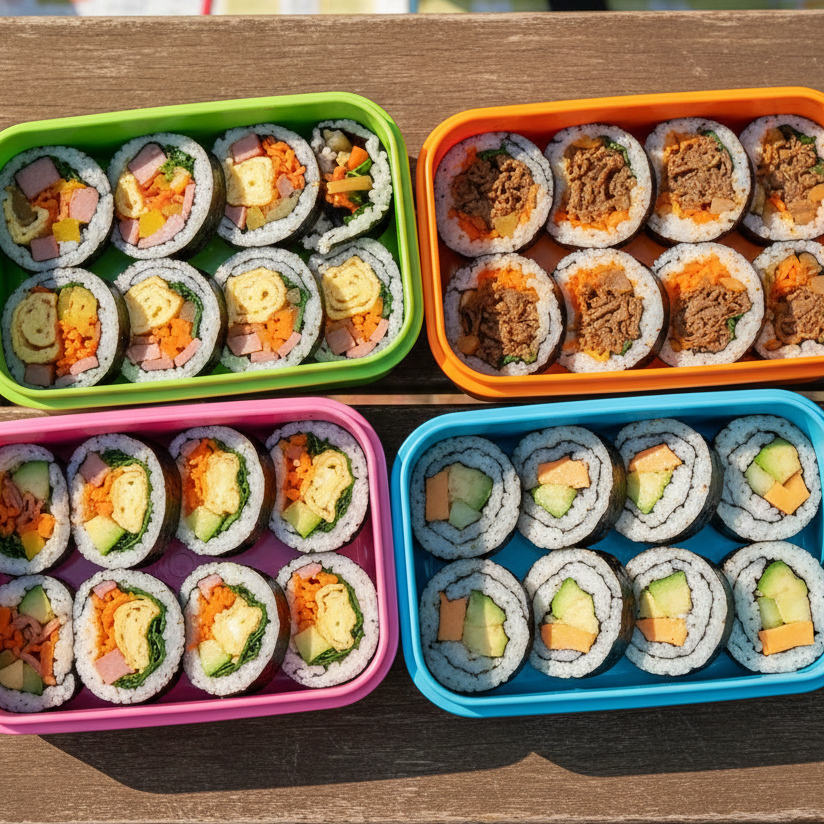
At the picnic, all the kids would gather on benches and open our lunch boxes. And every single one of us had gimbap — because that’s what Korean moms make for picnics. It’s practically a rule.
But here’s the fun part: everyone’s gimbap tasted different.
Some moms added bulgogi. Some used fish cake. Some made theirs with extra egg, others with more vegetables. Each family had their own recipe and their own way of making it. So we’d all share slices with each other, tasting the different versions and comparing whose mom made it best.
That memory — sitting on a bench with friends, trading pieces of gimbap, discovering that each roll was a little bit different — that’s what gimbap means to me. It’s not just food. It’s childhood, it’s sharing, and it’s a mother’s love wrapped in seaweed.
Final Thoughts
Gimbap and sushi may look alike, but they come from different places, taste completely different, and carry different meanings in their cultures.
Sushi is an art form — refined, delicate, and often expensive. Gimbap is everyday love — humble, affordable, and made for sharing.
If you visit Korea, don’t think of gimbap as “Korean sushi.” Think of it as something completely its own. Grab a roll from a bunsik restaurant, pair it with some tteokbokki, and enjoy one of Korea’s most beloved comfort foods.
And if you’re lucky enough to try homemade gimbap from a Korean mom? That’s the real treasure.