
Introduction
If someone asked me to recommend just one place to experience Korean food culture in Seoul, I’d say Gwangjang Market.
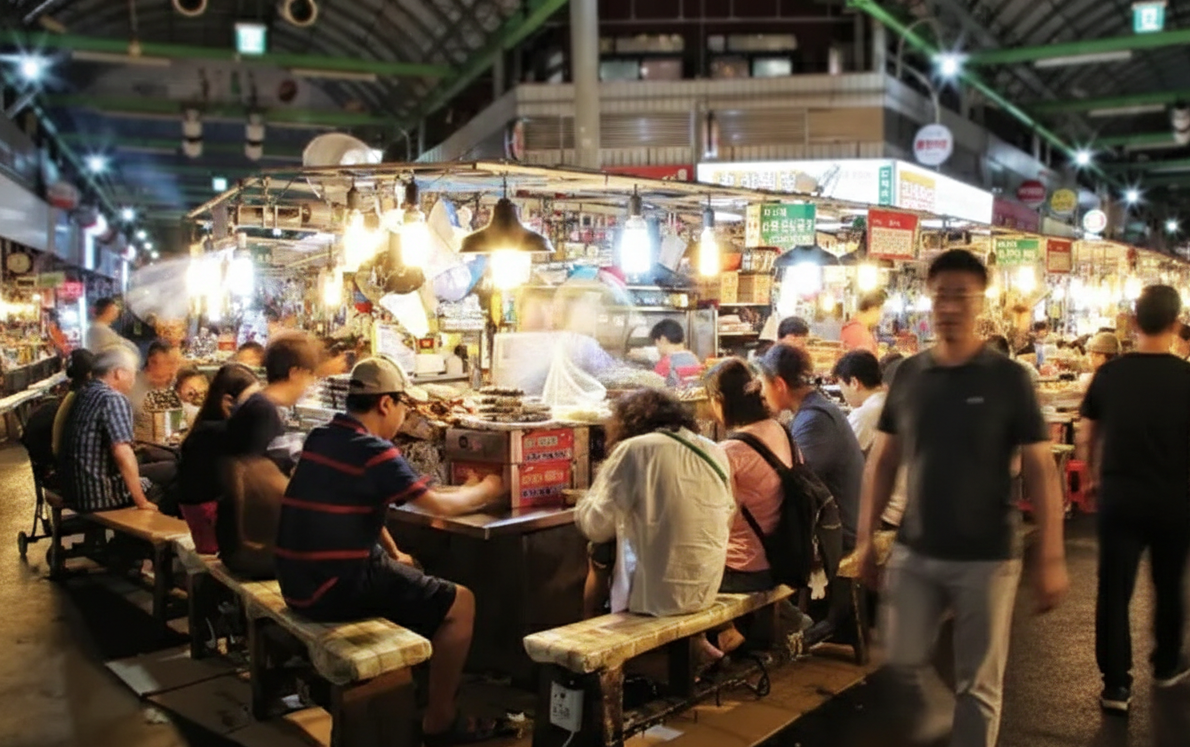
It’s loud, crowded, and chaotic — and that’s exactly what makes it special. Vendors shout orders across steaming griddles, strangers share tiny tables, and the smell of sizzling pancakes and fresh noodles fills every corner.
Gwangjang Market isn’t a tourist attraction dressed up to look traditional. It’s a real, working market where Koreans have been eating, shopping, and gathering for over a century.
In this guide, I’ll walk you through the must-try foods, how to navigate the market like a local, and share a few honest tips — including what I think is worth your time and what isn’t.
A Brief History of Gwangjang Market
Gwangjang Market (광장시장) opened in 1905, making it one of Korea’s oldest continuously operating traditional markets. It was originally established as a textile and fabric market, and to this day, the upper floors are still filled with shops selling hanbok fabric, silk, and vintage clothing.
The food alley — the part most visitors know — developed over decades as vendors set up stalls to feed the merchants and shoppers. Over time, the food became the main attraction.
In recent years, Gwangjang Market gained international fame through Netflix shows and travel programs. It’s now one of the most-visited food destinations in Seoul, drawing both Korean locals and tourists from around the world.
Must-Try Foods
The market has hundreds of food stalls, but these are the dishes that define Gwangjang Market.
Bindaetteok (빈대떡) — Mung Bean Pancake
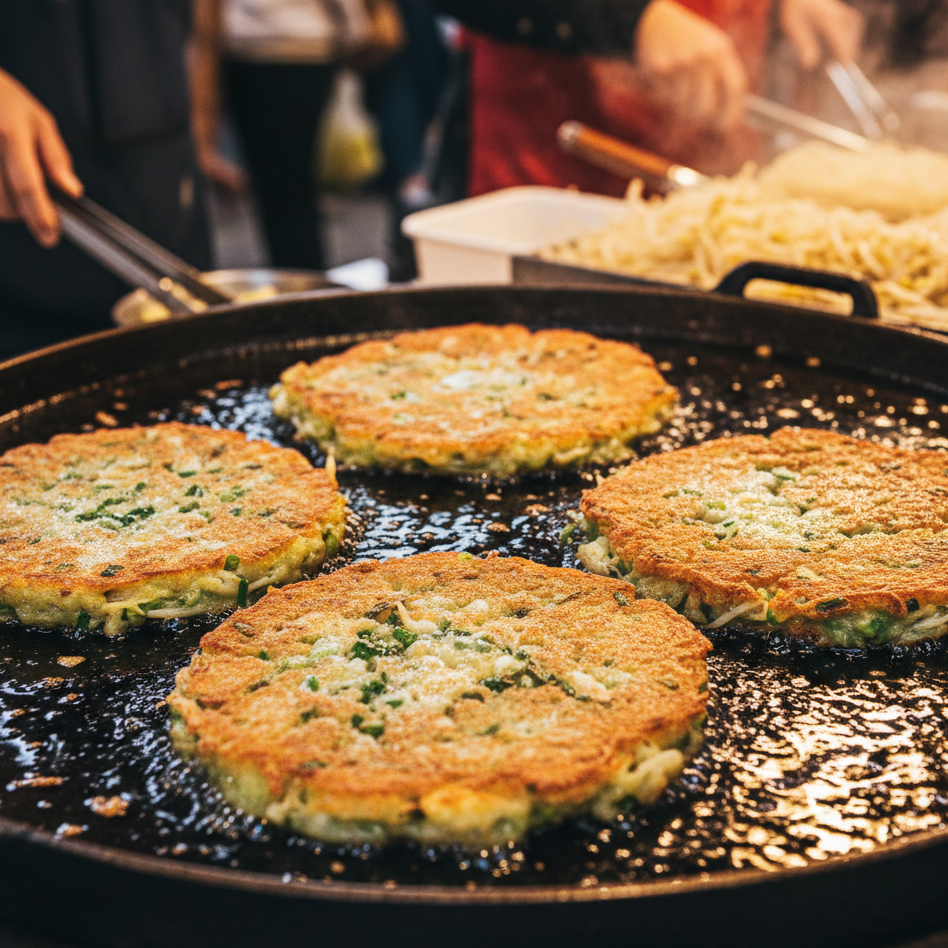
This is the signature dish of Gwangjang Market. Bindaetteok is a thick, savory pancake made from ground mung beans mixed with vegetables, kimchi, and sometimes pork. It’s cooked on a large iron griddle right in front of you, pressed flat and fried until the outside is golden and crispy.
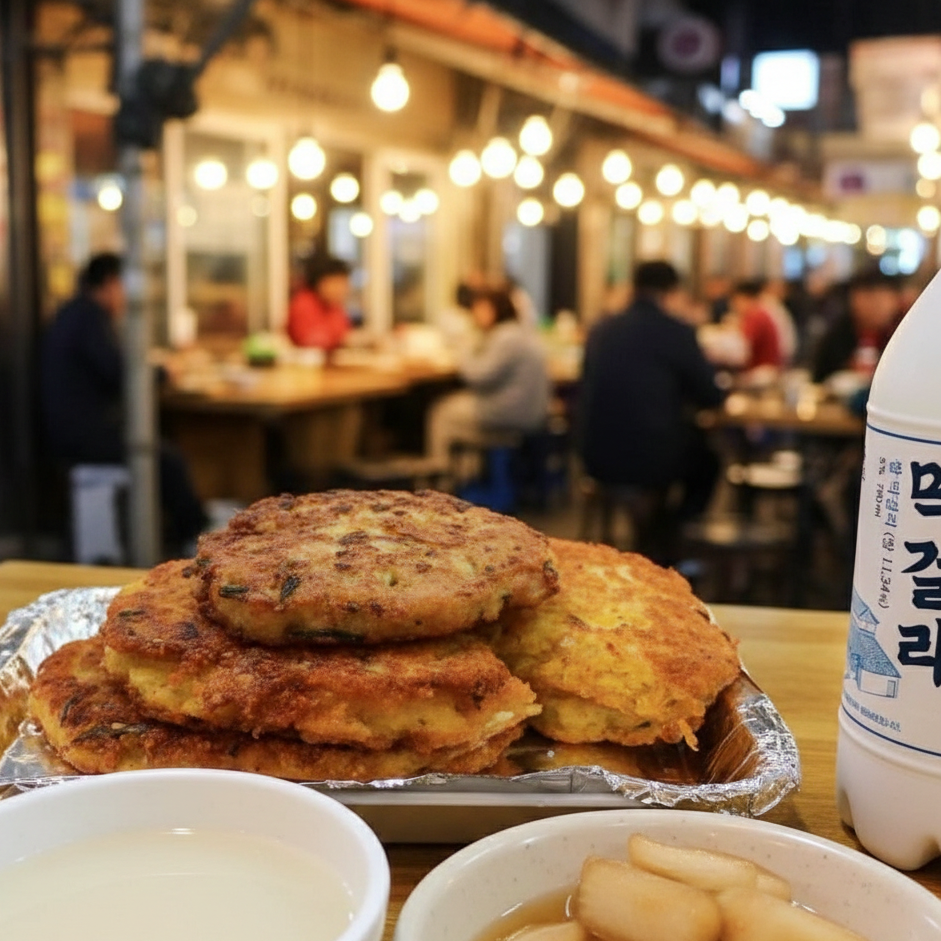
The best bindaetteok has a crunchy exterior with a soft, flavorful inside. It’s served with a small dish of soy sauce and pickled onions on the side. Many people pair it with makgeolli (Korean rice wine) — a combination that has been a Gwangjang Market tradition for decades.
Mayak Gimbap (마약김밥) — “Addictive” Mini Kimbap
These tiny, bite-sized rolls of rice wrapped in seaweed are called “mayak” (meaning “drug”) because they’re supposedly addictive. They come with a sweet mustard dipping sauce. The name has made them famous, and the lines for mayak gimbap are often the longest in the market.
Yukhoe (육회) — Korean Beef Tartare
Raw beef seasoned with sesame oil, garlic, and soy sauce, served with sliced Asian pear and a raw egg yolk on top. It might sound intimidating if you’ve never tried raw meat, but yukhoe is fresh, delicate, and surprisingly light. Gwangjang Market is one of the best places in Seoul to try it.
Kalguksu & Bibim Naengmyeon (칼국수 & 비빔냉면) — Noodle Dishes
Kalguksu is hand-cut noodle soup in a rich, milky broth. Bibim naengmyeon is cold noodles mixed with spicy sauce — perfect for summer. Both are made fresh and served in generous portions.
Tteokbokki & Sundae (떡볶이 & 순대)
Spicy rice cakes and Korean blood sausage are market staples. You’ll find plenty of stalls selling both, often as a combo plate.
Nokdu Jeon (녹두전) — Mung Bean Jeon
Similar to bindaetteok but often thinner and served in different variations. Some stalls add seafood or kimchi for extra flavor.
How to Navigate the Market
Gwangjang Market can feel overwhelming on your first visit. Here’s how to find your way around.
Where to go
The main food alley runs through the center of the market. Enter from the Jongno 5-ga station side (Exit 8), and you’ll walk straight into the heart of the food stalls. The east side of the market is where most of the famous food vendors are concentrated.
How to order
Just sit down at any open seat and point at what you want. Most stalls have picture menus or display their food openly. Some vendors speak basic English, but pointing and gestures work perfectly fine.
Payment
Cash is safer, though more stalls are accepting cards these days. Bring small bills — most dishes cost between 5,000 to 15,000 won.
Sharing tables
Seats are limited, especially during peak hours. It’s completely normal to share a table with strangers. Just sit down in any open spot — nobody will mind.
Tips for First-Time Visitors
Best time to visit
Weekday afternoons (2-4 PM) are the least crowded. Weekend lunchtimes are the busiest — expect long lines and packed aisles.
Eat small, try more
Don’t fill up on one dish. Order small portions and move from stall to stall. The goal is to taste as many things as possible.
Price awareness
Gwangjang Market has become more expensive in recent years due to its popularity. Prices can vary between stalls, so don’t be afraid to look around before sitting down.
Explore beyond food
The upper floors have vintage clothing shops and traditional fabric stores. It’s worth taking a walk upstairs after you eat.
Nearby attractions
Gwangjang Market is close to Cheonggyecheon Stream, Dongdaemun, and Jongmyo Shrine. You can easily combine a market visit with other sightseeing in the area.
How to Get There
Subway
The most convenient option. Take Line 1 to Jongno 5-ga Station (Exit 8) — this drops you right at the market entrance. You can also use Euljiro 4-ga Station (Line 2 or 5), which is a short walk away.
Address
88 Changgyeonggung-ro, Jongno-gu, Seoul
Hours
Most food stalls open from around 9:00 AM to 11:00 PM, though hours vary by vendor. Some stalls close earlier in the evening.
Closed
Sundays. Some stalls may also close on public holidays. Always check before visiting on a holiday.
My Gwangjang Market Story
For me, Gwangjang Market is all about one thing: bindaetteok and makgeolli.
My favorite way to enjoy the market is simple. Sit down at one of the old bindaetteok stalls, order a plate of crispy mung bean pancakes, and a bottle of makgeolli. Pour a cup of makgeolli first, take a sip, and then bite into the pancake — crispy on the outside, savory on the inside — dipped in soy sauce with pickled onions. That combination is perfection.
When it comes to makgeolli, most people don’t realize how many varieties exist. It’s traditionally made with rice, but I personally love Jipyeong Saeng Makgeolli (지평생막걸리), which is actually made with wheat. If you’re a beer drinker, think of it as the Hoegaarden of makgeolli — smooth, slightly sweet, and refreshing. I also enjoy chestnut-flavored makgeolli (밤맛 막걸리), which has a warm, nutty sweetness that pairs beautifully with fried food.
Now, I’ll be honest — I don’t love everything at Gwangjang Market.
Mayak gimbap? I genuinely don’t understand the hype. It’s fine, but not worth standing in a long line for. Tteokbokki and sundae are classic market foods, but honestly, there are better places in Seoul for both. The market’s rising popularity has pushed prices up, and I’ve noticed that some vendors aren’t as warm and friendly as they used to be. That’s the reality of a place that’s become a major tourist destination.
If you’re looking for a traditional market experience with generous portions, affordable prices, and a friendlier atmosphere, I’d actually recommend checking out Gyeongdong Market (경동시장). It’s less touristy and feels more like what Gwangjang Market used to be. I’m planning to write a guide about it soon.
But even with these changes, Gwangjang Market’s bindaetteok remains worth the visit. That crispy pancake with makgeolli is a combination you won’t find better anywhere else.
So go for the bindaetteok. Trust me on that one.
Final Thoughts
Gwangjang Market isn’t just a place to eat — it’s a living piece of Seoul’s history.
The vendors have been cooking the same recipes for decades. The market has survived wars, economic crises, and waves of change. It’s louder and more crowded than it used to be, but the heart of it — the food, the energy, the tradition — is still there.
Whether you’re a first-time visitor to Korea or someone who’s been to Seoul many times, Gwangjang Market deserves a spot on your list. Just go with an empty stomach, an open mind, and a willingness to share your table with a stranger.