
Introduction
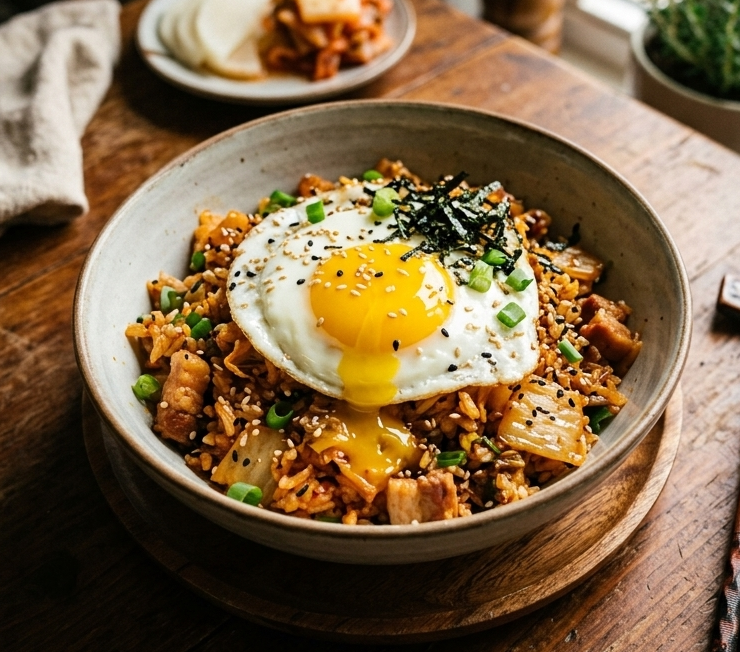
If there’s one Korean dish anyone can make at home, it’s kimchi fried rice.
Called “kimchi-bokkeumbap” (김치볶음밥) in Korean, this simple dish requires just a few basic ingredients: leftover rice, kimchi, and a bit of oil. That’s it. In 15 minutes, you’ll have a flavorful, satisfying meal.
Kimchi fried rice is the ultimate Korean comfort food. It’s what Koreans make when the fridge is almost empty, when it’s late at night and you need something quick, or when you have kimchi that’s gotten too sour to eat on its own.
In this guide, I’ll show you exactly how to make it — plus tips to make yours taste like it came from a Korean home kitchen.
What is Kimchi Fried Rice?
Kimchi fried rice is exactly what it sounds like: fried rice made with kimchi.
It’s one of the most common homemade dishes in Korea. Almost every Korean household makes it regularly because it’s easy, delicious, and the perfect way to use up leftover ingredients.
The beauty of kimchi fried rice is its simplicity. You don’t need fancy cooking skills or exotic ingredients. If you have rice and kimchi, you can make it. Everything else is optional.
Koreans often call this type of cooking “naengjanggo teori” (냉장고 털이) — literally “cleaning out the fridge.” Kimchi fried rice is the king of fridge-clearing meals.
Why This Recipe Works
A few things make kimchi fried rice special.
Sour Kimchi is Best
Fresh kimchi is great as a side dish, but for fried rice, you want kimchi that’s been fermented longer. The sour, tangy flavor develops when kimchi ages, and that acidity is what gives the fried rice its signature taste. If your kimchi is too fresh, the dish will taste flat.
Day-Old Rice is Better
Freshly cooked rice has too much moisture — it becomes mushy when fried. Cold, leftover rice from the fridge is drier and fries up perfectly with separate grains and better texture.
Simple Ingredients, Big Flavor
The magic comes from the kimchi itself. Good fermented kimchi brings sourness, spice, and umami all at once. Add a bit of sesame oil at the end, and you have layers of flavor from just a handful of ingredients.
Ingredients
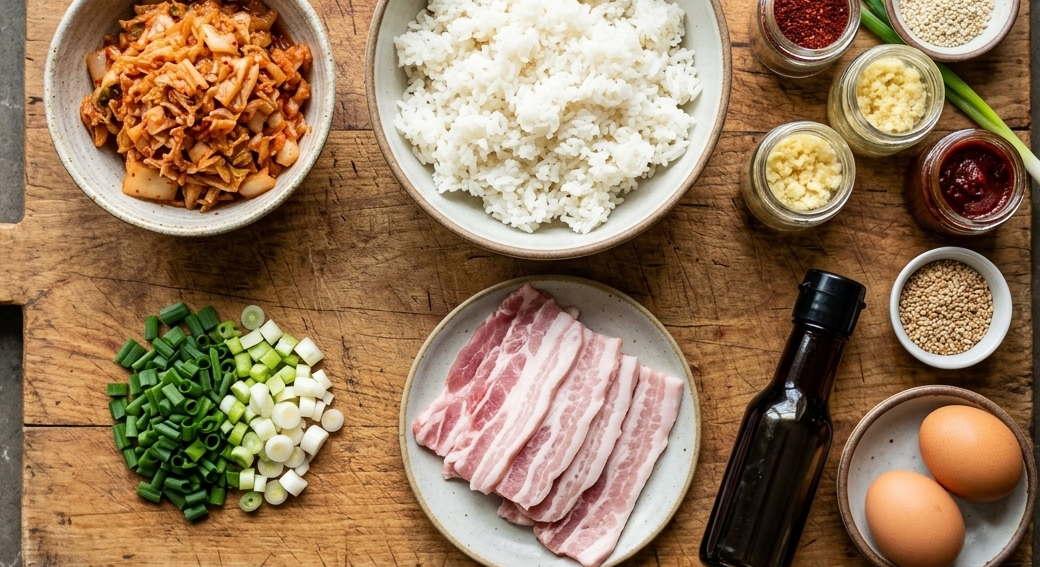
Here’s what you’ll need.
Essential Ingredients
| Ingredient | Amount | Notes |
|---|---|---|
| Kimchi | 150-200g (about 1 cup) | Aged/sour kimchi is best |
| Cooked rice | 1-2 bowls | Cold, leftover rice preferred |
| Cooking oil | 1-2 tbsp | Vegetable oil works fine |
| Kimchi juice | 2-3 tbsp | From the kimchi container |
| Sesame oil | 1 tbsp | Add at the end |
Optional Additions
| Ingredient | Notes |
|---|---|
| Egg | Fried egg on top is classic |
| Spam / Ham / Bacon | Adds protein and richness |
| Pork belly (samgyeopsal) | Makes it extra delicious |
| Canned tuna | Popular variation |
| Green onion | For freshness |
| Seaweed flakes (gim) | For topping |
| Sesame seeds | For garnish |
Seasonings
| Seasoning | Amount | Notes |
|---|---|---|
| Soy sauce | 1 tsp | For extra umami |
| Sugar | ½ tsp | Balances the sourness |
| Gochujang | 1 tsp (optional) | For extra spice |
Step-by-Step Recipe
Step 1: Prep Your Ingredients
Cut the kimchi into bite-sized pieces. If you’re adding meat (spam, bacon, or pork belly), cut it into small cubes or strips. Slice any green onions you’re using.
Take your rice out of the fridge. If it’s clumped together, break it apart gently with a spoon.
Step 2: Cook the Meat (If Using)
If you’re adding pork belly, spam, or bacon, cook this first.
Heat your pan over medium-high heat. Add a little oil and cook the meat until it’s slightly crispy and the fat has rendered. This creates a flavorful base for the rest of the dish. Don’t remove the meat — keep it in the pan.
Step 3: Stir-Fry the Kimchi
Add the kimchi to the pan. If you didn’t use meat, add a tablespoon of oil first.
Stir-fry the kimchi for 2-3 minutes until it softens and becomes slightly caramelized. The edges should get a little charred — this adds great flavor.
Add a splash of kimchi juice. This is a secret weapon — it adds tanginess and depth.
Step 4: Add the Rice
Add the cold rice to the pan. Break up any clumps and mix everything together thoroughly.
Stir-fry on medium-high heat for 3-4 minutes. You want the rice to get slightly toasted and absorb all the flavors from the kimchi and meat.
Step 5: Season and Finish
Add soy sauce and a pinch of sugar. Mix well.
Turn off the heat. Drizzle sesame oil over the rice and give it one final stir. The sesame oil should be added at the end so it keeps its nutty aroma.
Step 6: Plate and Serve
Transfer to a bowl or plate. Top with a fried egg — the runny yolk is essential. Sprinkle with seaweed flakes and sesame seeds.
Break the egg yolk, mix it into the rice, and enjoy.
Tips for Perfect Kimchi Fried Rice
Use Well-Fermented Kimchi
This is the most important tip. Sour, aged kimchi (called “mugeun-ji”) makes the best fried rice. If your kimchi is too fresh, the dish won’t have that characteristic tangy flavor.
Cold Rice, Not Fresh Rice
Day-old rice from the refrigerator works best. The grains are drier and separate, giving you better texture. If you only have fresh rice, spread it on a plate and let it cool for 10-15 minutes.
Don’t Skip the Kimchi Juice
That liquid at the bottom of your kimchi container is pure flavor. Add a few tablespoons while cooking — it’s the secret to restaurant-quality kimchi fried rice.
High Heat for the Final Stir-Fry
When you add the rice, keep the heat high. This helps evaporate excess moisture and gives the rice a slightly toasted flavor.
Sesame Oil at the End
Always add sesame oil after you turn off the heat. If you cook it too long, the aroma disappears. A final drizzle keeps it fragrant and nutty.
Variations
Once you master the basic recipe, try these popular variations.
Tuna Kimchi Fried Rice (참치 김치볶음밥)
Add a can of tuna (drained) when you add the rice. The tuna adds protein and a subtle seafood flavor. This is one of the most popular versions in Korea.
Spam Kimchi Fried Rice (스팸 김치볶음밥)
Cube some Spam and fry it until crispy before adding the kimchi. The salty, savory Spam pairs perfectly with the sour kimchi.
Pork Belly Kimchi Fried Rice (삼겹살 김치볶음밥)
Use sliced pork belly instead of spam. Cook it first until crispy, then add the kimchi. The rendered pork fat makes everything more delicious.
Cheese Kimchi Fried Rice (치즈 김치볶음밥)
Top the finished rice with shredded mozzarella cheese. Put a lid on the pan for 30 seconds to melt it. Stretchy cheese with spicy kimchi rice is addictive.
Kimchi Fried Rice with Ramen Seasoning
Add half a packet of instant ramen seasoning to the rice. It sounds strange, but it adds an extra layer of umami that’s surprisingly good.
Serving Suggestions
Kimchi fried rice is great on its own, but these additions make it even better.
Fried Egg (Essential)
A fried egg on top is practically mandatory. Cook it sunny-side-up so the yolk stays runny. When you break it and mix it into the hot rice, it creates a rich, creamy coating.
Seaweed Flakes (김가루)
Crushed dried seaweed adds a savory, oceanic flavor and nice texture contrast.
Pickled Radish (단무지)
The crunchy, sweet-sour pickles cut through the richness of the fried rice.
Soup on the Side
A simple soup — doenjang-guk (soybean paste soup) or gyeran-guk (egg drop soup) — makes the meal complete. The warm broth balances the fried rice perfectly.
My Kimchi Fried Rice Story
For me, kimchi fried rice is all about using kimchi that’s perfectly fermented.
I always keep kimchi in a container in the fridge. At first, it’s fresh and crisp — perfect for eating as a side dish. But as days pass, it gets more and more sour. Eventually, it reaches a point where it’s too fermented to enjoy on its own.
That’s when I know it’s time to make kimchi fried rice.
Overly sour kimchi that’s no longer great as a side dish becomes the perfect ingredient for fried rice. The sourness transforms into deep, complex flavor when you stir-fry it with rice. It’s actually better this way — nothing goes to waste.
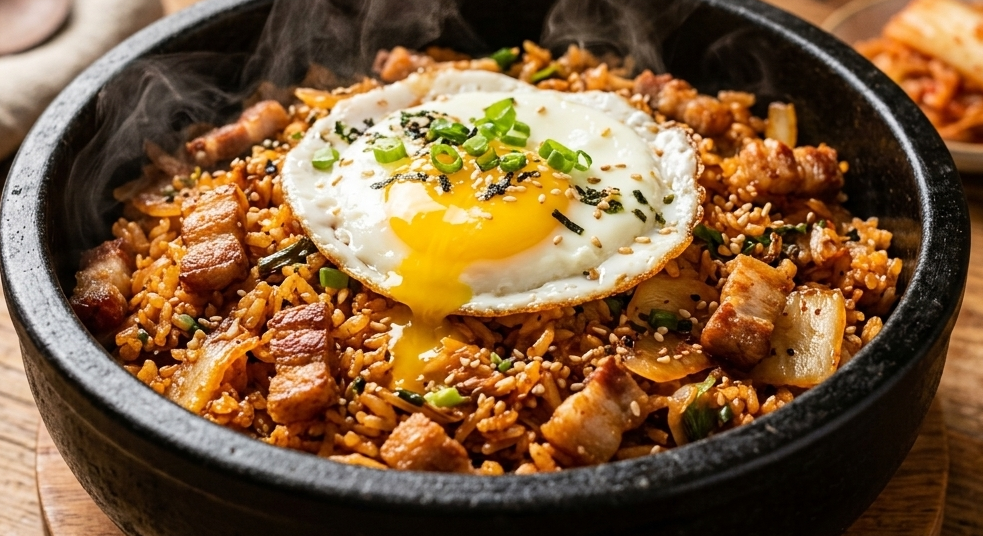
My favorite way to make it is with pork belly. I cook the sliced pork belly first until the fat renders and the edges get crispy. Then I add the kimchi directly into that flavorful pork fat. The kimchi absorbs all that richness, and when I add the rice, everything comes together beautifully.
The final touch is always sesame oil. Right at the end, after I turn off the heat, I drizzle sesame oil over everything. That nutty aroma hits immediately, and suddenly the whole dish smells incredible.
With a fried egg on top and maybe some seaweed flakes, it’s one of the most satisfying meals I know. Simple ingredients, simple cooking, incredible result. That’s what Korean home cooking is all about.
Final Thoughts
Kimchi fried rice is proof that great food doesn’t have to be complicated.
It’s a dish born from practicality — using up leftovers, making something from almost nothing. But the result is so delicious that people make it even when they have plenty of other options.
If you’re new to Korean cooking, start here. It’s forgiving, fast, and almost impossible to mess up. And once you’ve made it a few times, you’ll understand why every Korean knows this recipe by heart.
Get some good aged kimchi, dig out your leftover rice, and give it a try. Your kitchen will smell amazing, and dinner will be ready in 15 minutes.