
Introduction
Korea has one of the best public transportation systems in the world.
Trains run on time — often to the second. Buses are clean and frequent. Subways connect virtually every corner of major cities. And all of it is surprisingly affordable.
For travelers, this means freedom. You don’t need a car, you don’t need to rely on taxis, and you can explore the entire country using public transportation alone. From Seoul’s sprawling subway network to the high-speed KTX connecting major cities, getting around Korea is easy once you understand the system.
In this guide, I’ll walk you through everything you need to know — T-Money cards, subways, buses, trains, taxis, and the apps that make it all work seamlessly.
Why Korean Public Transportation is Amazing
Before diving into the details, let’s appreciate why Korea’s system is so impressive.
Punctuality
Korean trains and subways run on schedule. Delays are rare, and when they happen, they’re usually measured in minutes, not hours. You can plan your day around departure times and trust that they’ll be accurate.
Cleanliness
Stations and vehicles are cleaned regularly. You won’t find garbage on the floor or graffiti on the walls. Even busy subway cars stay remarkably clean.
Affordability
A single subway ride in Seoul costs around 1,400 won (about $1 USD). Buses are similar. You can travel across the entire city for the price of a coffee.
Coverage
The subway and bus networks reach almost everywhere. In Seoul, you’re rarely more than a 10-minute walk from a subway station.
Accessibility
Most stations have elevators, escalators, and assistance for disabled passengers. Announcements are made in Korean, English, Chinese, and Japanese.
T-Money Card: Your Essential Tool
The T-Money card is the key to Korean public transportation. Get one as soon as you arrive.
What is T-Money?
T-Money is a rechargeable transit card that works across Korea. One card covers subways, buses, taxis, and even convenience store purchases. Tap it when boarding and exiting, and the fare is automatically deducted.
Where to Buy
- Convenience stores — GS25, CU, 7-Eleven, Emart24 all sell T-Money cards
- Subway station kiosks — Available at most stations
- Airport — Convenience stores at Incheon Airport sell them
A blank card costs around 2,500-5,000 won depending on the design.
How to Recharge
- Convenience stores — Tell the cashier how much you want to add
- Subway station machines — Available in English, follow the prompts
- Some ATMs and bank machines
I recommend keeping at least 10,000-20,000 won loaded at all times.
Where You Can Use It
- Subways (all cities)
- Buses (all cities)
- Taxis (most accept T-Money)
- Convenience stores
- Some vending machines and lockers
Transfer Discounts
Here’s a great benefit: if you transfer between subway and bus (or bus to bus) within 30 minutes, you get a discount. The system tracks your card and applies it automatically.
Getting Your Balance Back
When leaving Korea, you can get a refund for your remaining balance (minus a small fee) at convenience stores or designated machines.
Subway (지하철)
The subway is the easiest and most efficient way to get around Korean cities.
Seoul Metro
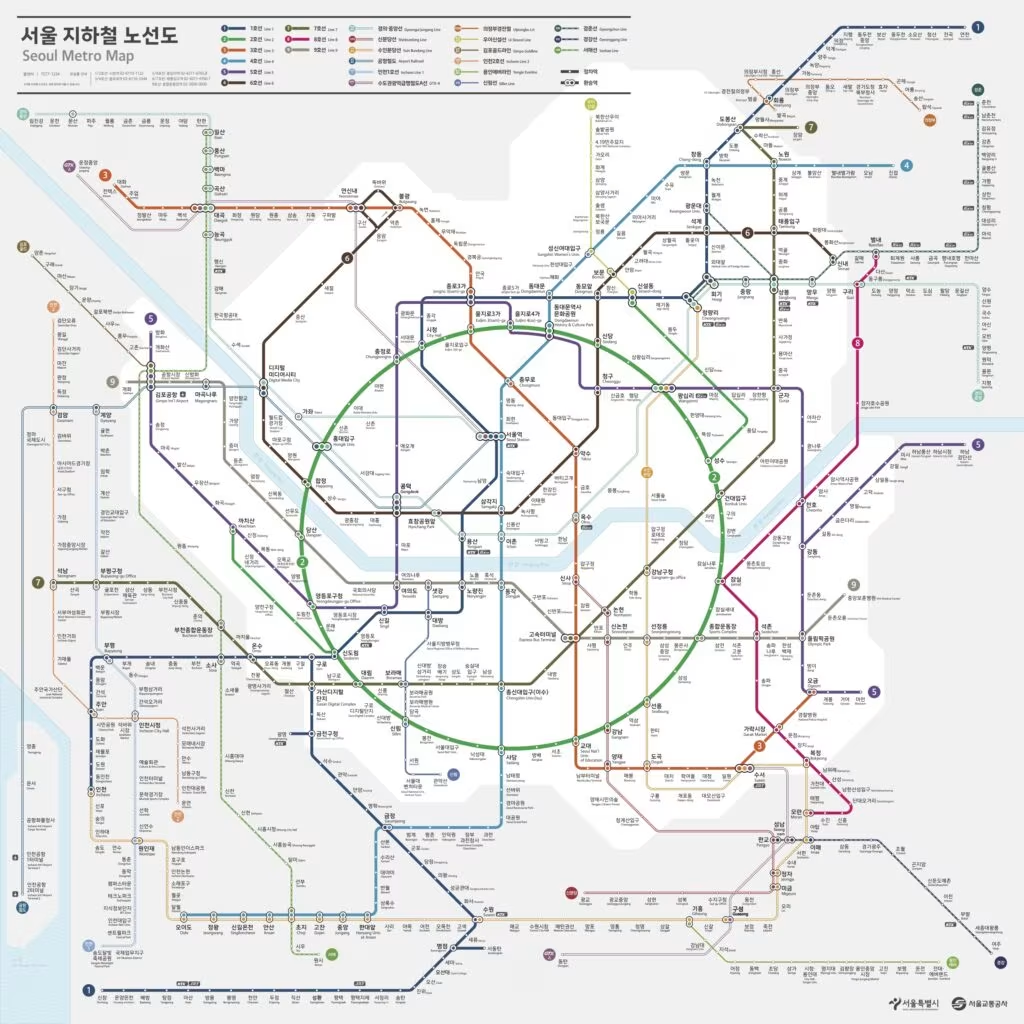
Seoul’s subway system is massive — one of the largest in the world. It has over 20 lines connecting hundreds of stations across the metropolitan area.
Key facts:
- Trains run from approximately 5:30 AM to midnight
- Frequency: Every 2-5 minutes during peak hours, 5-10 minutes off-peak
- All announcements in Korean, English, Chinese, and Japanese
- Free WiFi in most stations and trains
Most tourist destinations — Gyeongbokgung, Myeongdong, Hongdae, Gangnam — are directly accessible by subway.
Busan Metro
Busan’s subway is smaller but covers all major tourist areas. Four main lines connect Haeundae Beach, Gwangalli, Seomyeon, Nampo-dong, and Busan Station.
Other Cities
Daegu, Daejeon, Gwangju, and Incheon also have subway systems. They’re smaller but work the same way.
How to Ride
- Find your station on the map and note the line number
- Tap your T-Money card at the entrance gate
- Follow signs to your platform (check direction carefully)
- Board the train
- Tap your card again when exiting at your destination
Subway Etiquette
- Priority seats — Leave the seats at the ends of each car for elderly, pregnant, and disabled passengers. Even if the train is crowded, Koreans typically leave these seats empty
- Keep quiet — Phone calls are discouraged; keep conversations low
- Let passengers exit first — Stand to the side of the doors and wait
- Queue in line — Follow the marked waiting lines on the platform
- No eating — Eating on the subway is frowned upon
Bus (버스)
Buses fill the gaps that subways don’t reach. They’re slightly more complicated but very useful.
Bus Colors (Seoul)
| Color | Type | Use |
|---|---|---|
| Blue | Trunk (간선) | Long routes across the city |
| Green | Branch (지선) | Short routes within neighborhoods |
| Red | Express (광역) | Between Seoul and satellite cities |
| Yellow | Circular (순환) | Downtown circular routes |
How to Ride
- Check your route on Kakao Map or Naver Map
- Wait at the bus stop
- Board through the front door
- Tap your T-Money card when entering
- Press the stop button before your destination
- Tap your card again when exiting (important for transfer discounts!)
- Exit through the back door
Important: Unlike some countries, you must tap your card both when getting on AND getting off. If you forget to tap when exiting, you’ll be charged the maximum fare.
Tips
- Bus stop names are announced in English
- Screens inside show the upcoming stops
- Buses can get very crowded during rush hour
- Night buses (올빼미 버스) run after midnight on select routes
KTX (High-Speed Train)
The KTX is Korea’s high-speed rail system, connecting major cities quickly and comfortably.
Key Routes
| Route | Time |
|---|---|
| Seoul → Busan | ~2 hours 30 minutes |
| Seoul → Daegu | ~1 hour 40 minutes |
| Seoul → Gwangju | ~2 hours |
| Seoul → Jeonju | ~1 hour 30 minutes |
How to Book
- Korail Website/App — Book online in English at letskorail.com
- Korail Talk App — Korean-language app with more features
- Station Kiosks — Available in English at major stations
- Ticket Windows — Human assistance available
Tips
- Book in advance for weekends and holidays
- Choose window seats for scenic views
- First class (특실) offers larger seats and more legroom
- Standard class (일반실) is perfectly comfortable
- Food and drinks available on board
Seat Selection
When booking online, you can choose your exact seat. Window seats on the left side (going to Busan) offer the best views.
Taxi (택시)
Taxis are affordable in Korea and useful for late nights or heavy luggage.
Types of Taxis
| Type | Color | Notes |
|---|---|---|
| Regular | Orange, White, Silver | Standard, cheapest |
| Deluxe (모범) | Black | Larger, more expensive, better service |
| Jumbo | Black | Van-style, good for groups or luggage |
How to Use
- Hail on street — Raise your hand when you see an available taxi (lit-up sign on roof)
- Kakao Taxi app — Like Uber, order a taxi through the app (highly recommended)
- Taxi stands — Available at stations, malls, and tourist areas
Fares
- Base fare: Around 4,800 won (Seoul)
- Increases by distance and time
- Late night surcharge: 20-40% extra after midnight
- No tipping expected or necessary
Payment
- T-Money card accepted in most taxis
- Credit card machines available
- Cash always works
Tips
- Have your destination written in Korean or show it on your phone
- Kakao Taxi translates automatically
- Drivers usually don’t speak much English
- Seatbelts required by law
Intercity Bus (고속버스/시외버스)
For cities not served by KTX, intercity buses are a great option.
Types
- 고속버스 (Express Bus) — Direct routes between major cities
- 시외버스 (Intercity Bus) — Stops at smaller towns along the way
How to Book
- Bus Terminals — Buy tickets at the station
- T-money Bus App — Book in advance online
- Walk-up tickets usually available except during holidays
Major Terminals in Seoul
- Seoul Express Bus Terminal (Gangnam)
- Dong Seoul Bus Terminal (East Seoul)
- Sangbong Bus Terminal
Tips
- Cheaper than KTX but takes longer
- Comfortable seats with good legroom
- Rest stops on longer routes
- Book ahead for holidays (Chuseok, Seollal)
Essential Apps
Your smartphone is essential for navigating Korea. Download these apps before you arrive.
Kakao Map
The best navigation app for Korea. Google Maps doesn’t work well here — use Kakao Map or Naver Map instead. It shows subway routes, bus numbers, walking directions, and estimated arrival times.
Naver Map
Similar to Kakao Map. Some people prefer one over the other. Both work great. Naver Map has excellent subway information, including real-time arrival and which exit to use.
Kakao Taxi
Order taxis directly through the app. Enter your destination, request a taxi, and track its arrival. Payment can be automatic through the app.
Kakao Metro / Subway Korea
Dedicated subway apps with detailed station maps, timetables, and transfer information.
Korail Talk
For booking KTX tickets. The interface is a bit clunky but works.
Tips for Tourists
Use Kakao Map or Naver Map, Not Google Maps
This is the most important tip. Google Maps has limited functionality in Korea due to national security regulations. Kakao Map and Naver Map are far more accurate and useful.
Get T-Money Immediately
Buy your T-Money card at the airport convenience store. You’ll need it right away for the airport train or bus.
Avoid Rush Hour
If possible, avoid traveling between 8-9 AM and 6-7 PM. Subways and buses get extremely crowded during these times.
Respect Priority Seats
Even if the train is packed, leave priority seats empty. It’s a strong cultural norm.
Keep Quiet
Koreans are generally quiet on public transportation. Keep phone calls short or text instead.
Know Your Exits
Major subway stations have many exits — sometimes 20 or more. Check which exit number you need before arriving.
Use Transfer Discounts
When switching between bus and subway (or bus to bus), do it within 30 minutes to get discounted fares.
My Transportation Story
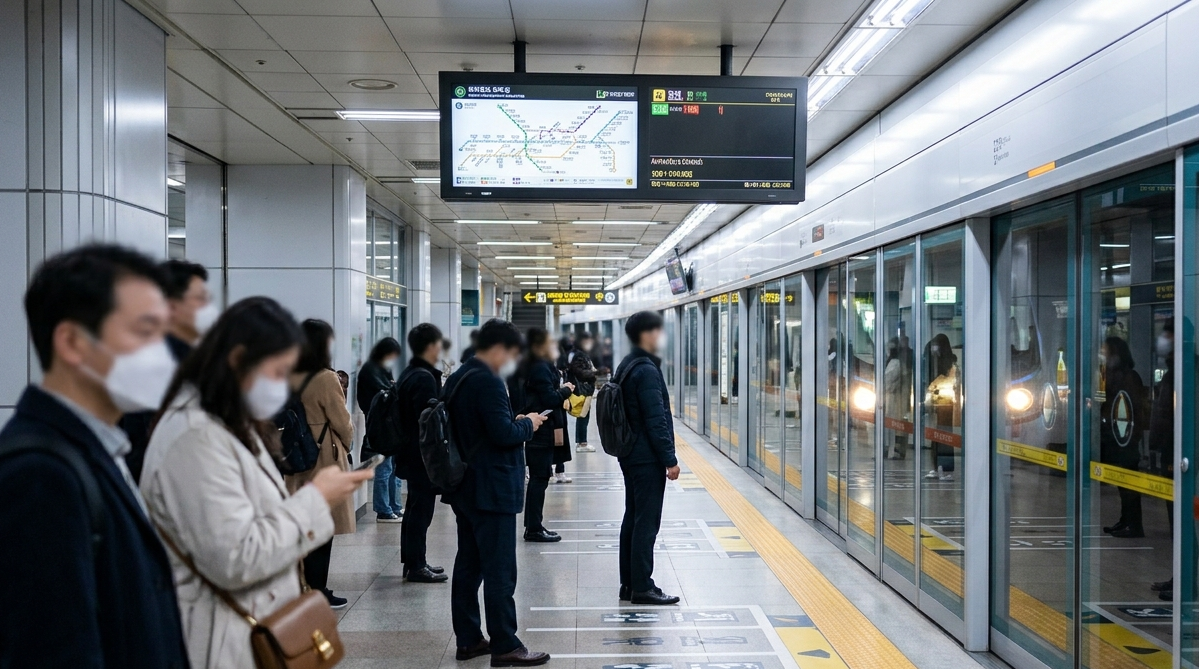
When I lived in Korea, I took the subway almost every day. It became second nature.
I always used Naver Map — not just for directions, but for all the small details that make commuting faster. The app tells you exactly when the next train arrives, which car to board, and even which door to stand near so you’re closest to the exit at your destination.
I’ll admit it: I became obsessed with optimizing my commute. I would check which door number was closest to the stairs or escalator at my exit station, then position myself on the platform to board at exactly that spot. When the train arrived, I’d get on, and when it stopped at my station, I’d be right at the door, ready to exit quickly.
Maybe that sounds a little intense, but that’s just how Koreans are. We like things fast. “Bballi bballi” (빨리빨리) — quickly, quickly — is practically a national motto. Everyone is always moving efficiently, minimizing wasted time, getting where they need to go as fast as possible.
It’s not stressful, though. It’s satisfying. There’s a certain pleasure in having your commute down to a science — knowing exactly where to stand, exactly when to move, exactly how to navigate a crowded station without slowing down.
That’s Korean public transportation culture. It’s not just about getting from A to B. It’s about doing it as smoothly and efficiently as possible.
Final Thoughts
Korean public transportation is a gift to travelers.
It’s clean, affordable, punctual, and reaches almost everywhere you’d want to go. With a T-Money card and a navigation app, you can explore the entire country independently — from Seoul’s palaces to Busan’s beaches to small towns in the countryside.
Don’t be intimidated by the complexity. Start with the subway, which is the easiest to use. Download Kakao Map or Naver Map. Get your T-Money card on day one. After a few trips, it’ll feel like second nature.
Korea’s public transportation system is genuinely world-class. Take advantage of it — it’s one of the best things about traveling here.