
Introduction
Walk down any street in Korea, and you’ll notice something immediately: there are cafes everywhere.
Not just one or two — sometimes two or three cafes on a single block, all filled with customers. From global chains like Starbucks to tiny independent shops tucked in alleyways, coffee culture has become an essential part of Korean daily life.
But Korean cafes aren’t just about coffee. They’re social spaces, study halls, date spots, and creative escapes all rolled into one. Understanding why Koreans love cafes so much tells you a lot about Korean culture itself.
In this guide, I’ll explore Korea’s cafe obsession — why it exists, the different types of cafes you’ll find, and how to enjoy them like a local.
Korea’s Coffee Obsession by Numbers
Korea’s love for coffee is not an exaggeration. The numbers prove it.
South Korea consistently ranks among the top coffee-consuming countries in the world. The average Korean drinks over 400 cups of coffee per year — more than one cup per day. Seoul alone has tens of thousands of cafes, making it one of the most cafe-dense cities on the planet.
Global chains have taken notice. Korea is one of Starbucks’ largest markets outside the United States. But it’s not just Starbucks — Korean chains like Twosome Place, Ediya, Mega Coffee, and Compose Coffee have expanded rapidly, competing for every corner.
The cafe industry in Korea is worth billions of dollars, and it keeps growing. Coffee isn’t just a drink here — it’s a lifestyle.
Why Koreans Love Cafes
What drives this cafe obsession? Several cultural factors come together.
Limited Living Space
Many Koreans, especially young people, live in small apartments. Cafes offer an escape — a comfortable space to relax, work, or meet friends outside of cramped homes.
Study and Work Culture
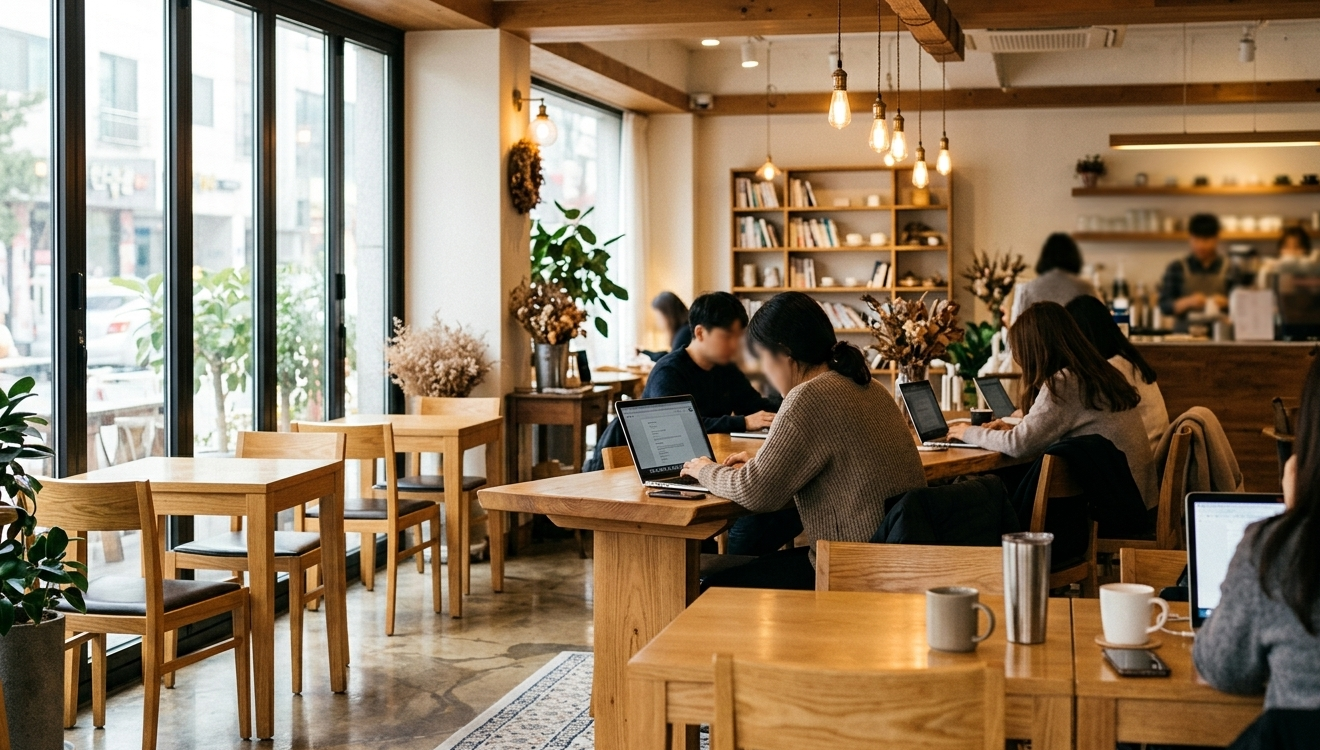
Korea is famous for its intense study culture. Students preparing for exams and professionals working on projects often prefer cafes over libraries or home. There’s even a word for it: “kagongok” (카공족) — people who study at cafes. The ambient noise, coffee on demand, and change of scenery help many people focus better.
Perfect Meeting Spots
When meeting friends, family, or colleagues, cafes are the default choice. They’re everywhere, easy to find, comfortable, and you can stay as long as you want with just one drink.
Aesthetic and Instagram Culture
Korean cafes often have stunning interiors — minimalist designs, plant-filled spaces, retro themes, or unique concepts. Many people visit cafes specifically to take photos for Instagram. A “pretty cafe” (예쁜 카페) is a destination in itself.
Solo Time
Just like “honbap” (eating alone), “honka” (혼카, going to a cafe alone) is completely normal. Cafes are perfect for enjoying some quiet time by yourself with a book, laptop, or just your thoughts.
Types of Korean Cafes
Korean cafes come in many different styles. Here’s what you’ll find.
Franchise Cafes
Big chains are everywhere. Starbucks is hugely popular, but Korean brands dominate too.
- Twosome Place — Known for quality desserts
- Ediya — Affordable and widespread
- Mega Coffee / Compose Coffee — Budget-friendly with large sizes
- Paik’s Coffee — Simple menu, low prices
- Blue Bottle — Specialty coffee, trendy locations
Franchises offer consistency — you know what you’re getting no matter which location you visit.
Independent / Aesthetic Cafes
Small, owner-operated cafes with unique personalities. These are the hidden gems — beautiful interiors, specialty drinks, and often handmade desserts. Every neighborhood has its favorites, and finding a new one feels like a small adventure.
Theme Cafes
Korea takes themed experiences to another level.
- Cat Cafes / Dog Cafes — Play with animals while drinking coffee
- Board Game Cafes — Walls of games to play with friends
- Comic Book Cafes (만화카페) — Read manga with drinks
- Flower Cafes — Surrounded by plants and flowers
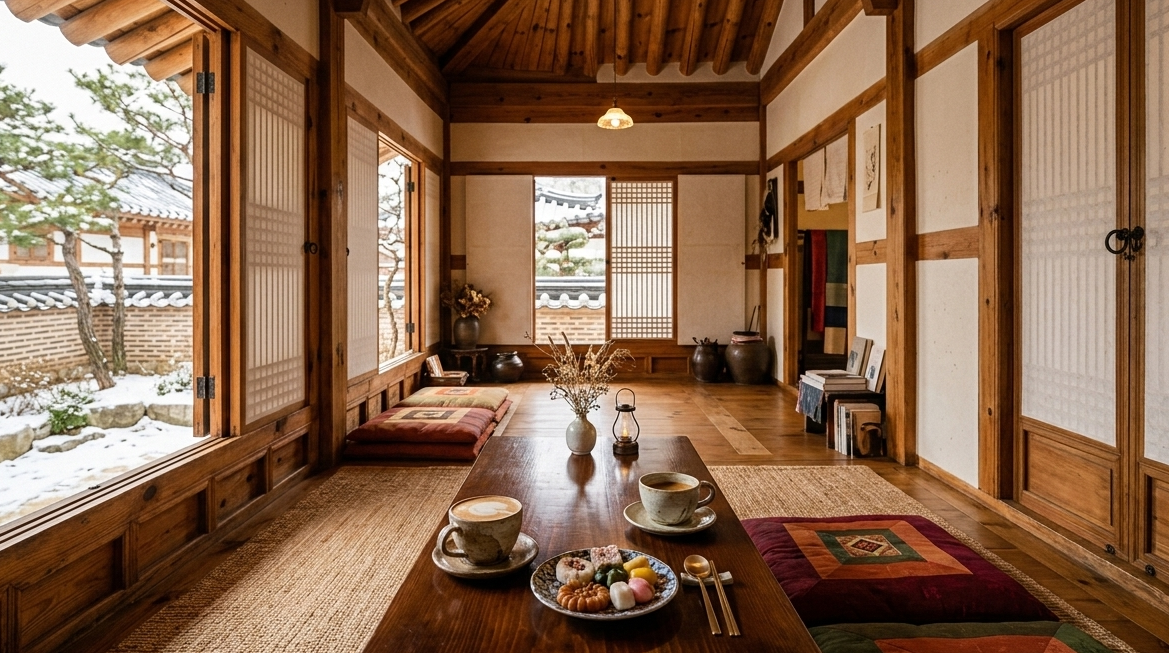
- Hanok Cafes — Traditional Korean houses converted into cafes
Large Destination Cafes
Outside Seoul, you’ll find massive cafes — sometimes more like resorts. They feature gardens, rooftops, bakeries, and scenic views. Koreans drive out to these cafes on weekends as a mini escape from the city.
Study Cafes (스터디 카페)
A hybrid between a cafe and a library. You pay by the hour for a quiet, individual desk space. Drinks are often included. These are designed specifically for serious studying with no distractions.
What to Order at Korean Cafes
Korean cafe menus are extensive. Here’s a quick guide.
Coffee
- Americano (아메리카노) — The default Korean order. Hot or iced, it’s simple and popular
- Cafe Latte (카페라떼) — Espresso with steamed milk
- Vanilla Latte / Caramel Macchiato — Sweet options for those who prefer less bitterness
Non-Coffee
- Milk Tea — Various flavors, often with boba
- Green Tea Latte (녹차라떼) — Creamy matcha drink
- Sweet Potato Latte (고구마라떼) — Unique Korean favorite
- Ades (에이드) — Fruit drinks like grapefruit, lemon, or grapefruit ade
Seasonal Drinks
- Spring — Strawberry drinks and desserts
- Summer — Bingsu (shaved ice), cold brews, iced fruit drinks
- Fall — Sweet potato, chestnut, pumpkin flavors
- Winter — Warm drinks, holiday specials
Desserts
- Cakes — From simple cheesecake to elaborate creations
- Croffle — Croissant-waffle hybrid, often with ice cream
- Macarons — Popular at aesthetic cafes
- Traditional sweets (한과) — Available at hanok and traditional cafes
Cafe Etiquette in Korea
A few things to know about cafe manners.
Ordering
Some cafes require ordering before sitting, others let you sit first. Watch what others do, or just go to the counter — staff will tell you if you need to grab a table first.
Staying Long is Usually OK
Most cafes don’t mind if you stay for hours with just one drink. However, during busy times (weekend afternoons), be considerate.
“One Drink Per Person” Rule
Some popular cafes, especially on weekends, require each person to order at least one drink (1인 1음료). This is usually posted near the counter.
Laptop and Outlets
Many cafes allow laptop use. Seats near power outlets are highly coveted — arrive early if you need to charge devices. Some cafes restrict laptop use during peak hours.
Keep the Volume Down
Korean cafes are generally quiet. Keep conversations at a moderate level. In study cafes, silence is expected.
Unique Korean Cafe Culture
Kagongok (카공족) — Cafe Studiers
A huge segment of cafe customers are there to study or work. Students preparing for university exams, job seekers studying for certifications, freelancers working remotely — cafes are their office. Some people spend entire days moving from cafe to cafe.
Cafe Dates
For couples, cafe-hopping is a classic date activity. Finding pretty cafes, ordering aesthetic drinks, taking photos together — it’s romantic and low-pressure.
Photo Culture
Before drinking your coffee, you photograph it. Before eating the cake, you photograph it. The interior, the table, the window view — everything gets captured. This isn’t vanity; it’s just part of the experience. Many cafes are designed with Instagram in mind.
Seasonal Menus
Korean cafes constantly update their menus with seasonal items. Strawberry season in spring, bingsu in summer, autumn flavors like sweet potato and chestnut, and winter holiday specials. There’s always something new to try.
Famous Cafe Neighborhoods in Seoul
If you’re visiting Seoul, these areas are known for great cafes.
Seongsu-dong (성수동)
Seoul’s “Brooklyn.” Industrial buildings converted into hip cafes, roasteries, and concept stores. The trendiest cafe scene in the city.
Yeonnam-dong / Yeonhui-dong (연남동 / 연희동)
Cozy, artistic neighborhoods with charming independent cafes. A relaxed vibe away from the crowds.
Ikseon-dong (익선동)
Traditional hanok buildings housing modern cafes. Beautiful fusion of old and new Korea.
Samcheong-dong / Bukchon (삼청동 / 북촌)
Near the palaces, this area has cafes set in traditional Korean houses. Perfect after sightseeing.
Hannam-dong (한남동)
Upscale neighborhood with sophisticated cafes and international vibes.
Hongdae / Hapjeong (홍대 / 합정)
Young, creative energy. Every style of cafe imaginable, from quirky to minimalist.
Tips for Visiting Korean Cafes
Payment
Cards are accepted almost everywhere. You rarely need cash.
WiFi
Almost all cafes offer free WiFi. The password is often posted near the counter or on receipts.
English Menus
Many cafes, especially in tourist areas, have English menus or pictures. Pointing works too.
Peak Hours
Weekday mornings and weekend afternoons are busiest. For a quieter experience, visit on weekday afternoons.
Expect Lines
Popular cafes — especially Instagram-famous ones — may have lines on weekends. Be patient or visit during off-peak hours.
My Cafe Story
I’m a complete coffee lover. Honestly, I can’t imagine life without my daily cup.
In Korea, I’m spoiled for choice — there are two or three cafes on almost every block. No matter where you are, a good coffee is never more than a few steps away. And Koreans consume coffee like it’s water. It’s just part of daily life here.
When I was a university student, I spent countless hours studying at cafes. My go-to order was a hot Americano with something sweet on the side — a slice of cake or a chocolate brownie. There’s something about that combination that just helps me focus. The cafe environment, the background noise, the smell of coffee — it was the perfect study atmosphere.
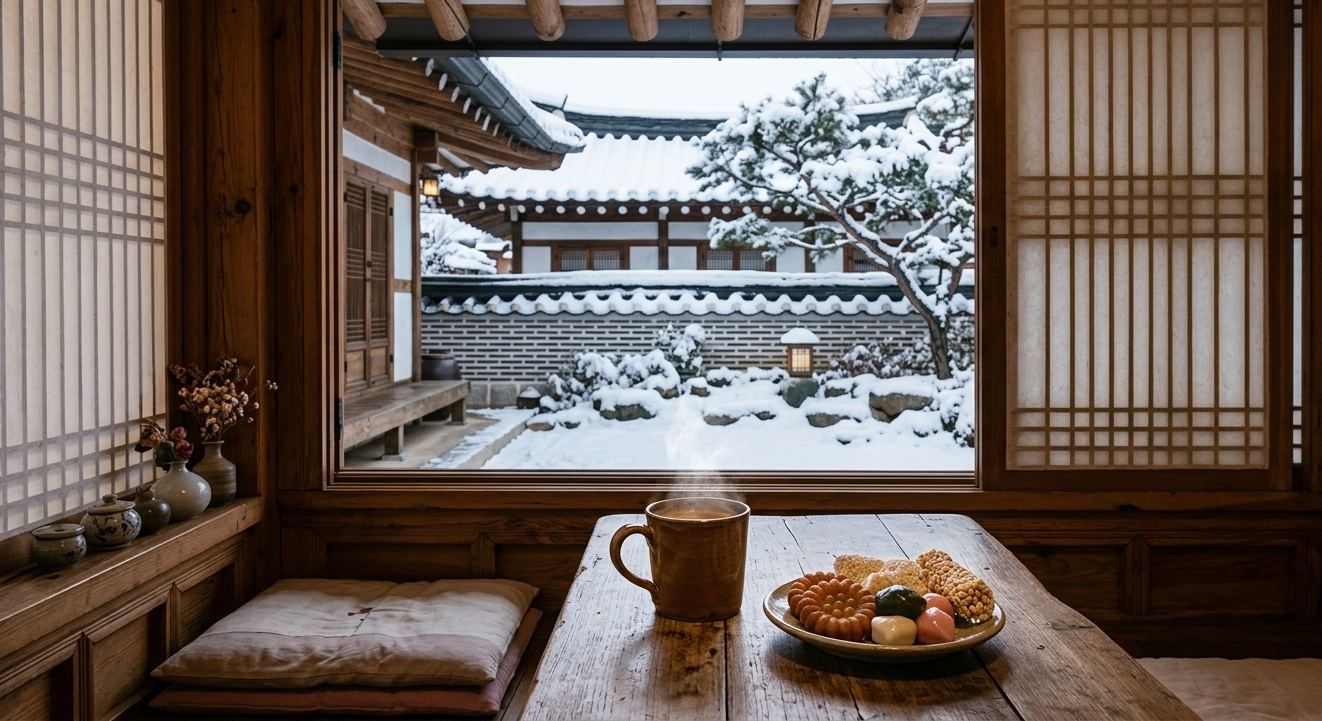
But the cafe experience I remember most vividly is a hanok cafe near Bukchon Hanok Village.
It was a cold winter day, and snow had just fallen. The cafe was inside a traditional Korean house — wooden beams, paper doors, that warm, old feeling of a hanok. I sat on the heated floor, looking out at the snow-covered courtyard while holding a warm cup of coffee.
They served hangwa (한과) — traditional Korean sweets — alongside the coffee. When I bit into the hangwa while sipping the hot coffee, it melted softly in my mouth. The warmth of the drink, the delicate sweetness of the traditional treat, the peaceful snowy scene outside — it was one of those perfect moments.
That’s what Korean cafe culture is about. It’s not just coffee. It’s the experience, the atmosphere, the little moments of peace in a busy life.
Final Thoughts
Korean cafes are more than places to get caffeine. They’re extensions of daily life.
For students, they’re study rooms. For couples, they’re date spots. For workers, they’re remote offices. For everyone, they’re places to slow down, meet friends, or simply enjoy some time alone.
If you visit Korea, don’t just grab coffee to go. Sit down in a cafe. Order an Americano and something sweet. Watch the people around you — studying, talking, taking photos of their drinks. You’ll understand why Koreans love their cafes so much.
And if you find a hanok cafe on a snowy day? Stay a while. It might become your favorite memory.