
Introduction
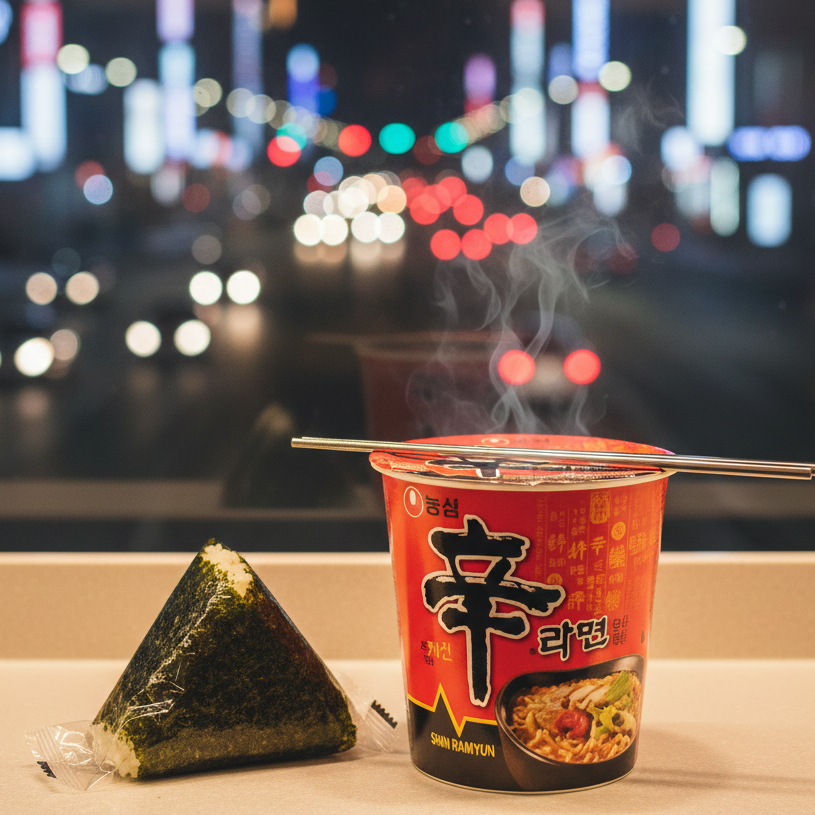
If you’ve ever watched a Korean drama, you’ve probably seen this scene: someone sitting by a convenience store window, eating ramen from a cup while looking out at the street.
That’s not just a TV moment — it’s real life in Korea.
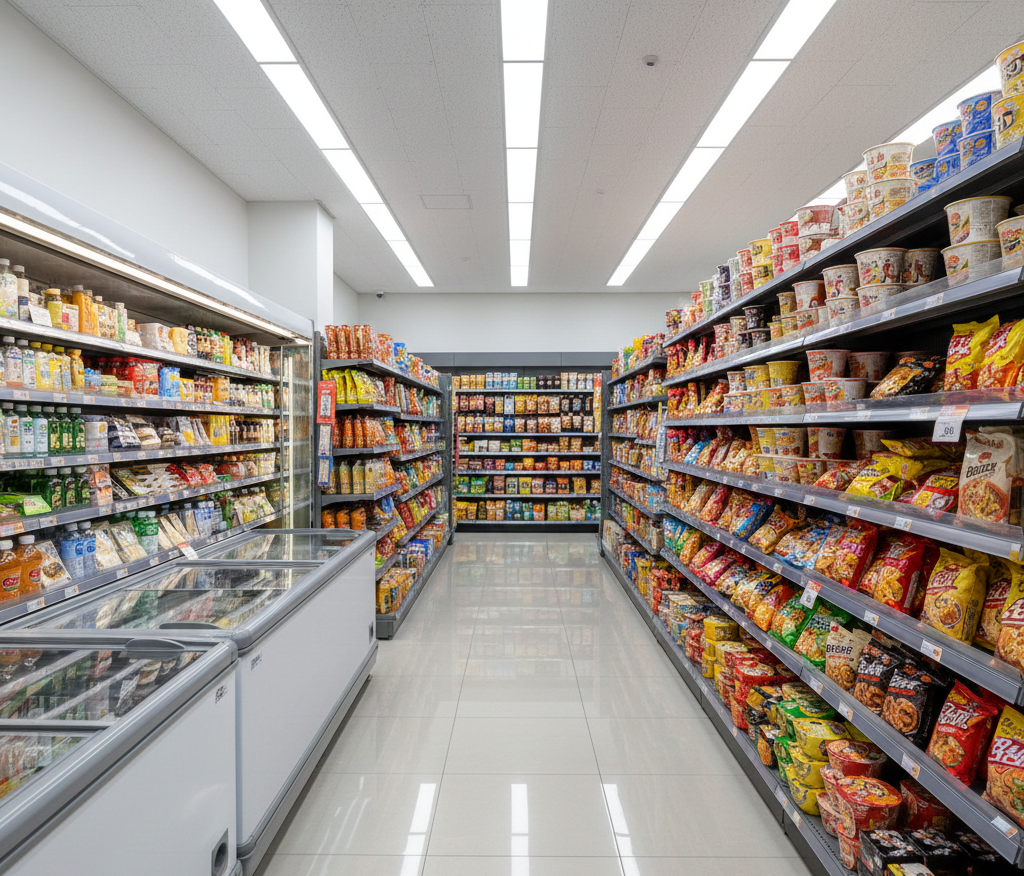
Korean convenience stores are more than places to grab a quick snack. They’re an essential part of daily life, open 24 hours a day, serving as mini restaurants, banks, post offices, and late-night hangout spots all in one.
For travelers visiting Korea, the convenience store experience is a must. It’s affordable, it’s everywhere, and it offers a surprisingly authentic glimpse into how Koreans actually live.
In this guide, I’ll walk you through what makes Korean convenience stores unique, what to eat, and how to make the most of your visit.
What Makes Korean Convenience Stores Different
If you’re used to convenience stores in other countries, Korean ones will feel like a different universe.
They’re Everywhere
In Seoul, you’ll find a convenience store on almost every block — sometimes two or three within sight of each other. Korea has one of the highest convenience store densities in the world. No matter where you are, there’s probably one within a two-minute walk.
Open 24/7
Most Korean convenience stores never close. Whether it’s 3 AM and you need medicine, or you’re craving a midnight snack, there’s always a store open nearby.
More Than Just a Store
Korean convenience stores offer services you wouldn’t expect. You can withdraw cash from ATMs, send and receive packages, pay utility bills, charge your transit card, print documents, and even buy concert tickets. It’s like a mini service center disguised as a snack shop.
Clean and Organized
Stores are well-lit, neatly organized, and regularly restocked. The quality of products — especially food — is surprisingly high for a convenience store.
Must-Try Convenience Store Foods
The food selection at Korean convenience stores is legendary. Here’s what you need to try.
Samgak Kimbap (삼각김밥)
These triangular rice balls wrapped in seaweed are the ultimate Korean convenience store icon. They come in dozens of flavors — tuna mayo, bulgogi, kimchi, spam, and more. They’re cheap (usually around 1,000-1,500 won), filling, and perfect for a quick bite. Learning how to open the packaging is a rite of passage for every visitor — there’s a trick to pulling the wrapper in the right order to keep the seaweed crispy.
Cup Ramyeon (컵라면)
Instant noodles in a cup, ready to eat after adding hot water. Every Korean convenience store has a hot water dispenser and a microwave, so you can prepare and eat your ramyeon right there. The combination of samgak kimbap and cup ramyeon is the classic convenience store meal.
Lunch Boxes (도시락)
Korean convenience store lunch boxes are a full meal — rice, meat, side dishes, and sometimes even soup. They cost between 3,000-5,000 won and rival what you’d get at a casual restaurant. Heat them up in the store’s microwave and you’re set.
Hot Bar and Fried Foods
Most stores have a heated display case with fried snacks: hot dogs, fried chicken pieces, tteokbokki, fish cakes, and dumplings. These are perfect for a quick, warm snack, especially in winter.
Desserts and Snacks
Korean convenience stores excel at desserts. You’ll find creamy puddings, fresh pastries, unique ice cream flavors, and seasonal limited-edition treats. The snack aisle is equally impressive, with Korean chips, crackers, and candies you won’t find anywhere else.
The Convenience Store Eating Experience
One thing that surprises many visitors: in Korea, eating inside the convenience store is completely normal.
Seating Areas
Most stores have a counter by the window or a small table where you can sit and eat. It’s not fancy, but it’s convenient — a quick, cheap meal without needing to find a restaurant.
Microwave and Hot Water
Every store has a microwave for heating up your food and a hot water dispenser for instant noodles. Some even have automatic ramyeon cooking machines that boil water and cook your noodles for you.
Solo Dining is Normal
Eating alone at a convenience store carries zero stigma in Korea. Students, office workers, travelers — everyone does it. It’s fast, affordable, and nobody cares.
Popular Drinks You Should Try
Banana Milk (바나나맛 우유)
The iconic yellow bottle. Sweet, creamy, and nostalgic for every Korean who grew up drinking it. It’s a must-try, even just once.
Soju and Beer
Korean convenience stores sell alcohol at much lower prices than bars or restaurants. Many people buy soju or beer from a convenience store and drink it at a park or by the river — perfectly legal and socially accepted in Korea.
Makgeolli
Korean rice wine, available in bottles. Great for a casual night.
Coffee
From canned coffee to bottled iced Americanos to instant coffee sachets, there’s every type of coffee you could want.
Beyond Food: Services You Didn’t Expect
Korean convenience stores are basically mini service centers.
ATM
Almost every store has an ATM. You can withdraw cash anytime, day or night.
Package Delivery
You can send packages from a convenience store or have online orders delivered there for pickup. Very useful for travelers staying in Airbnbs without a front desk.
Transit Card Charging
Running low on your T-money card? Top it up at any convenience store counter.
Bill Payment
Koreans pay utility bills, phone bills, and even traffic fines at convenience stores.
Emergency Supplies
Need an umbrella during sudden rain? Socks because yours got wet? Phone charger? Medicine for a headache? The convenience store has you covered.
Convenience Stores in Korean Daily Life
Understanding how Koreans use convenience stores tells you a lot about Korean culture.
Students
For Korean students — especially those attending after-school academies (hagwon) — convenience stores are essential. They’re affordable places to grab dinner between classes when there’s no time for a proper meal.
Office Workers
When work runs late and the cafeteria is closed, the convenience store becomes dinner. A lunch box or cup of ramyeon at 10 PM is a common sight in Korea’s work culture.
Late-Night Hangouts
Groups of friends often buy drinks and snacks from a convenience store and sit outside on plastic chairs, chatting late into the night. It’s casual, cheap, and very Korean.
Travelers on a Budget
For visitors trying to save money, convenience stores are a lifesaver. You can eat well for under 5,000 won and find everything you need in one place.
Tips for First-Time Visitors
Payment
Cards are accepted everywhere, but cash works too. Contactless payments like Samsung Pay and Apple Pay are widely accepted.
Major Chains
The big names are CU, GS25, 7-Eleven, and Emart24. Each has slightly different products and promotions, but they’re all good.
Look for Deals
Korean convenience stores constantly run promotions: 1+1 (buy one get one free), 2+1 (buy two get one free), and app-exclusive discounts. Check the signs before you pay.
Check the Receipt
Some receipts have lottery numbers or discount coupons. Don’t throw them away without looking.
Use the Apps
Each chain has its own app with points, coupons, and special deals. If you’re staying in Korea for a while, they’re worth downloading.
My Convenience Store Story
For me, convenience stores bring back memories of my school days.
When I was in 5th and 6th grade, I attended an after-school academy — the kind where students prepare to get into competitive high schools like foreign language or science high schools. Classes ran from 6 PM to 10 PM, so dinner had to happen somewhere in between.
Around the academy, there were three convenience stores. Most students got pocket money from their parents, but not enough to eat at a real restaurant. So the convenience store became our cafeteria.
During break time, it was a race to get there first.
The go-to meal for everyone was the same: one samgak kimbap and one cup ramyeon. The samgak kimbap was easy — just microwave it and you’re done. But cup ramyeon needed hot water, and that’s where the problem started.
The hot water dispenser could only handle so many cups before it ran out of truly hot water. If you arrived late, you’d get lukewarm water instead. And there’s nothing worse than lukewarm cup ramyeon — the noodles don’t cook properly, so you’re basically just eating soggy, half-raw noodles soaked in warm water.
I remember times when my teacher kept the class running three to five minutes past break time. By the time I got to the convenience store, the hot water was gone. On those days, I just had to accept my fate and eat my sad, undercooked ramyeon anyway.
Looking back, it’s a funny memory. But it also shows how central convenience stores were — and still are — to everyday life in Korea.
These days, convenience stores have even more options. The lunch boxes are better, there are more snacks to choose from, and they’re open 24 hours. When I need medicine at 2 AM or get hungry after midnight, I know there’s always a store nearby. That kind of convenience is something I’ve come to appreciate even more now that I’ve lived abroad.
Final Thoughts
Korean convenience stores are more than just stores — they’re part of the culture.
They’re where students grab dinner between classes, where workers find a late-night meal, where friends sit outside with cheap beer and good conversation. They’re reliable, affordable, and always there when you need them.
If you’re visiting Korea, don’t skip the convenience store experience. Buy a samgak kimbap, heat up a cup of ramyeon, sit by the window, and watch the city go by. It’s one of the most authentic ways to experience everyday Korean life.