

Introduction
Korean fried chicken has taken over the world — and for good reason.
It’s not just fried chicken. It’s crispy, flavorful, and comes in dozens of varieties you won’t find anywhere else. From sweet and spicy yangnyeom to savory garlic soy, Korean chicken is in a league of its own.
But what really sets it apart isn’t just the taste. It’s the culture around it — late-night delivery, eating chicken with beer by the river, and having hundreds of chicken brands to choose from.
In this guide, I’ll explain what makes Korean fried chicken different, introduce the most popular styles and brands, and share why chicken has become such an essential part of Korean food culture.
What Makes Korean Fried Chicken Different?
If you’ve ever tried Korean fried chicken and thought it tasted better than regular fried chicken, you’re not imagining it. There are real differences in how it’s made.
Double Frying
The biggest secret is the double-frying technique. Korean fried chicken is fried twice — first at a lower temperature to cook the meat through, then again at a higher temperature to crisp up the skin. This creates an incredibly thin, crunchy exterior that stays crispy much longer than traditional fried chicken.
Thin, Crispy Coating
Unlike American-style fried chicken with thick, heavy breading, Korean chicken has a light, thin coating. The focus is on crunch, not batter. This makes it less greasy and allows the sauces to coat the chicken evenly.
Variety of Sauces
Korean fried chicken comes in countless flavors. Sweet and spicy, soy garlic, honey butter, cheese, and more. Many restaurants have their own signature sauces, so you can eat chicken every week and never get bored.
Fresh Oil
Korean chicken restaurants have extremely high turnover, which means the frying oil is constantly being refreshed. Fresh oil makes a noticeable difference in taste and quality.
The Sides
Korean chicken always comes with “chikin-mu” (치킨무) — sweet pickled radish cubes that cleanse your palate between bites. It’s the perfect refreshing contrast to the rich, crispy chicken.
Types of Korean Fried Chicken
Korean fried chicken isn’t just one dish — it’s a whole category. Here are the main styles you’ll encounter.
Huraideu (후라이드) — Original/Plain
Classic fried chicken with no sauce. Just perfectly crispy, golden-brown chicken. This style lets the quality of the frying technique shine through. Simple but addictive.
Yangnyeom Chicken (양념치킨)
The most iconic Korean style. Fried chicken coated in a sweet, spicy, and slightly sticky red sauce. It’s tangy, a little bit hot, and absolutely delicious. If you’ve seen Korean chicken in K-dramas, this is probably what they were eating.
Ganjang Chicken (간장치킨)
Chicken glazed with a sweet soy sauce. Less spicy than yangnyeom, with a savory-sweet flavor profile. Kyochon Chicken made this style famous.
Garlic Chicken (마늘치킨)
Coated with a garlic-heavy sauce or topped with fried garlic pieces. Perfect for garlic lovers.
Padak (파닭)
Fried chicken buried under a mountain of sliced green onions. The fresh, sharp flavor of raw scallions balances the rich chicken perfectly.
Banban (반반) — Half and Half
Can’t decide between two flavors? Order “banban” — half original and half yangnyeom (or any two flavors). It’s the most popular way to order in Korea, giving you the best of both worlds.
Bone-in vs Boneless (뼈 vs 순살)
You can order most chicken styles with bones or boneless. Koreans often debate which is better. Bone-in has more flavor, but boneless is easier to eat. Your choice.
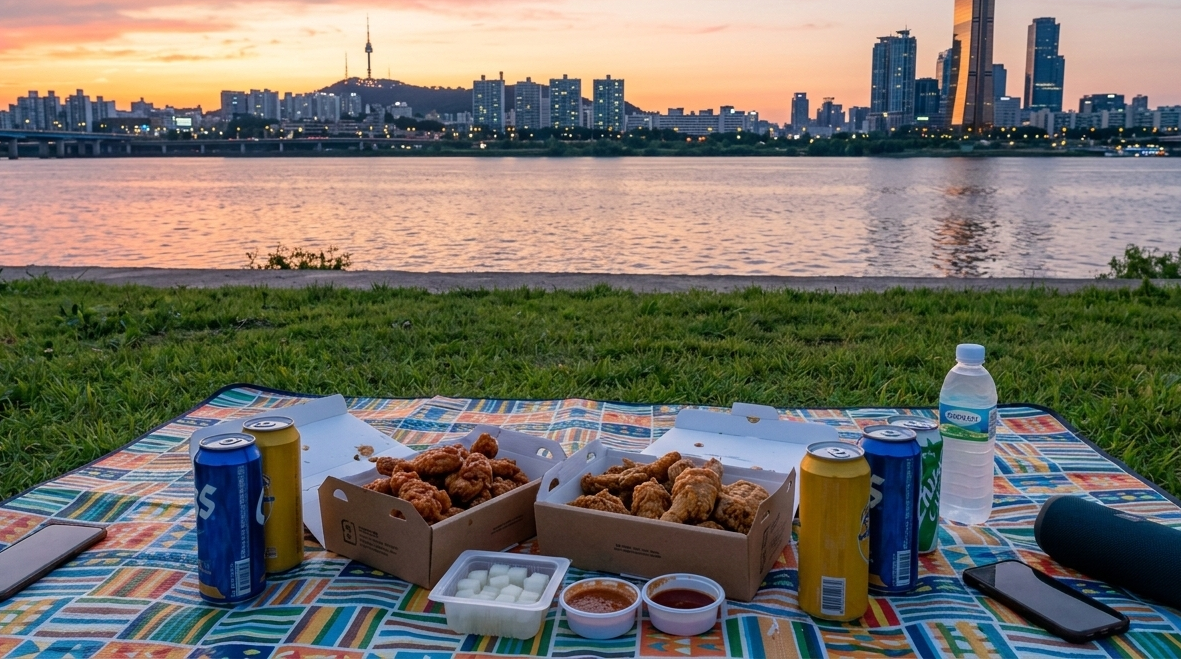
Chimaek Culture (치맥)
You can’t talk about Korean chicken without talking about chimaek.
What is Chimaek?
“Chimaek” (치맥) combines “chicken” (치킨) and “maekju” (맥주, beer). It simply means eating fried chicken while drinking beer — and it’s one of Korea’s most beloved food traditions.
Where to Enjoy Chimaek
The most iconic spot is the Han River. On warm evenings, thousands of Koreans sit along the riverbanks with chicken and beer delivered right to them. Baseball stadiums are another chimaek hotspot — watching a game with chicken and beer is a quintessential Korean experience.
But honestly, most chimaek happens at home. Order delivery, crack open some cold beers, and enjoy.
Why It Works
The crispy, salty chicken pairs perfectly with cold, refreshing beer. It’s a combination that just makes sense. Unlike heavier drinking sessions with soju, chimaek has a lighter, more relaxed vibe — perfect for casual hangouts with friends.
Chicken Delivery Culture
One thing that surprises visitors to Korea is the delivery culture — especially for chicken.
Delivery Anywhere
In Korea, you can get chicken delivered almost anywhere. To your home, obviously. But also to parks, the Han River, even certain beaches. Delivery riders will find you wherever you are.
Delivery Apps
Most Koreans order through apps like Baedal Minjok (배달의민족), Yogiyo (요기요), or Coupang Eats. These apps show you every chicken restaurant nearby, with menus, photos, reviews, and estimated delivery times.
Fast Delivery
Delivery is fast — usually 30 minutes to an hour. Some restaurants are even faster. The competition among chicken shops is fierce, so speed and quality both matter.
Late Night Orders
Many chicken places deliver until 1 or 2 AM, and some are open 24 hours. Late-night chicken — “야식” (yasik) — is a Korean tradition, especially after drinking or during late-night TV watching.
Popular Korean Chicken Brands
Korea has thousands of chicken restaurants. Here are some of the biggest names.
Kyochon (교촌치킨)
The pioneer of soy garlic chicken. Kyochon is known for its signature honey-soy flavor and consistent quality. One of the most recognizable chicken brands in Korea.
BBQ Chicken
Famous for their “Golden Olive Chicken” fried in olive oil. BBQ has a wide menu with many unique flavors and has expanded internationally.
BHC
Known for creative flavors like “Ppurinkle” (cheese powder-coated chicken) and “Macho King” (spicy). Popular with younger Koreans.
Nene Chicken (네네치킨)
Offers a huge variety of sauce options. Known for their snow-style cheese toppings.
Goobne Chicken (굽네치킨)
Specializes in oven-roasted chicken instead of fried. A healthier alternative that’s still crispy and delicious.
Pelicana (페리카나)
One of the oldest chicken chains in Korea. A nostalgic favorite for many Koreans.
Jadamchicken (자담치킨)
Known for their spicy chicken options. If you like heat, their spicy menu items deliver a perfect balance of flavor and kick.
Puradak (푸라닭치킨)
Famous for high-quality, juicy chicken. The meat itself is noticeably tender and flavorful.
Neighborhood Chicken Shops
Don’t overlook small, local chicken shops. Many have loyal followings and secret recipes that rival the big chains. Some of the best chicken in Korea comes from no-name shops that have been perfecting their recipe for decades.
When Koreans Eat Chicken
Chicken isn’t just for special occasions in Korea. It’s an anytime food.
Rainy Days
There’s a Korean belief that fried food tastes better when it rains. Something about the sound of rain and sizzling oil. When the weather turns gray, chicken orders spike.
Watching Sports
Baseball and soccer games go hand-in-hand with chicken and beer. Whether you’re at the stadium or watching at home, chicken is the default game-day food.
Late Night Snacking
Chicken is the king of Korean late-night food. After a night out, after studying, after working late — chicken is always there.
No Reason at All
Sometimes you just want chicken. Koreans don’t need a special occasion. The craving hits, you open the delivery app, and 40 minutes later you’re eating.
Tips for Ordering Chicken in Korea
If you’re new to Korean chicken, here are some tips.
Try Banban First
If you can’t decide, order banban (half and half). You get to try two flavors without committing to one.
Use Delivery Apps
Download Baedal Minjok or Yogiyo. Even if you don’t read Korean, the pictures and ratings make it easy to choose.
Don’t Skip the Sides
Chicken places offer sides like cheese balls, tteokbokki, french fries, and more. They’re worth trying.
Check Minimum Order Amounts
Some restaurants have minimum order amounts for delivery. Usually ordering one whole chicken is enough.
Eat the Pickled Radish
Don’t ignore the chikin-mu. It’s there to refresh your mouth between bites and cut through the richness.
My Korean Fried Chicken Story
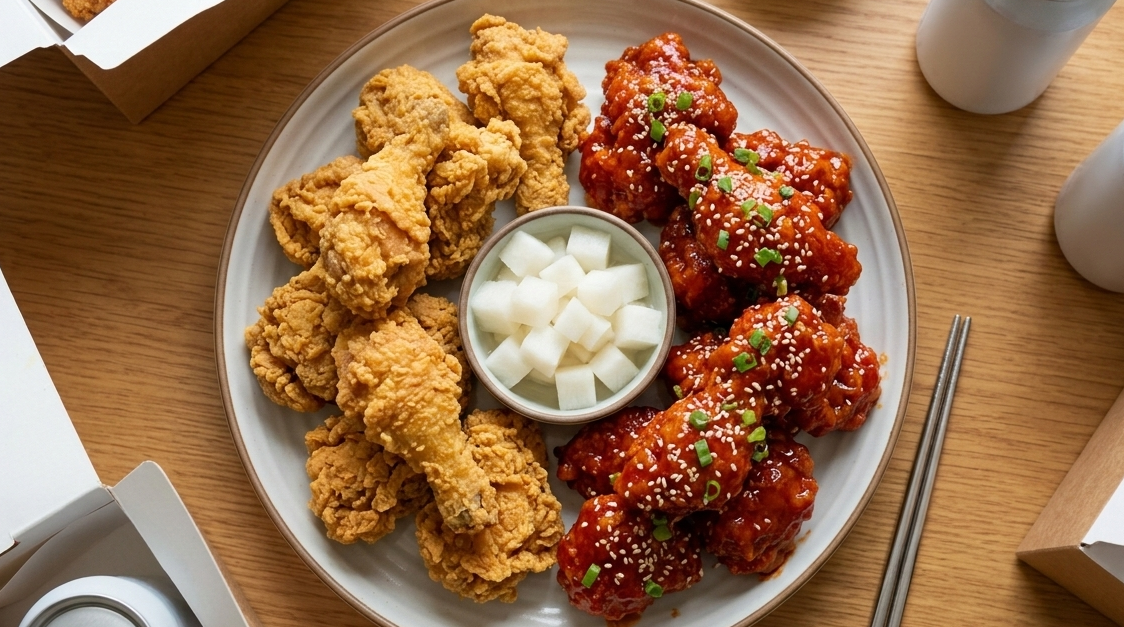
When I was young, my family always ordered “banban” — half original, half yangnyeom.
But here’s the thing: I only ate the original fried chicken. I avoided the yangnyeom completely. The reason was simple — I didn’t like getting the sticky sauce all over my hands. It sounds silly now, but as a kid, that was a dealbreaker.
These days, things have changed. My wife loves yangnyeom chicken. So now, instead of ordering banban, we just order full yangnyeom. I’ve learned to embrace the sticky fingers.
I also have my favorite chicken brands that weren’t mentioned in the popular chains above. One is Jadamchicken (자담치킨). They have a spicy chicken menu that’s incredible — it’s the perfect combination of delicious flavor and real heat. When I’m craving something spicy, that’s what I order.
The other is Puradak (푸라닭치킨). What sets them apart is the chicken itself — it’s noticeably more tender and juicy than other places. You can really taste the quality of the meat.
That’s the beauty of Korean chicken culture. There are so many brands and so many menus that I still haven’t tried everything, even after years of eating chicken regularly.
If you visit Korea, don’t just try one place and call it done. Take your time. Explore different brands, different styles, different flavors. Every shop has something unique to offer, and finding your personal favorite is part of the fun.
Final Thoughts
Korean fried chicken is more than just food. It’s a culture.
It’s delivery arriving at your door at midnight. It’s sitting by the Han River with beer and friends. It’s the satisfying crunch of perfectly fried skin. It’s debating with family about which flavor to order.
If you visit Korea, eating fried chicken is non-negotiable. Find a good spot, order some chimaek, and experience one of Korea’s greatest culinary contributions to the world.
Your tastebuds will thank you.