
Introduction
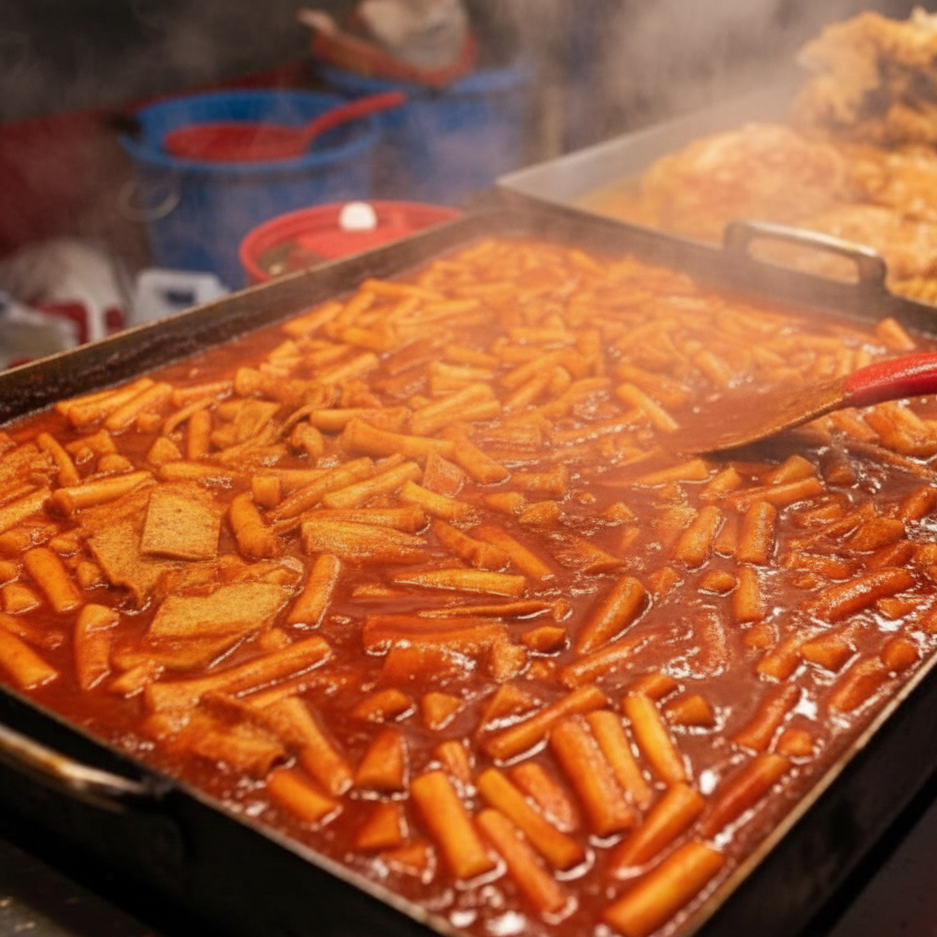
If there’s one street food that defines Korea, it’s tteokbokki.
Walk through any Korean city — whether it’s a busy subway station in Seoul or a quiet alley in a small town — and you’ll find tteokbokki. The sweet and spicy smell of its red sauce fills the air, drawing people in like a magnet.
Tteokbokki is more than just a popular snack. It’s affordable, satisfying, and deeply tied to Korean culture. For many Koreans, it’s a taste of childhood, late-night cravings, and comfort on cold winter days.
In this guide, I’ll introduce you to everything you need to know about tteokbokki — what it is, where to find it, how to eat it like a local, and why it holds such a special place in Korean hearts.
What is Tteokbokki?
Tteokbokki (떡볶이) is a Korean dish made with chewy rice cakes cooked in a sweet and spicy red sauce. The name comes from “tteok” (rice cake) and “bokki” (stir-fried).
The main ingredients are simple: cylinder-shaped rice cakes, gochujang (Korean red pepper paste), gochugaru (red pepper flakes), sugar, and fish cake. Some versions include boiled eggs, scallions, or cabbage.
What makes tteokbokki addictive is the combination of textures and flavors. The rice cakes are soft and chewy, almost bouncy when you bite into them. The sauce is a perfect balance of sweet, spicy, and slightly savory. It’s the kind of food that makes you keep reaching for more, even when your mouth is on fire.
A Brief History
Tteokbokki has a surprisingly royal origin.
The original version dates back to the Joseon Dynasty, where it was served in the royal court. Back then, it wasn’t spicy at all. The rice cakes were stir-fried with soy sauce, sesame oil, vegetables, and beef — a refined dish fit for kings.
The tteokbokki we know today was born in the 1950s. After the Korean War, a woman in Seoul accidentally dropped rice cakes into a pot of spicy sauce. The result was so delicious that she started selling it at her food stall. The dish quickly spread across the country.
From royal courts to street corners, tteokbokki transformed into an affordable comfort food for everyday people. Today, it’s one of the most beloved snacks in Korea, enjoyed by students, office workers, and families alike.
Types of Tteokbokki
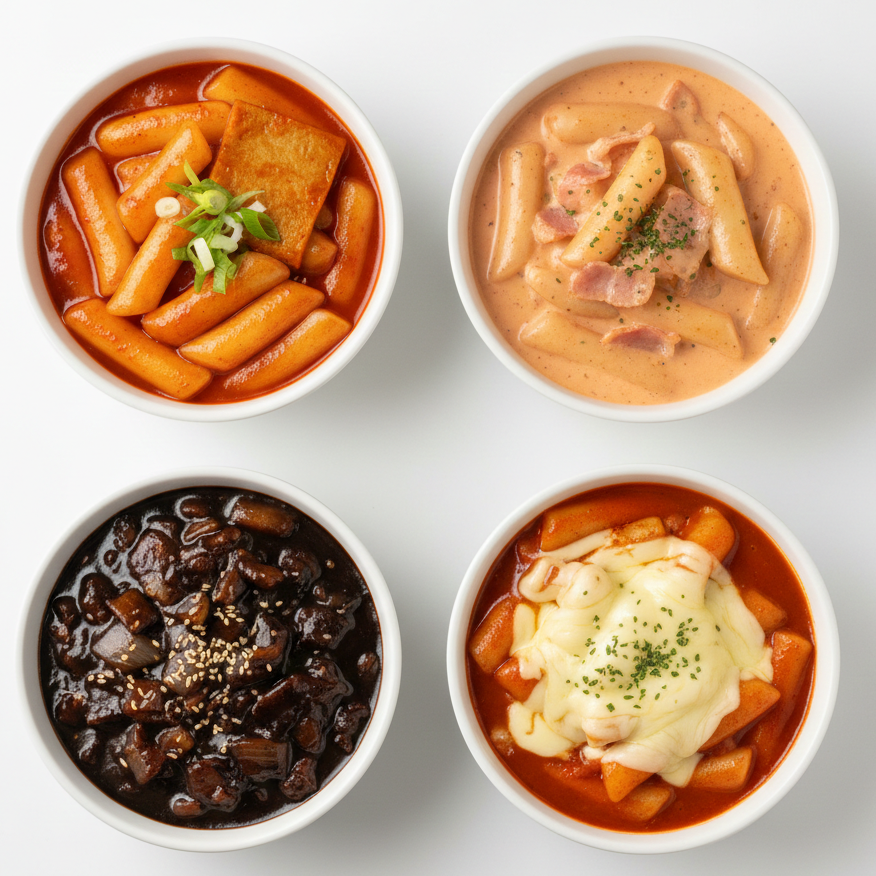
Over the years, tteokbokki has evolved into many different styles. Here are the most popular ones you’ll find in Korea.
Original Tteokbokki (일반 떡볶이) The classic version with chewy rice cakes and fish cake in sweet-spicy gochujang sauce. This is what you’ll find at most street stalls.
Soup Tteokbokki (국물 떡볶이) A soupier version with more broth. It’s less thick than the original and great for dipping other foods.
Rose Tteokbokki (로제 떡볶이) A modern twist that combines gochujang sauce with cream. It’s milder, slightly creamy, and has become hugely popular in recent years. “Rose” refers to the pinkish color of the sauce.
Jjajang Tteokbokki (짜장 떡볶이) Made with black bean sauce instead of gochujang. It’s savory rather than spicy, with a completely different flavor profile.
Cheese Tteokbokki (치즈 떡볶이) Regular tteokbokki topped with melted cheese. The cheese balances the spiciness and adds a rich, gooey texture.
Royal Court Tteokbokki (궁중 떡볶이) The original non-spicy version with soy sauce, vegetables, and beef. It’s elegant and mild — a taste of the dish’s royal roots.
Where to Eat Tteokbokki in Korea
Tteokbokki is everywhere in Korea, but some places offer a more authentic experience than others.
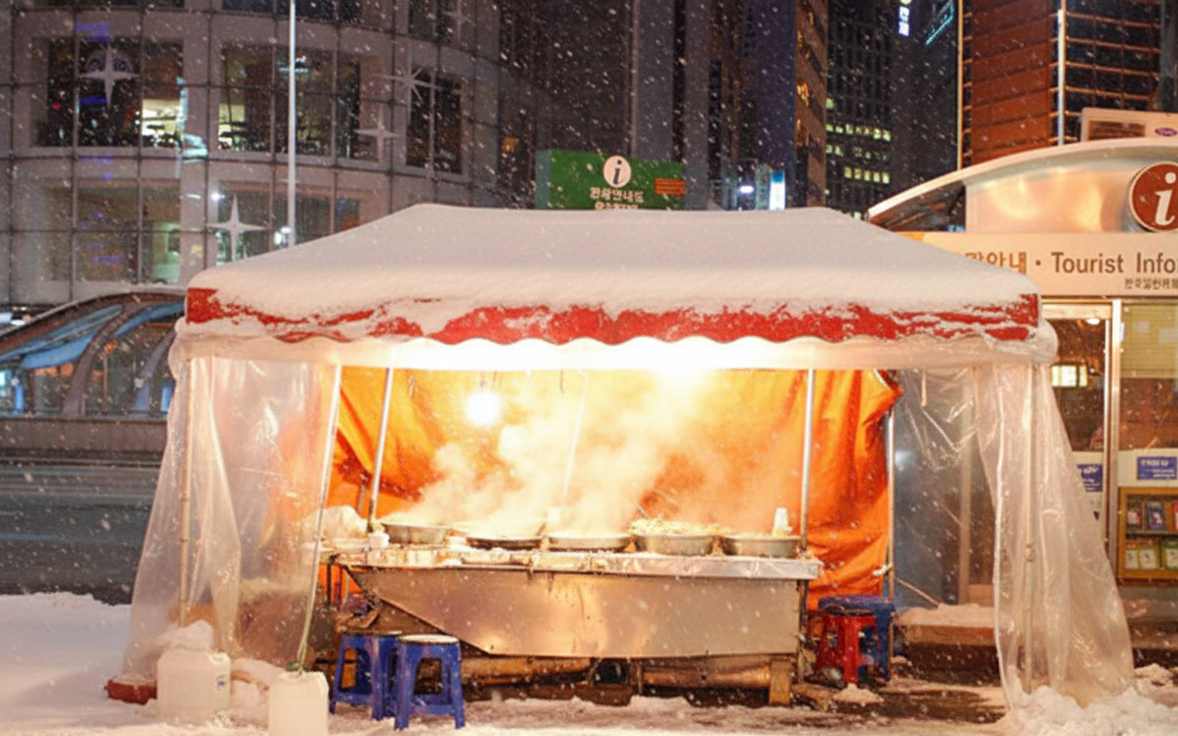
Street Food Stalls (포장마차) The most iconic way to eat tteokbokki. These small outdoor stalls are usually found near subway stations, schools, and busy streets. You’ll eat standing up or on plastic stools, often in the cold — and that’s part of the charm.
Bunsik Restaurants (분식집) Casual Korean eateries that specialize in affordable comfort food. Along with tteokbokki, you’ll find gimbap, ramyeon, and fried foods. These are perfect for a quick, cheap meal.
Traditional Markets Markets like Gwangjang Market in Seoul or Tongin Market are famous for their food vendors. You can try different styles of tteokbokki while exploring the market atmosphere.
Franchise Chains Korea has several popular tteokbokki chains like Sindangdong Tteokbokki Town, Jaws Tteokbokki, and Dookki. These offer consistent quality and often have unique menu items like cheese tteokbokki or tteokbokki hot pot.
How to Eat Like a Local
Eating tteokbokki isn’t just about the rice cakes. Here’s how Koreans really enjoy it.
Pair it with fish cake soup (어묵 국물) Most tteokbokki stalls offer free fish cake broth on the side. Sip it between bites to cleanse your palate and cool down the spiciness. In winter, this warm broth is essential.
Order fried foods (튀김) and sundae Tteokbokki is rarely eaten alone. Koreans typically order it with fried vegetables, squid, or dumplings — and sundae (Korean blood sausage). Dipping these into the tteokbokki sauce is the best part.
Finish with fried rice (볶음밥) When you’re done with the rice cakes, don’t waste the leftover sauce. Many places will stir-fry rice in the remaining sauce for a final course. It’s incredibly satisfying.
Adjust the spice level If you can’t handle too much heat, ask for “deol maepge” (덜 맵게), which means “less spicy.” Some places also offer mild versions or cheese to tone down the heat.
My Tteokbokki Memories
For me, tteokbokki is more than food. It’s a thread that runs through my entire life.
I’ve been eating tteokbokki since elementary school, and my order has barely changed in all these years: one serving of tteokbokki, three pieces of fried food — vegetable fritter, gimmari (seaweed roll), and fried squid — and a cup of fish cake broth. I would take those crispy fried pieces and mix them right into the tteokbokki sauce, coating them in that sweet-spicy goodness. That combination, to me, is perfection.
The memories I cherish most come from Korean winter nights. After finishing hagwon (after-school academy), I would walk toward the subway station to go home. The winter air was freezing, and my breath came out in white puffs. But there, right in front of the station, was a small pojangmacha — a street food stall with orange plastic tarps glowing warmly in the dark.
I would duck inside, order my usual, and stand there eating while the steam rose from the tteokbokki. The hot fish cake broth warmed my hands and my stomach. For those few minutes, the cold didn’t matter. It was just me, the food, and that cozy feeling of being wrapped in warmth before heading home.
Even now, tteokbokki brings me that same comfort. My wife makes it at home from time to time, and every bite takes me back to those winter nights. The taste is slightly different — homemade always is — but the feeling is exactly the same.
For Koreans, tteokbokki is soul food. It’s the taste of childhood, of late nights, of warmth when you need it most. It’s not fancy or expensive, but it carries decades of memories in every bite.
Final Thoughts
Tteokbokki isn’t just Korea’s most popular street food. It’s a window into Korean culture — the warmth of street vendors, the joy of simple pleasures, and the comfort of food that feels like home.
If you ever visit Korea, don’t just try tteokbokki at a restaurant. Find a pojangmacha on a cold evening. Order a plate of tteokbokki with some fried snacks and a cup of fish cake broth. Stand there in the steam, surrounded by locals doing the same thing.
That experience — more than any fancy meal — will show you what Korean food culture is really about.
Coming Soon
I’m planning to share more tteokbokki content in the future:
My Wife’s Homemade Tteokbokki Recipe — The recipe she uses to bring me back to those winter nights. Simple, authentic, and perfect for making at home.
Best Tteokbokki Chain Restaurants in Korea — Korea has many popular tteokbokki franchises, each with their own style. I’ll share my recommendations for travelers who want to try different versions.
Stay tuned!