
Introduction
Jeju Island is Korea’s paradise.
Located off the southern coast of the Korean peninsula, Jeju is unlike anywhere else in the country. It has volcanic landscapes, stunning beaches, unique cuisine, and a laid-back atmosphere that feels worlds away from the busy streets of Seoul.
For Koreans, Jeju is the ultimate domestic getaway — a place to escape, relax, and reconnect with nature. It’s so beloved that many Koreans dream of doing “Jeju living” for a week or even a month, working remotely while enjoying island life.
For international visitors, Jeju offers something special: a UNESCO World Heritage site, dramatic natural scenery, delicious food, and a glimpse into a different side of Korean culture.
In this guide, I’ll cover everything you need to know to plan your Jeju trip — how to get there, where to go, what to eat, and tips to make the most of your visit.
Jeju at a Glance
| Quick Facts | |
|---|---|
| Location | Island south of the Korean peninsula |
| From Seoul | ~1 hour by flight |
| Best Time to Visit | Spring (April-May) or Fall (September-October) |
| Getting Around | Rental car strongly recommended |
| Known For | Hallasan Mountain, beaches, black pork, tangerines |
Special Entry: Many nationalities can visit Jeju visa-free, even if they normally need a visa for mainland Korea. Check the current regulations for your country.
How to Get to Jeju
By Air (Most Common)
Jeju International Airport (CJU) is one of the busiest airports in the world by passenger traffic — that’s how popular Jeju is.
| From | Flight Time |
|---|---|
| Seoul (Gimpo) | ~1 hour |
| Busan (Gimhae) | ~45 minutes |
| Other Korean cities | 45-70 minutes |
Flights are frequent — sometimes departing every 10-15 minutes during peak times. Book in advance during holidays and summer for better prices.
International Flights
Some Asian cities have direct flights to Jeju, including Tokyo, Osaka, Shanghai, and Taipei.
By Ferry
Ferries operate from Mokpo and Busan to Jeju. The journey takes several hours but can be a scenic alternative if you have time.
Getting Around Jeju
This is important: Jeju is not easy to navigate without a car.
Rental Car (Highly Recommended)
Jeju’s attractions are spread across the island, and public transportation is limited. A rental car gives you freedom to explore at your own pace.
- International driving permit required for foreign licenses
- Many rental companies at the airport
- Book in advance during peak season
- Roads are well-maintained and easy to navigate
Bus
Jeju has a bus system, but routes are infrequent and don’t reach many attractions conveniently. It’s possible to travel by bus, but you’ll spend a lot of time waiting.
Taxi
Taxis are available but expensive for long distances. Useful for short trips within Jeju City or Seogwipo.
Tour Buses
If you don’t want to drive, organized tour buses visit major attractions. Less flexible but a decent option for solo travelers without a license.
Best Areas to Explore
Jeju is divided into several distinct areas, each with its own character.
Jeju City (제주시)
The main city on the north side of the island. This is where the airport is located. Jeju City has the most urban conveniences — restaurants, shops, and nightlife. It’s a good base for exploring the north and east.
Seogwipo (서귀포)
The second-largest city, located on the south coast. Seogwipo is known for beautiful waterfalls, the Jungmun Resort area, and a more relaxed vibe than Jeju City. Great for nature lovers.
East Jeju
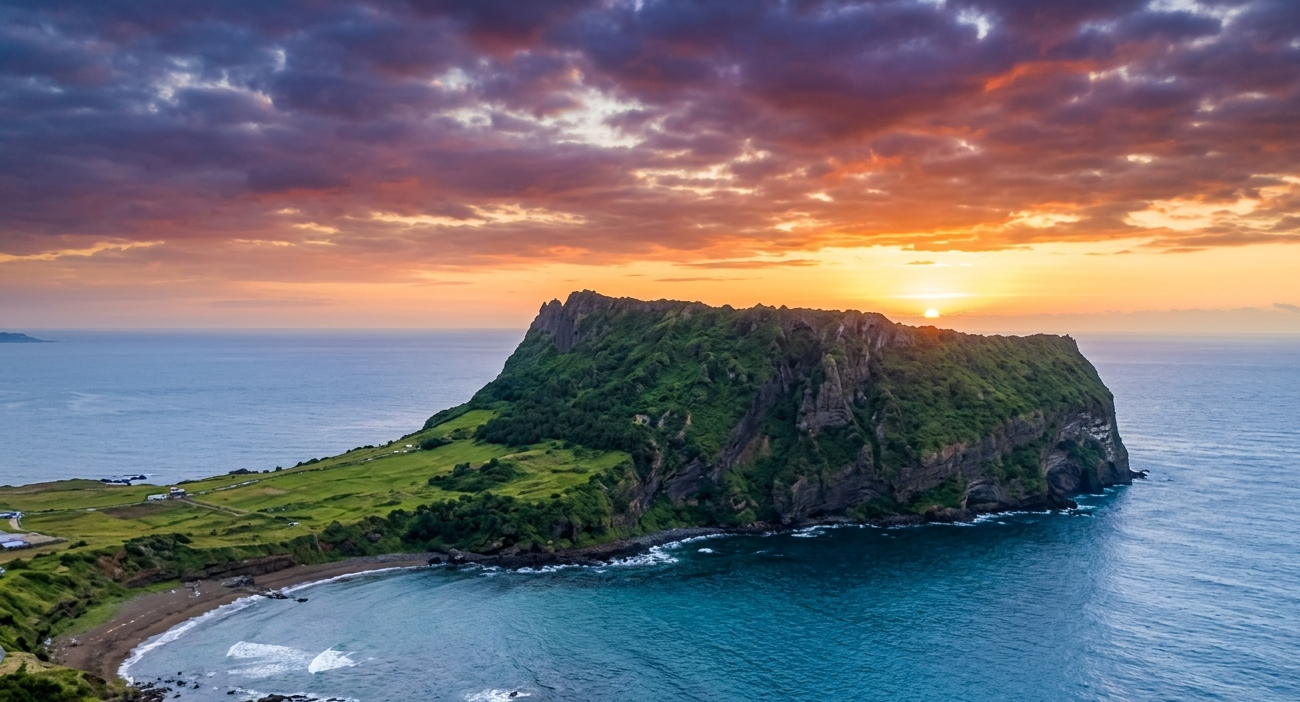
Home to Seongsan Ilchulbong (Sunrise Peak), Udo Island, and Seopjikoji. This area has dramatic volcanic landscapes and is essential for first-time visitors.
West Jeju
Known for beautiful beaches like Hyeopjae and Gwakji, the Osulloc Tea Museum, and the trendy Aewol café area. More laid-back and scenic.
Must-See Attractions
Natural Wonders
Hallasan Mountain (한라산)
Korea’s highest peak at 1,947 meters. Hallasan is a dormant volcano and the centerpiece of Jeju Island. You can hike to the summit (Baengnokdam crater lake) or take shorter trails. The landscape changes with each season — cherry blossoms in spring, lush green in summer, autumn foliage, and snow in winter.
Seongsan Ilchulbong (성산일출봉)
Also called “Sunrise Peak,” this iconic volcanic crater rises from the ocean on Jeju’s east coast. A UNESCO World Heritage site, it’s famous for spectacular sunrise views. The hike to the top takes about 30 minutes.
Manjanggul Cave (만장굴)
One of the longest lava tubes in the world. Walking through this ancient volcanic cave is surreal — the formations are millions of years old.
Jusangjeolli Cliff (주상절리대)
Stunning hexagonal basalt columns formed by volcanic activity, meeting the crashing waves of the sea. A beautiful sight, especially at sunset.
Waterfalls
- Cheonjiyeon Falls (천지연폭포) — “Pond of Heaven,” beautiful at night with lighting
- Jeongbang Falls (정방폭포) — One of few Asian waterfalls that falls directly into the ocean
Beaches
Jeju’s beaches have a different feel from mainland Korea — clearer water, volcanic black sand mixed with white, and a tropical atmosphere.
Hyeopjae Beach (협재해변)
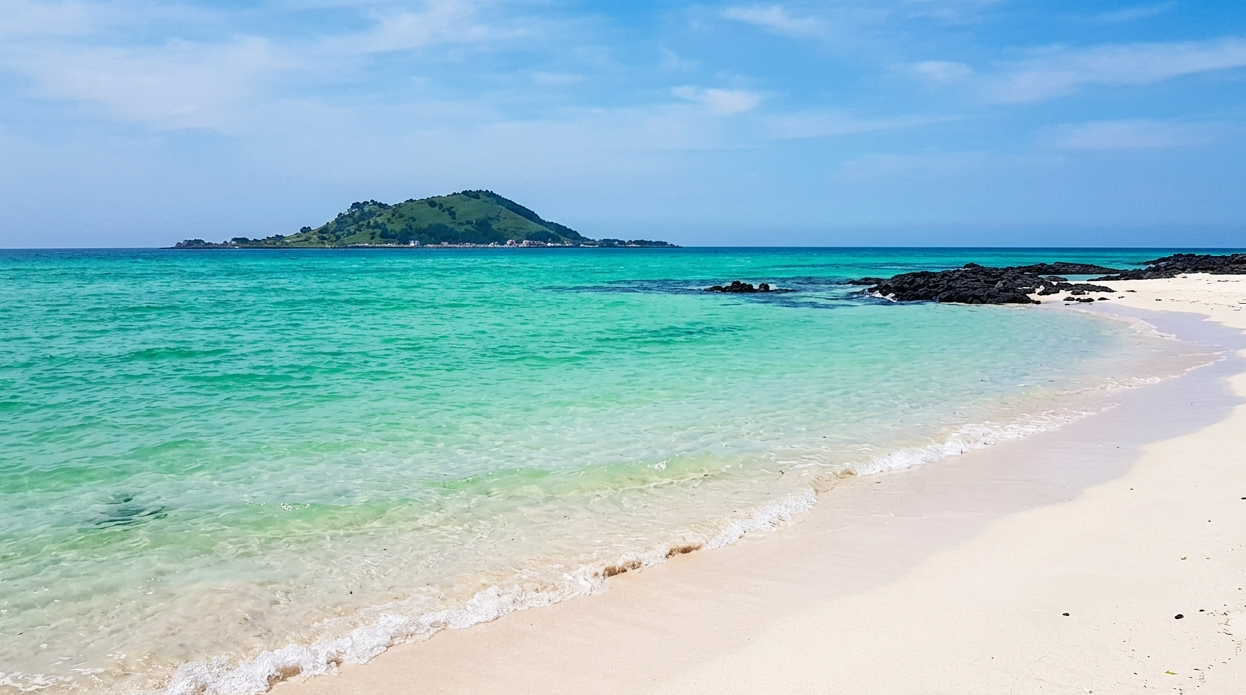
Famous for its emerald-green water and white sand. Views of Biyangdo Island in the distance make it incredibly picturesque.
Hamdeok Beach (함덕해변)
Clear, shallow water perfect for swimming. Surrounded by cafés and restaurants.
Woljeongri Beach (월정리해변)
Known for its photogenic cafés lining the shore. A popular spot for Instagram photos and relaxing with a coffee.
Islands Off Jeju
Udo Island (우도)
A small island off Jeju’s east coast, accessible by ferry. Rent a bicycle, electric scooter, or ATV and explore at your own pace. Famous for peanut ice cream and beautiful scenery.
Marado Island (마라도)
Korea’s southernmost point. A tiny island you can walk around in an hour. Famous for jjajangmyeon (black bean noodles) restaurants.
Culture and Experience
Osulloc Tea Museum (오설록)
Set among beautiful green tea fields, this museum offers tea tastings, matcha desserts, and scenic walks. A must-visit for tea lovers.
Dongmun Market (동문시장)
Jeju City’s traditional market. Sample local street food, fresh seafood, and Jeju specialties.
Haenyeo (해녀) Culture
Jeju’s famous female divers who harvest seafood without breathing equipment. You can watch demonstrations at some coastal areas and try fresh seafood they’ve caught.
Food You Must Try
Jeju has its own distinct cuisine, different from mainland Korea.
Main Dishes
Heukdwaeji (흑돼지) — Black Pork
Jeju’s famous black pigs produce meat that’s richer and more flavorful than regular pork. Grilled black pork is a must — find it at any barbecue restaurant.
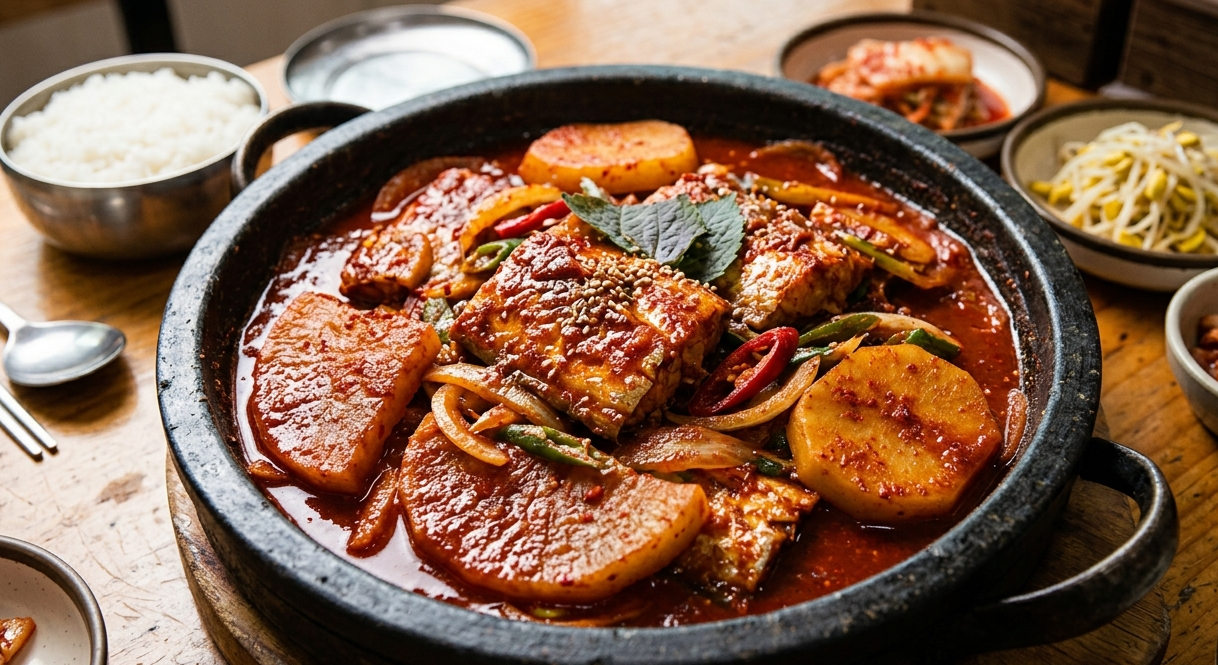
Galchi-jorim (갈치조림)
Braised hairtail fish in a spicy red sauce. Hairtail is abundant in Jeju waters, and this dish is a local specialty.
Gogi-guksu (고기국수)
Noodles in a pork bone broth, topped with sliced pork. Simple, hearty, and deeply satisfying. A Jeju comfort food staple.
Haemul-ttukbaegi (해물뚝배기)
Hot pot loaded with fresh Jeju seafood. Perfect on a rainy or chilly day.
Jeonbok-juk (전복죽)
Abalone porridge. Jeju is famous for abalone, and this creamy, savory porridge is a luxurious breakfast or light meal.
Snacks and Desserts
Hallabong (한라봉)
Jeju’s signature citrus fruit — sweet, juicy, and available in juice, desserts, and chocolates everywhere.
Omegi-tteok (오메기떡)
Traditional Jeju rice cake made with millet and coated in red bean powder.
Green Tea Desserts
The Osulloc area offers green tea ice cream, cakes, lattes, and more.
Peanut Ice Cream
Udo Island’s specialty. Creamy, nutty, and perfect while exploring the island.
How Many Days in Jeju?
| Duration | What You Can Do |
|---|---|
| 2 Days | Rushed but possible — hit major highlights |
| 3-4 Days | Comfortable — see main attractions without rushing |
| 5-7 Days | Relaxed — explore thoroughly, enjoy slow travel |
| 1 Month | Live the Jeju dream — many Koreans do “한달살기” (one-month living) |
I recommend at least 3-4 days to experience Jeju properly. The island is bigger than people expect, and rushing between attractions defeats the purpose of visiting such a relaxing place.
Sample Itineraries
3-Day Itinerary
| Day | Itinerary |
|---|---|
| Day 1 | Arrive → Hamdeok Beach → Dongmun Market → Jeju City evening |
| Day 2 | Seongsan Ilchulbong (sunrise) → Udo Island → Seopjikoji |
| Day 3 | Jungmun area → Jusangjeolli Cliff → Cheonjiyeon Falls → Depart |
4-Day Itinerary
| Day | Itinerary |
|---|---|
| Day 1 | Arrive → Hyeopjae Beach → Aewol cafés → Sunset |
| Day 2 | Hallasan hiking (full or half day) |
| Day 3 | Seongsan Ilchulbong → Udo Island → East coast drive |
| Day 4 | Osulloc Tea Museum → Seogwipo → Depart |
Tips for Visitors
Rent a Car
Seriously — you’ll thank yourself. Jeju without a car is frustrating. With a car, it’s freedom.
Weather Changes Fast
Jeju weather is unpredictable. Sunny morning can become rainy afternoon. Always carry a light jacket or umbrella.
Avoid Typhoon Season
Late summer (July-September) is typhoon season. Typhoons can disrupt flights, ferries, and outdoor activities. If a typhoon is approaching, your plans may need to change quickly.
Book Accommodation Early
Jeju is extremely popular with Korean travelers. During peak seasons (summer, holidays), hotels and pensions fill up fast.
Cash vs Card
Cards are widely accepted, but small vendors at markets may prefer cash.
Jeju Dialect
Jeju has its own dialect, quite different from standard Korean. Locals mostly speak standard Korean to visitors, but you might hear unique Jeju words.
One-Month Living Trend
Many Koreans dream of doing “한달살기” (one-month living) in Jeju — working remotely while enjoying island life. If you have the flexibility, it’s a wonderful way to truly experience Jeju beyond tourism.
My Jeju Story
Jeju is a place you can visit in any season, and each season offers something different.
I last visited in winter. Some people think winter isn’t the best time for Jeju, but I disagree. Hallasan Mountain covered in snow was absolutely stunning — the white landscape against the volcanic rock was breathtaking. There were fewer tourists too, which made everything feel more peaceful.
A friend of mine went in summer with an ambitious plan: cycle around the entire island. He rented a bicycle and started from Jeju City, making his way clockwise around the coast. By the time he reached Seogwipo — about halfway around — he heard news that a typhoon was coming in two days.
He had to abandon his plan and rush back to Jeju City before the storm hit. He still laughs about it now, but it’s a good reminder: summer in Jeju means typhoon risk. If you’re visiting between July and September, keep an eye on weather forecasts and have backup plans ready.
That’s the thing about Jeju — it’s beautiful in every season, but nature is in charge. Spring brings cherry blossoms and canola flowers. Summer has beaches and green landscapes (and occasional typhoons). Fall offers perfect weather and autumn colors. Winter has snow-capped Hallasan and cozy vibes.
No matter when you go, Jeju will surprise you.
Final Thoughts
Jeju Island is Korea’s escape — a place where the pace slows down, nature takes center stage, and every meal features something fresh and local.
It’s different from Seoul and Busan in the best way possible. Here, you’re not rushing between subway stations or navigating crowded streets. You’re driving coastal roads with ocean views, hiking volcanic craters, and eating black pork while watching the sunset.
Whether you have three days or three weeks, Jeju will reward you. Rent a car, pack layers for unpredictable weather, and let yourself relax into island time.
Just check the typhoon forecast if you’re visiting in summer.