
Introduction
In most countries, when summer arrives, people reach for cold drinks and light salads.
In Korea, they eat boiling hot chicken soup.
This might sound counterintuitive, but there’s wisdom behind it. Samgyetang (삼계탕) — Korean ginseng chicken soup — is one of Korea’s most beloved dishes, especially during the hottest days of summer. It’s a perfect example of how Korean food culture blends tradition, health, and incredible flavor.
In this guide, I’ll explain what samgyetang is, why Koreans eat it in summer, and how to enjoy it properly.
What is Samgyetang?
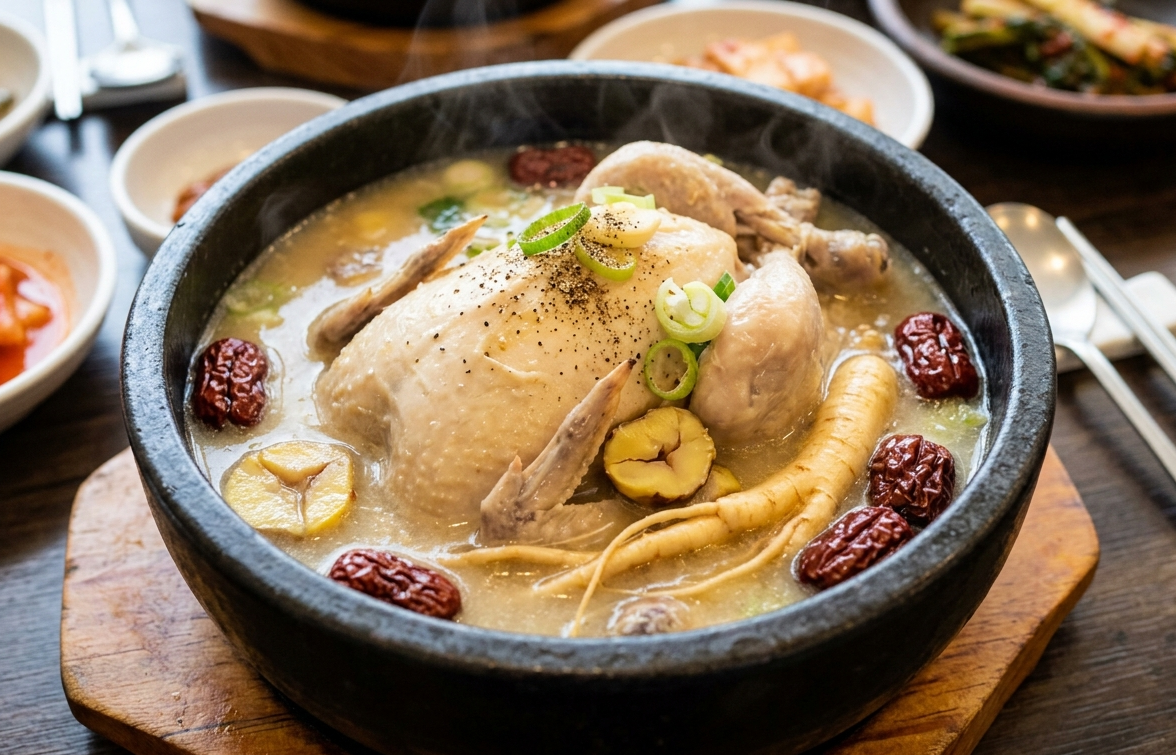
Samgyetang is a traditional Korean soup made with a whole young chicken stuffed with glutinous rice, ginseng, jujubes (Korean dates), garlic, and sometimes other medicinal herbs.
The name breaks down like this:
- Sam (삼) — Ginseng
- Gye (계) — Chicken
- Tang (탕) — Soup
Each serving is one whole chicken in a stone pot of milky, golden broth. The chicken is small and tender — a young chicken called “yeongge” (영계) — and after hours of simmering, the meat falls off the bone.
The broth is subtle and clean, not heavy or overly seasoned. The ginseng and herbs infuse the soup with earthy, slightly bitter notes that balance the richness of the chicken. It’s comfort food that also happens to be incredibly nourishing.
Why Koreans Eat Hot Soup in Summer
Here’s the part that confuses many foreigners: samgyetang is most popular during the hottest days of summer.
The concept is called “iyeolchiyeol” (이열치열) — literally, “fight fire with fire” or “use heat to overcome heat.”
The idea is that eating hot food in hot weather makes you sweat, which cools your body down and helps restore your energy. Instead of fighting the heat with cold food, you work with it.
Boknal: The Three Hottest Days
Koreans traditionally eat samgyetang on “boknal” (복날) — three specific days during the hottest period of summer:
- Chobok (초복) — First boknal
- Jungbok (중복) — Middle boknal
- Malbok (말복) — Last boknal
These days fall between mid-July and mid-August, calculated by the lunar calendar. On boknal, samgyetang restaurants are packed. Lines stretch out the door. It’s a cultural ritual — eating well to stay strong through the summer heat.
Key Ingredients
Samgyetang’s healing reputation comes from its carefully chosen ingredients.
| Ingredient | Korean | Purpose |
|---|---|---|
| Young chicken | 영계 | Tender meat, one per serving |
| Glutinous rice | 찹쌀 | Stuffed inside the chicken, adds heartiness |
| Ginseng | 인삼 | The star ingredient — boosts energy and immunity |
| Jujubes (Korean dates) | 대추 | Adds subtle sweetness, aids circulation |
| Garlic | 마늘 | Flavor and immune support |
| Ginkgo nuts | 은행 | Adds texture (optional) |
| Chestnuts | 밤 | Nutty flavor (optional) |
| Hwanggi (Astragalus) | 황기 | Additional herbal boost (optional) |
The combination creates a soup that’s meant to replenish your body — perfect after sweating through a Korean summer day or recovering from illness.
Health Benefits
Samgyetang isn’t just delicious — it’s genuinely nutritious.
High-Quality Protein
A whole chicken provides plenty of protein. The slow cooking makes the meat tender and easy to digest.
Ginseng’s Properties
Korean ginseng (insam) has been used in traditional medicine for centuries. It’s believed to boost energy, support the immune system, and improve overall vitality. While modern science is still studying these claims, ginseng remains a cornerstone of Korean wellness culture.
Easy to Digest
Unlike heavy or greasy foods, samgyetang is light on the stomach. The clear broth and tender meat make it suitable even when you’re not feeling well.
Recovery Food
Koreans eat samgyetang when they’re tired, recovering from illness, or need an energy boost. It’s also popular as a postpartum recovery food for new mothers.
How to Eat Samgyetang
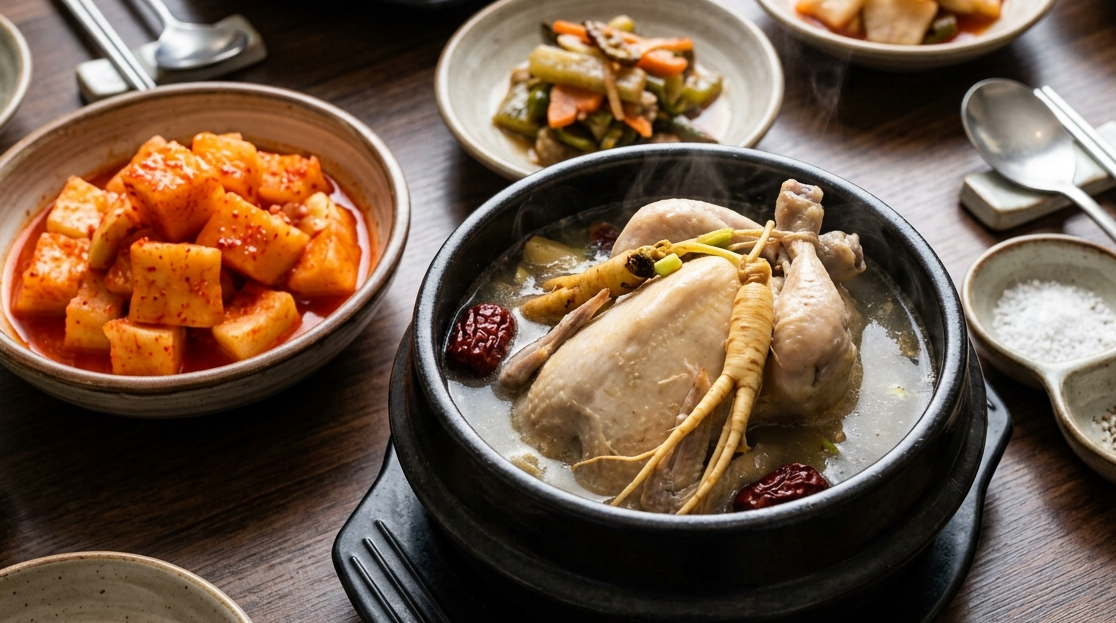
Samgyetang arrives at your table bubbling hot in a stone pot. Here’s how to enjoy it properly.
Step 1: Season the Broth
The soup comes lightly seasoned. Taste it first, then add salt and pepper to your preference. Small dishes of salt and ground black pepper are always provided.
Step 2: Start with the Chicken
Use your chopsticks and spoon to pull apart the tender chicken meat. It should fall off the bone easily. Dip the meat in salt or eat it with the broth.
Step 3: Eat the Rice Inside
The glutinous rice stuffed inside the chicken will have absorbed all the flavors. Scoop it out and enjoy it with the soup.
Step 4: Enjoy the Broth
The broth is where all the flavors come together — chicken, ginseng, garlic, and herbs. Sip it throughout your meal.
Step 5: Add More Rice (Optional)
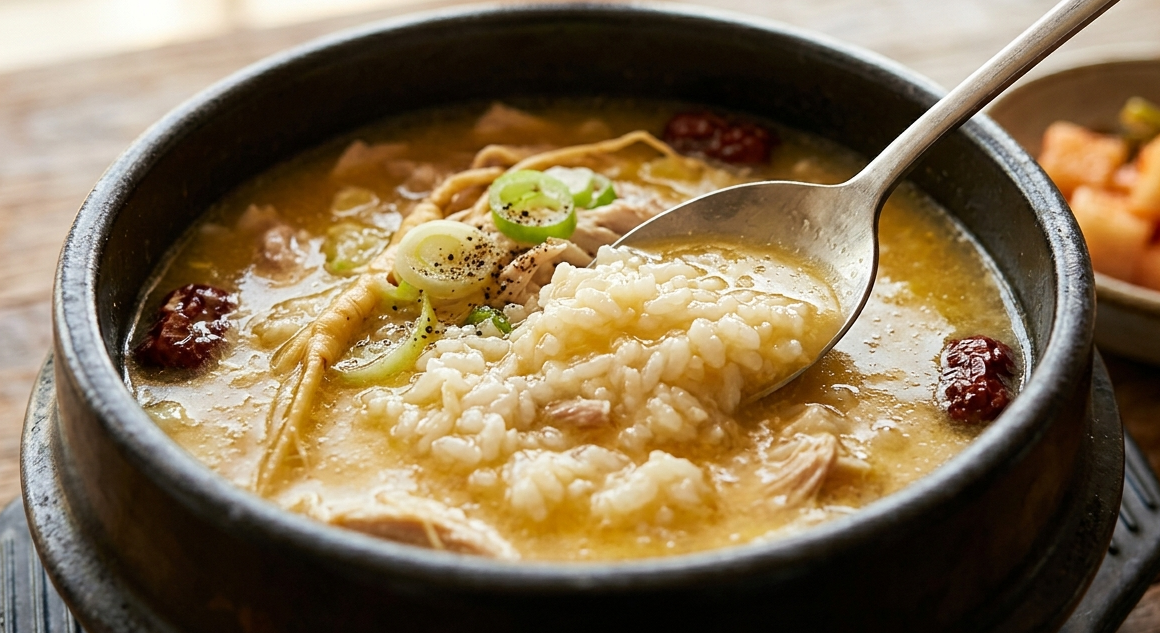
Once you’ve finished the chicken and stuffed rice, you can ask for additional rice to add to the remaining broth. This creates a simple, satisfying porridge to finish your meal.
Essential Side Dish: Kkakdugi
Samgyetang is almost always served with kkakdugi (깍두기) — cubed radish kimchi. The crunchy, tangy, slightly spicy radish is the perfect contrast to the rich, mild soup. Well-fermented kkakdugi with a good sour kick makes the samgyetang experience even better.
Some restaurants also serve traditional Korean liquor like insam-ju (ginseng wine) to accompany the meal.
Where to Eat Samgyetang
Samgyetang restaurants are everywhere in Korea, but some areas are especially famous.
Seoul
- Jongno area — Many famous samgyetang restaurants are clustered here
- Tosokchon (토속촌) — One of the most famous, often crowded with long lines
- Goryeo Samgyetang — Another well-known spot
What to Expect
- Most restaurants specialize in samgyetang and serve little else
- Prices typically range from 15,000 to 20,000 won per serving
- Premium versions with extra ginseng or black chicken (오골계) cost more
- On boknal days, expect crowds and waiting lines
Convenience Options
Many convenience stores and supermarkets sell packaged samgyetang that you can heat at home. It’s not quite the same as restaurant-fresh, but it’s a decent option when you can’t make it to a proper restaurant.
Samgyetang vs Other Korean Chicken Dishes
Samgyetang isn’t the only Korean chicken soup. Here’s how it compares.
| Dish | Description |
|---|---|
| Samgyetang (삼계탕) | Whole chicken with ginseng, rice stuffing, clear herbal broth |
| Dakbaeksuk (닭백숙) | Whole chicken boiled plainly, simpler than samgyetang, no stuffing |
| Dakdoritang (닭도리탕) | Chicken pieces in spicy red broth with vegetables |
| Jimdak (찜닭) | Braised chicken with soy sauce, glass noodles, vegetables |
Samgyetang stands out for its medicinal approach — it’s specifically designed as health food, not just a tasty dish.
Making Samgyetang at Home
While samgyetang is best enjoyed at a restaurant, you can make it at home.
Basic Ingredients
- 1 small young chicken (Cornish hen works as a substitute)
- ½ cup glutinous rice (soaked for 1 hour)
- 1 small ginseng root
- 4-5 garlic cloves
- 3-4 jujubes
- 2-3 chestnuts (optional)
- Salt and pepper
Basic Method
- Clean the chicken and stuff it with soaked rice, ginseng, garlic, jujubes, and chestnuts
- Close the cavity with a toothpick or by crossing the legs
- Place in a pot and cover with water
- Bring to a boil, then simmer for 1-1.5 hours until the chicken is tender
- Season with salt and pepper before serving
The key is long, slow cooking — this extracts all the flavors and makes the meat fall-off-the-bone tender.
My Samgyetang Story
I absolutely love samgyetang. It’s one of my favorite Korean foods.
My way of eating it has become a little ritual. First, I eat the chicken — pulling apart the tender meat and dipping it in a bit of salt. Once the chicken is done, I go for the glutinous rice stuffed inside. It’s soft and has absorbed all the rich flavors of the broth.
But here’s my favorite part: the soup itself is incredible, so after I finish the chicken and rice, I’m not done. I ask for extra rice and add it directly to the remaining broth. Mixing fresh rice into that golden, ginseng-infused soup creates an amazing finish to the meal — like a simple, comforting porridge.
And one thing I never skip: well-fermented kkakdugi. The tangy, crunchy radish kimchi alongside samgyetang is essential. That contrast between the mild, rich soup and the sharp, sour kkakdugi makes everything taste even better.
That’s my perfect samgyetang experience — chicken first, stuffed rice second, then broth with extra rice, all with plenty of kkakdugi on the side.
Final Thoughts
Samgyetang represents something special about Korean food culture — the belief that food is medicine.
It’s not just about eating something delicious (although it is). It’s about nourishing your body, restoring your energy, and taking care of yourself. The tradition of eating hot soup on the hottest days might seem strange at first, but once you’ve experienced it, the logic makes sense.
If you’re visiting Korea during summer, seek out a samgyetang restaurant on boknal. Join the crowds, wait in line if you have to, and experience this tradition firsthand.
And if you’re visiting any other time of year, don’t worry — samgyetang is available year-round. Whenever you need comfort, energy, or just a really good bowl of soup, samgyetang is there for you.