
Introduction
Ask any Korean about their go-to comfort food, and there’s a good chance they’ll say jjajangmyeon.
Jjajangmyeon (짜장면) — black bean noodles — is one of Korea’s most beloved dishes. It’s the classic delivery food, the celebration meal after moving into a new home, and the consolation dish for singles on Black Day.
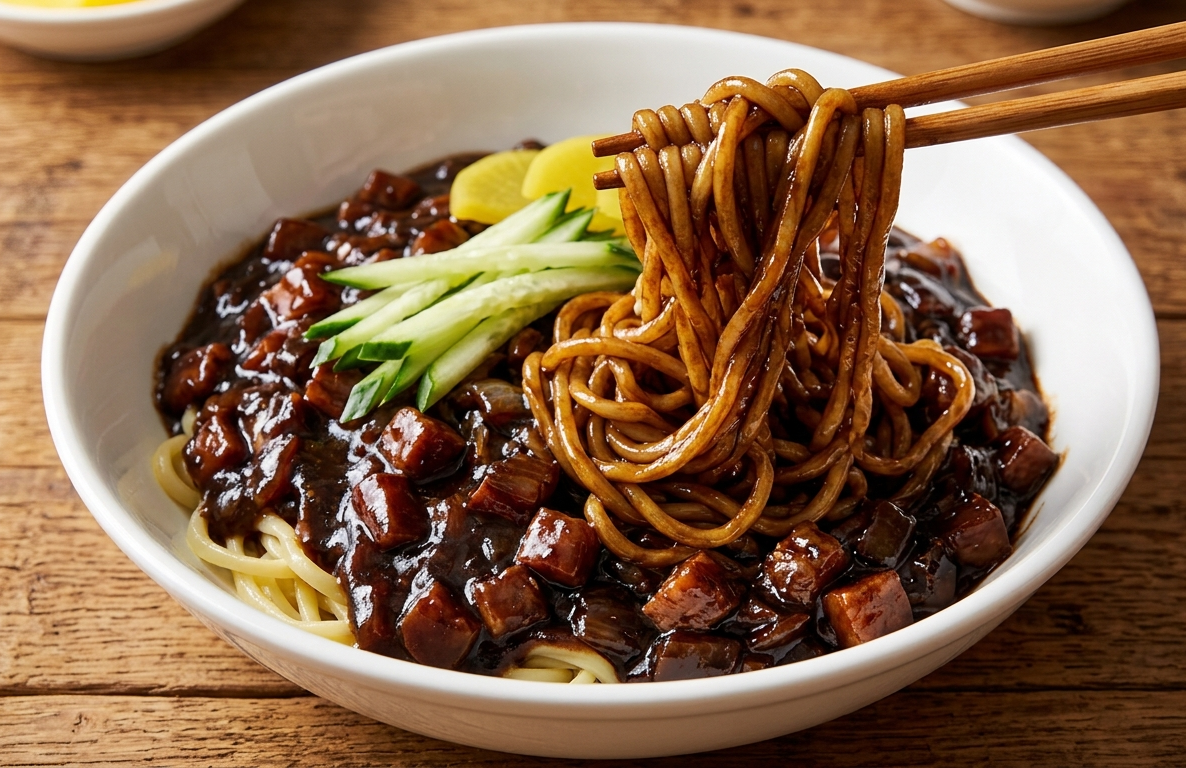
With its glossy black sauce, sweet caramelized onions, and chewy noodles, jjajangmyeon is simple yet deeply satisfying. It’s technically Korean-Chinese food, but make no mistake — this dish is 100% Korean in spirit.
In this guide, I’ll explore what jjajangmyeon is, its fascinating history, how to eat it properly, and why it holds such a special place in Korean hearts.
What is Jjajangmyeon?
Jjajangmyeon is a noodle dish topped with a thick black sauce made from chunjang (춘장), a fermented black bean paste.
Key Components:
| Element | Description |
|---|---|
| Noodles | Thick, chewy wheat noodles |
| Sauce | Black bean paste (chunjang) with caramelized onions |
| Meat | Diced pork (sometimes beef) |
| Vegetables | Onions, zucchini, cabbage, sometimes potato |
| Flavor | Savory-sweet, rich, slightly salty |
The magic happens when the onions are slowly cooked until they caramelize, creating a natural sweetness that balances the earthy, savory black bean paste. The result is a glossy, jet-black sauce that coats every strand of noodle.
History of Jjajangmyeon
Jjajangmyeon has a fascinating origin story rooted in Korea’s port city of Incheon.
Chinese Roots, Korean Soul
In the early 1900s, Chinese immigrants settled in Incheon’s Chinatown, bringing with them zhajiangmian — a northern Chinese noodle dish with fermented soybean paste.
Korean tastes preferred something sweeter and milder, so the dish evolved. The sauce became sweeter, the vegetables changed, and over time, jjajangmyeon became distinctly Korean.
Gonghwachun: The Birthplace
The restaurant credited with creating modern jjajangmyeon is Gonghwachun (공화춘) in Incheon Chinatown. Today, the original building is a Jjajangmyeon Museum — yes, the dish is important enough to have its own museum.
From Workers’ Food to National Dish
Originally, jjajangmyeon was cheap, filling food for laborers. But as delivery culture grew in Korea, jjajangmyeon became the ultimate delivery meal. By the 1970s and 80s, it was a nationwide phenomenon.
Jjajangmyeon vs Chinese Zhajiangmian
Though they share ancestry, Korean jjajangmyeon and Chinese zhajiangmian are quite different.
| Aspect | Korean Jjajangmyeon | Chinese Zhajiangmian |
|---|---|---|
| Sauce color | Jet black, glossy | Brown, less shiny |
| Taste | Sweet and savory | Saltier, more savory |
| Key flavor | Caramelized onions | Fermented bean, meat |
| Vegetables | Onions, zucchini, cabbage | Cucumber, radish, bean sprouts |
| Texture | Thick, coating sauce | Drier, chunkier |
If you’ve tried Chinese zhajiangmian and expect the same thing in Korea, you’ll be surprised. Korean jjajangmyeon is sweeter, saucier, and has its own distinct identity.
Types of Jjajangmyeon
Not all jjajangmyeon is the same. Here are the variations you’ll encounter.
Jjajangmyeon (짜장면)
The standard version. Smooth sauce generously coating the noodles. This is what most people order.
Ganjjajang (간짜장)
“Dry” jjajangmyeon. The sauce is thicker and stir-fried rather than poured over. More concentrated flavor, less saucy.
Jaengban Jjajang (쟁반짜장)
Served on a large platter with noodles and sauce separate. Great for sharing — you mix it yourself at the table.
Samseon Jjajang (삼선짜장)
“Three fresh” jjajangmyeon with added seafood — shrimp, squid, sea cucumber. A premium version.
Yuni Jjajang (유니짜장)
Extra meat in the sauce. For those who want more protein.
Jjajangbap (짜장밥)
Same black bean sauce served over rice instead of noodles.
How to Eat Jjajangmyeon
Jjajangmyeon is simple to eat, but there’s a proper way to enjoy it.
Step 1: Mix It Well
When your bowl arrives, the sauce sits on top. Use your chopsticks to thoroughly mix the noodles and sauce together. Every strand should be coated in that glossy black goodness.
Step 2: Slurp Away
Jjajangmyeon is meant to be slurped. Don’t be shy — pick up a big bundle of noodles and go for it.
Step 3: Enjoy the Sides
| Side | Purpose |
|---|---|
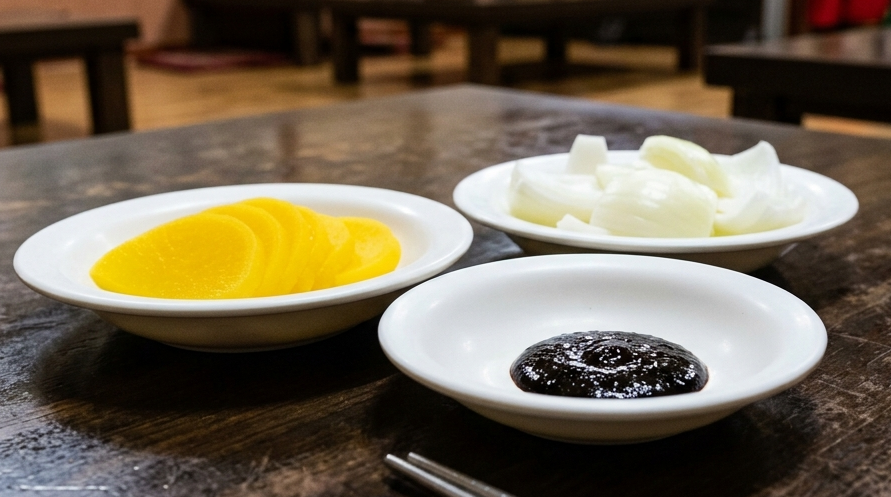
| Danmuji (단무지) | Yellow pickled radish — cleanses your palate between bites |
| Raw onion + black bean sauce | Dip raw onion slices in the provided sauce for a crunchy, savory bite |
The raw onion might seem strange, but it’s the perfect contrast to the rich, sweet noodles. Dip it in the small dish of black bean sauce and crunch away.
Step 4: Finish Everything
Koreans consider it polite to finish your jjajangmyeon completely — it shows appreciation for the food.
Jjajangmyeon Culture
Jjajangmyeon isn’t just food in Korea. It’s woven into the culture.
The Original Delivery Food
Before apps like Baedal Minjok, there were Chinese restaurants on motorcycles. Jjajangmyeon was one of Korea’s first delivery foods, brought to your door in metal containers that the restaurant would later collect.
This “bowl return” system is still used by some traditional Chinese restaurants today — an environmentally friendly practice that predates modern sustainability trends.
Black Day (April 14th)
Korea has Valentine’s Day (February 14) and White Day (March 14). But what about people who didn’t receive anything on either day?
They celebrate Black Day on April 14th by eating jjajangmyeon — black noodles for those feeling “black” (sad) about being single. It started as a joke but became a real cultural phenomenon.
Moving Day Tradition
When Koreans move into a new home, one of the first things they do is order jjajangmyeon. It’s quick, satisfying, and means you don’t have to cook while unpacking. This tradition is so ingrained that “moving day = jjajangmyeon” is automatic.
Celebration Food
Finished exams? Order jjajangmyeon. Kid’s graduation? Jjajangmyeon. Random Tuesday and you want comfort? Jjajangmyeon.
Jjajangmyeon vs Jjamppong: The Eternal Debate
No discussion of jjajangmyeon is complete without mentioning its rival: jjamppong (짬뽕).
The Showdown:
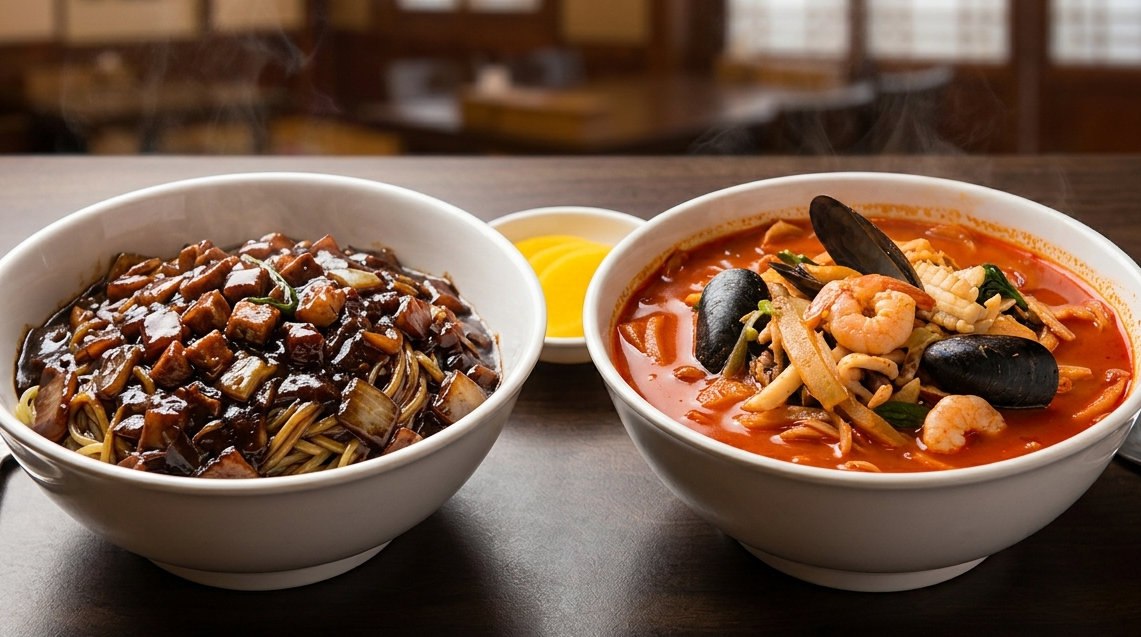
| Jjajangmyeon | Jjamppong |
|---|---|
| Black bean sauce | Spicy red seafood broth |
| Sweet and savory | Hot and spicy |
| No soup | Soupy |
| Mild | Fiery |
When Koreans order from a Chinese restaurant, the biggest dilemma is often: jjajangmyeon or jjamppong?
The Solution: Jjamjjamyeon (짬짜면)
Can’t decide? Many restaurants offer jjamjjamyeon — half jjajangmyeon, half jjamppong. Or you can simply order both and share.
Some people order both dishes every time, taking turns between sweet black noodles and spicy red soup. It’s the best of both worlds.
Where to Eat Jjajangmyeon
Incheon Chinatown
For the historic experience, visit Incheon Chinatown where it all began. The Jjajangmyeon Museum is here, along with many traditional Chinese-Korean restaurants.
Any Chinese Restaurant
Every neighborhood in Korea has a “junggukjip” (중국집) — Chinese restaurant. They all serve jjajangmyeon, and most deliver.
Famous Chains:
- Hong Kong Banjum (홍콩반점)
- Various local favorites in each neighborhood
Price:
- Usually 6,000-8,000 won
- Premium versions with seafood: 10,000-15,000 won
Making Jjajangmyeon at Home
You can make jjajangmyeon at home if you have the right ingredients.
Essential Ingredients:
- Chunjang (춘장) — Korean black bean paste
- Pork belly or shoulder, diced
- Onion (lots of it)
- Zucchini
- Potato or cabbage
- Fresh or dried jjajangmyeon noodles
Basic Method:
- Fry the chunjang in oil to remove bitterness
- Cook diced pork until browned
- Add onions and cook until caramelized (this takes time — be patient)
- Add other vegetables
- Mix in the fried chunjang
- Add water or stock, simmer until thick
- Serve over boiled noodles
The key is caramelizing the onions properly. This creates the signature sweetness.
Reality Check:
Most Koreans agree: delivery jjajangmyeon tastes better than homemade. The restaurants have perfected their recipes over decades. Making it at home is fun, but don’t expect restaurant quality on your first try.
My Jjajangmyeon Story
Here’s a confession: I always struggle to choose between jjajangmyeon and jjamppong.
And honestly? I almost always choose jjamppong. I just love soupy noodles — there’s something about slurping noodles from a hot, spicy broth that I can’t resist. My favorites are haemul jjamppong (seafood) or chadolbagi jjamppong (with brisket).
But here’s the thing — my wife always chooses jjajangmyeon. Every single time.
So in the end, I get to enjoy both. She eats her sweet black bean noodles, I dive into my spicy red soup, and we share bites with each other. It’s the perfect system.
When I was younger and had a bigger appetite, I used to order “gopbaegi” — double portion. I could finish a huge bowl of jjamppong and still have room for some of my friend’s jjajangmyeon. These days, I stick to regular portions. Age catches up with everyone, I guess.
But the jjajangmyeon vs jjamppong debate? That’ll never end. It’s a question every Korean faces, and there’s no wrong answer.
Final Thoughts
Jjajangmyeon is more than just noodles with black sauce. It’s a dish that carries over a century of history, from Chinese immigrants in Incheon to delivery drivers on motorcycles to families celebrating milestones.
It’s comfort when you’re sad, celebration when you’re happy, and convenience when you just don’t want to cook.
If you visit Korea, order jjajangmyeon at least once — preferably delivered to wherever you’re staying. Mix those noodles, crunch on some pickled radish, and understand why millions of Koreans eat this dish every single day.
And if you can’t decide between jjajangmyeon and jjamppong? Just order both.