
Introduction
In Korea, you can get almost anything delivered to almost anywhere.
Fried chicken at midnight? No problem. Hot jajangmyeon to a park bench? Done. Coffee and cake to your office at 3 PM? Easy.
Korea has one of the most advanced food delivery systems in the world. It’s fast, affordable, and incredibly convenient. For many Koreans, ordering delivery isn’t a special occasion — it’s just a normal part of daily life.
In this guide, I’ll explore why Koreans love delivery food so much, what they order, how the system works, and why this culture has become such a defining part of modern Korean life.
Korea’s Delivery Culture by Numbers
Korea’s delivery obsession isn’t an exaggeration. The numbers prove it.
The food delivery market in Korea is worth billions of dollars annually and continues to grow. Tens of millions of Koreans use delivery apps regularly, and the average delivery time is around 30 minutes — often faster.
During the COVID-19 pandemic, delivery culture exploded even further. But even before that, Korea was already the world leader in food delivery infrastructure.
What makes it remarkable isn’t just the speed — it’s the variety. Virtually every type of food is available for delivery: Korean, Chinese, Japanese, Western, desserts, coffee, late-night snacks. If a restaurant exists, chances are it delivers.
Why Delivery is So Popular in Korea
Several factors have made delivery culture thrive in Korea.
Busy Lifestyles
Koreans work long hours. After a tiring day at the office, the last thing many people want to do is cook or go out to eat. Delivery solves this perfectly — hot food arrives at your door without any effort.
Small Living Spaces
Many Koreans, especially in cities, live in compact apartments. Hosting guests for a home-cooked meal isn’t always practical. Ordering delivery for a group is easier and often more enjoyable.
Convenience Culture
Korea values efficiency. Everything is designed for speed and convenience — from fast internet to quick service at restaurants. Delivery fits perfectly into this culture of “ppalli ppalli” (빨리빨리, quickly quickly).
Affordable Delivery Fees
Unlike many countries where delivery fees are expensive, Korean delivery fees are remarkably low — sometimes free. Many restaurants absorb the delivery cost to stay competitive.
Rise of Single-Person Households
Over 40% of Korean households are single-person households. Cooking for one person often feels inefficient. Delivery portions and prices are well-suited for solo diners.
Extreme Weather
Korean summers are hot and humid; winters are freezing cold. When the weather is uncomfortable, staying home and ordering delivery becomes the obvious choice.
Popular Delivery Apps
A few major apps dominate the Korean delivery market.
Baedal Minjok (배달의민족)
The most popular delivery app in Korea, often called “Baedal” or “Baemin” for short. It has a huge selection of restaurants, user reviews, and frequent promotions. The interface is user-friendly, and there’s basic English support.
Coupang Eats (쿠팡이츠)
Known for ultra-fast delivery. Coupang Eats focuses on speed, often delivering in 10-20 minutes. It’s part of the larger Coupang ecosystem (Korea’s version of Amazon).
Yogiyo (요기요)
Another major player with a wide restaurant selection. Similar to Baedal Minjok in functionality.
How to Use
- Download the app
- Enter your address
- Browse restaurants or search for specific food
- Place your order
- Pay by card (in-app) or cash on delivery
- Track your delivery in real-time
- Receive your food at your door
Most apps now offer English language options, making them accessible for tourists staying in Korea.
What Koreans Order
Some foods are delivery staples in Korea.
Chicken (치킨)
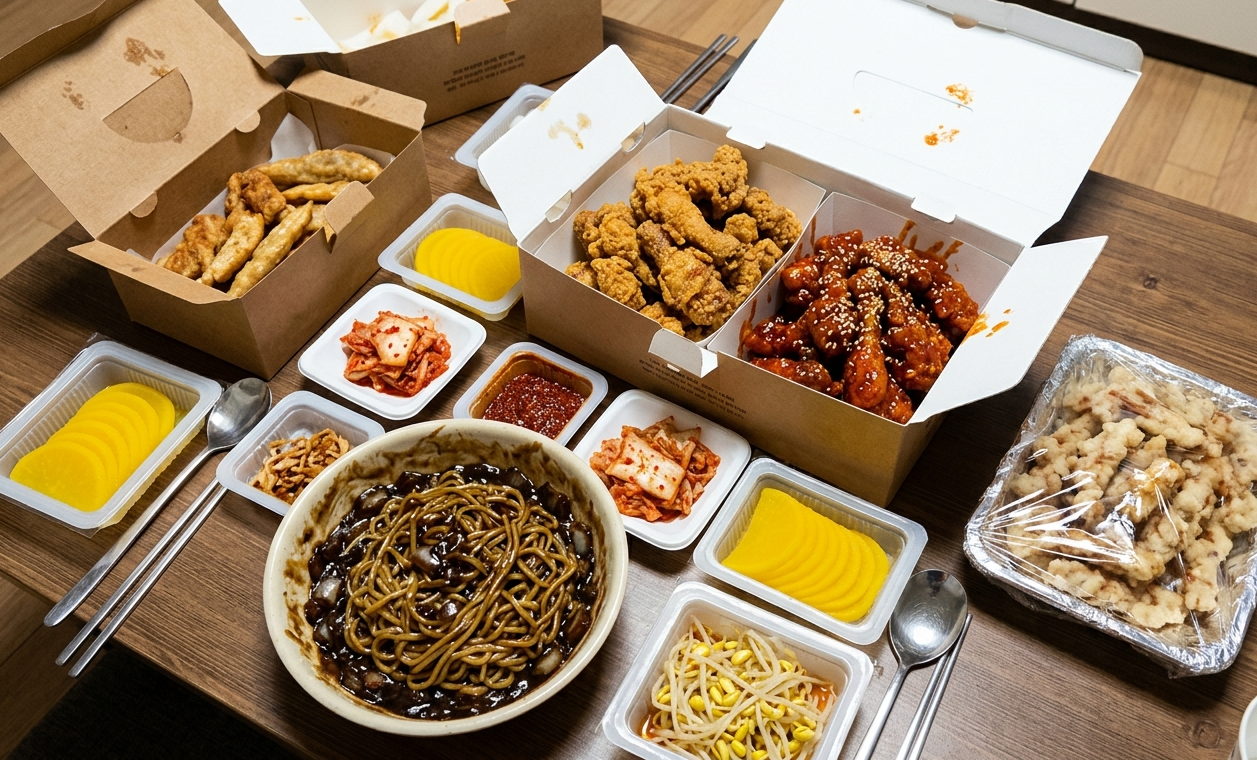
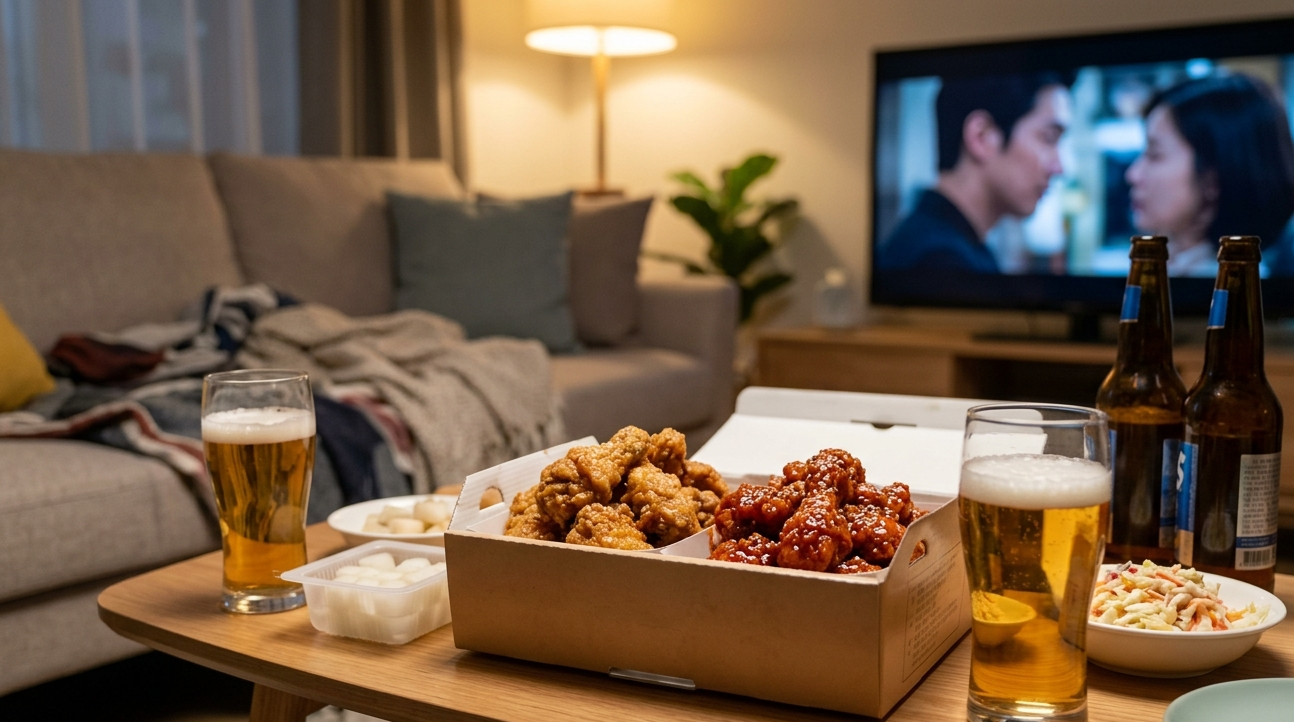
The undisputed king of Korean delivery. Fried chicken — whether plain, seasoned, soy garlic, or spicy — is the most ordered delivery food in Korea. Pair it with beer (치맥, chimaek) and you have a perfect night in.
Chinese Food (중국집)
Jajangmyeon (black bean noodles) and jjamppong (spicy seafood noodles) are classic delivery choices. Korean-Chinese restaurants have been delivering for decades, long before apps existed.
Pizza
Korean pizza has its own style — often sweeter, with unique toppings like sweet potato or bulgogi. Major chains like Domino’s, Pizza Hut, and local brands all deliver.
Jokbal and Bossam (족발/보쌈)
Braised pig’s feet and boiled pork wrap. Popular for gatherings and drinking sessions.
Bunsik (분식)
Tteokbokki, gimbap, ramyeon, and other casual Korean foods. Quick, cheap, and satisfying.
Tang and Jjim (탕/찜)
Soups and stews like gamjatang (pork bone soup), dakdoritang (spicy chicken stew), and jjimdak (braised chicken). These arrive hot and ready to eat.
Fast Food
McDonald’s, Burger King, and Korean chains all deliver. Late-night burger cravings are easily solved.
Coffee and Dessert
Yes, even coffee shops deliver. Order an iced Americano and a slice of cake directly to your home or office.
Unique Things About Korean Delivery
Korean delivery has features you won’t find anywhere else.
Delivery Anywhere
You don’t need a traditional address. Koreans order delivery to parks, riverbanks, beaches, and even hiking trails. Apps allow you to share your GPS location, and riders find you.
The Han River in Seoul is famous for this. On any warm evening, you’ll see people sitting on the grass eating fried chicken that was delivered directly to them.
Incredible Speed
Average delivery time is around 30 minutes. Coupang Eats often delivers in 10-20 minutes. This speed would be impressive anywhere, but it’s standard in Korea.
Dish Return System
When you order from traditional Korean-Chinese restaurants, your food arrives in real dishes — not disposable containers. When you’re finished, you simply leave the dishes outside your door, and the restaurant picks them up later. It’s an old system that’s environmentally friendly and still widely used.
24-Hour Availability
Many restaurants deliver late into the night. Korea has a strong “yasik” (야식, late-night snack) culture, and delivery makes it easy to satisfy midnight cravings.
Contact-Free Delivery
Even before the pandemic, Korea offered “leave at door” options. You can request that the rider leave your food at your door without face-to-face contact.
Delivery Etiquette
A few things to know about Korean delivery culture.
No Tipping
Tipping isn’t expected or customary in Korea. The price you see is the price you pay.
Leave Reviews
After your order, the app will prompt you to leave a review. Koreans take reviews seriously, and they help other users find good restaurants.
Eco-Friendly Options
Many apps now let you decline disposable utensils and single-use plastics. As awareness of waste grows, more people are choosing these options.
Be Responsive
If the rider calls (they sometimes do when they can’t find your location), try to answer or respond quickly. They’re often managing multiple deliveries.
The Other Side of Delivery Culture
While delivery culture is incredibly convenient, it’s worth acknowledging some challenges.
Environmental Concerns
The amount of packaging waste from delivery is significant. Single-use plastics, containers, and bags create environmental problems. Korea is working on solutions, but it remains an issue.
Rider Safety
Delivery riders work under pressure to deliver quickly. This can lead to safety issues, especially in bad weather or heavy traffic. There’s ongoing discussion about improving working conditions for riders.
Health Considerations
The convenience of delivery can lead to over-reliance on restaurant food, which may be less healthy than home cooking. Balance is important.
These issues don’t negate the benefits of delivery culture, but they’re part of the full picture.
Delivery for Tourists
If you’re visiting Korea, you can absolutely use delivery apps.
English Support
Major apps like Baedal Minjok and Coupang Eats have English language options. Navigation isn’t difficult.
Delivery to Accommodation
Order directly to your hotel, Airbnb, or guesthouse. Just enter the address and any helpful notes (building name, floor, etc.).
Payment Options
Most apps accept international credit cards. Cash on delivery is also available.
Recommended First Order
Try ordering fried chicken. It’s the quintessential Korean delivery experience. Get it with beer from a convenience store and enjoy it in your accommodation. You’ll understand why Koreans love delivery so much.
My Delivery Story
Korean delivery is truly incredible. You can order almost any food you can imagine, and the quality is just as good as eating at the restaurant.
For me, the go-to delivery orders are always chicken or jajangmyeon. I can’t count how many times I’ve ordered these.
What I love most about delivery is the convenience. On days when the weather is too hot or too cold to go outside, when I come home exhausted from work and have zero energy to cook — that’s when delivery saves the day. I just open the app, order, and within 30 minutes, delicious food arrives at my door. No effort, no stress, just good food at home.
My wife and I have a little routine. Sometimes on weekends, we’ll order chicken, pick a movie, and have a cozy night in. There’s something so satisfying about it — crispy fried chicken, a good film, and nowhere to be. It’s a simple pleasure, but it’s one of my favorite things.
That’s the beauty of Korean delivery culture. It’s not just about convenience (although it’s incredibly convenient). It’s about making everyday life a little easier and a little more enjoyable. Whether you’re tired, busy, or just don’t feel like going out, great food is always just a few taps away.
Final Thoughts
Delivery culture is woven into Korean daily life.
It reflects the values Koreans hold dear — efficiency, convenience, and good food. The infrastructure that supports it — fast riders, excellent apps, countless restaurant options — is genuinely world-class.
If you’re visiting Korea, don’t just eat at restaurants. Order delivery at least once. Get some fried chicken delivered to your accommodation, or order jajangmyeon to a park. Experience how Koreans actually eat on a regular day.
You’ll quickly understand why delivery isn’t just a service here. It’s a lifestyle.